
Filter
856
Text search:
disaster
outbreaks
Featured
105
225
Language
Document type
348
159
124
86
79
22
12
12
10
2
1
1
Countries
52
36
34
22
20
19
18
16
15
15
14
14
14
13
12
12
11
10
10
10
9
8
8
7
7
7
7
6
6
5
5
5
5
4
4
4
4
4
4
3
3
3
3
3
3
3
3
3
3
3
2
2
2
2
2
2
2
2
2
2
2
2
1
1
1
1
1
1
1
1
1
1
1
1
1
1
1
1
1
1
1
1
1
1
1
1
1
1
1
1
1
Authors & Publishers
Publication Years
Category
281
148
49
24
21
14
6
1
Toolboxes
102
98
82
64
64
47
46
31
22
15
13
12
10
9
8
7
6
6
6
4
4
3
3
2
2
2
1

Technical Note
Recently, the approach to hazardous events has undergone a considerable shift, away from reactive activities focused on managing and responding to events and towards a more proactive process of emergency and disaster risk management
...

As the world recovers from the shock of the COVID-19 pandemic and reflects on lessons learnt from failure of global public health systems to contain the global outbreak of SARS-CoV-2, new infectious disease threats, caused by movement of people globally, remain omnipresent, and repeated calls for mo
...

The Disaster Recovery Framework (DRF) Guide for the Health Sector provides guidance on how to implement a comprehensive, integrated, and structured approach to disaster recovery. Its overarching goa
...

With an estimated population of about 5 million and an annual growth rate of 8 per cent, Dar es Salaam, Tanzania, is Africa’s fastest growing city.1 Over 70 per cent of the people live in informal, unplanned settlements with inadequate infrastructure. In addition, heavy rainfalls twice a year
...

An emerging framework for achieving synergies among the Sendai Framework, the 2030 Agenda for Sustainable Development, the New Urban Agenda and the Paris Agreement. This paper discusses the potential of the Health Emergency and Disaster Risk M
...

The document presents a strategic framework by the World Health Organization for managing risks related to emergencies and disasters in the health sector. It highlights that such events (such as epidemics, natural disasters, or conflicts) have major impacts on health, healthcare systems, and societa
...
This tool outlines the specific procedures, custom arrangements, and logistical considerations for incoming assistance in member countries
The intent of these guidelines is to develop a holistic, coordinated, proactive and technology driven strategy for management of biological disasters through a culture of prevention, mitigation and preparedness to generate a prompt and effective response in the event of an emergency. Th
...

"National Disaster Management Guidelines: Management
of Chemical (Terrorism) Disasters (are intended to
focus on all aspects of the disaster management
cycle, including prevention measures such a
...

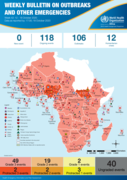
The WHO Health Emergencies Programme is currently monitoring 118 events in the region. This week’s main articles cover the following events:
Coronavirus disease 2019 (COVID-19) in Togo
Measles in Chad
Ebola virus disease (EVD) in Équateur Province, Democratic Republic of the Congo.
...

Accessed on 31.03.2020
This Guidance Note aims to provide humanitarian child protection practitioners, particularly child protection advisors and program managers, with guidance on how to engage in responses to infectious disease outbreaks to ens
...
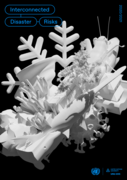
Interconnected Disaster Risks is a new science-based report for the general public from United Nations University – Institute for Environment and Human Security. It was first published in 2021, and is set to become an annual report.
Morbidity and Mortality Weekly Report (MMWR):

The guidance aspires
• To emphasize the 'need' to mainstream disaster risk reduction (DRR) in the health sector initiatives.
• To identify key approaches for mainstreaming DRR in the health sector in Myanmar, particularly in rural area ...
• To emphasize the 'need' to mainstream disaster risk reduction (DRR) in the health sector initiatives.
• To identify key approaches for mainstreaming DRR in the health sector in Myanmar, particularly in rural area ...

Myanmar has made significant progress in its disaster management policies, plans, and procedures since 2008, when Cyclone Nargis impacted the country leaving devastation in its aftermath. The Government of Myanmar (GoM) has modified the government s
...
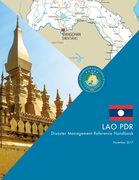
Lao People’s Democratic Republic (Lao PDR), also referred to as Laos, or Lao, is exposed to natural disasters such as flooding, typhoons, cyclones, drought, and earthquakes. The country is vulnerable to recurrent, sudden-onset and slow onset natural disasters with flooding, storms and typhoons hav
...
