
Filter
358
Text search:
WHO
Regional
Office
for
Europe
United
Nations
City
Featured
Recommendations
29
New Publications
58
Language
Document type
No document type
153
Studies & Reports
100
Guidelines
52
Manuals
22
Strategic & Response Plan
18
Fact sheets
5
Training Material
3
Situation Updates
3
Brochures
1
Resource Platforms
1
Countries / Regions
Western and Central Europe
35
Global
22
Ukraine
16
Eastern Europe
13
Syria
10
Eastern Europe and Central Asia
6
Russia
5
Kazakhstan
4
USA
3
Ethiopia
3
Latin America and the Carribbean
3
Asia
3
Africa
3
Sierra Leone
2
Liberia
2
India
2
North Macedonia
2
Myanmar / Burma
2
South–East Asia Region
2
Tajikistan
2
Estonia
2
Moldova
2
Kyrgyzstan
2
Guinea
1
Zimbabwe
1
Philippines
1
Iraq
1
Afghanistan
1
Turkey
1
Kenya
1
Tanzania
1
Thailand
1
South Africa
1
Bangladesh
1
Malawi
1
Croatia
1
Sri Lanka
1
Middle East and North Africa
1
Venezuela
1
Albania
1
Iran
1
Uzbekistan
1
Georgia
1
Turkmenistan
1
Mauritius
1
Azerbaijan
1
Authors & Publishers
Publication Years
Category
Countries
57
Key Resources
35
Clinical Guidelines
31
Public Health
20
Women & Child Health
20
Capacity Building
4
Pharmacy & Technologies
3
Toolboxes
HIV
59
Mental Health
35
Planetary Health
32
TB
26
COVID-19
26
Conflict
24
Refugee
17
Caregiver
15
Global Health Education
14
AMR
14
Rapid Response
10
Disability
7
2.0 Rapid Response
6
Ebola & Marburg
5
Specific Hazards
5
NCDs
5
Pharmacy
4
NTDs
3
Polio
2
Typhoon
2
Natural Hazards
2
Zika
2
Cholera
1
Social Ethics
1
Health Financing Toolbox
1
Technical Brief

Current evidence that the climate is changing is overwhelming. Impacts of climate change and variability are being observed: more intense heat-waves, fires and floods; and increased prevalence of food- water- and vector-borne diseases. Climate change will put pressure on environmental and health det
...
Key considerations for the use of law to prevent noncommunicable diseases in the WHO European Region
Report of an intensive legal training and capacity-building workshop on law and noncommunicable diseases (Moscow, 30 May–3 June 2016)
The report summarizes important issues, themes and topics discussed during the meeting in Moscow, ranging from the design and implementation of legislation, reconc
...
Strengthening health-system emergency preparedness.
These policy guidelines provide a strategic approach and new recommendations for integrated TB and HIV services for patients suffering from substance-abuse addiction. The key recommendations fall un
...

Noncommunicable diseases (NCDs) are the principal cause of morbidity, disability and premature mortality in Azerbaijan. The most effective way to reduce the NCD burden is to prevent NCD development, by addressing thebehavioural risk factors underlying NCDs at the population and individual leve
...

This brief summarizes the lessons learned across Europe on the redevelopment of contaminated sites as a part of urban planning and renewal. Specifically, it aims to provide information on the health and environmental impacts to be considered during
...
Available in Russian
A detailed overview is provided of the implementation of alcohol policies described in the 10 action areas of the European Action Plan to Reduce the Harmful Use of Alcohol 2012–2020 (EAPA), including the current status of implementation of the five action areas of the
...

Consultancy Report May 2022
An all-hazards tool for hospital administrators and emergency managers.
The World Health Organization Regional Office
...
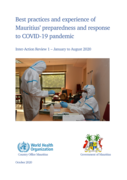
his Inter Action Review report for the COVID-19 outbreak in Mauritius documents and assesses the country’s capacity to respond to the outbreak and identifies the best practices, strengths, gaps and challenges of the national response. Areas requir
...
Constituting the fourth part of the World Drug Report 2022, this booklet focuses on the market dynamics of various stimulants – cocaine, amphetamines and “ecstasy” – and of NPS.
The first chapter contains an analysis of the global market for
...
The global tripartite self-assessment survey of country progress in addressing antimicrobial resistance (AMR) is a component of a broader approach for monitoring and evaluation of the global action plan on AMR. This report analyses the results of th
...

Every year, around 830 000 children die from unintentional or "accidental" injuries. The vast majority of these injuries occur in low-income and middle-income countries. However, dozens of prevention strategies and programmes exist. If they were integrated into other child survival programmes and im
...
