
Filter
117
Text search:
Hotline
in
a
Box
Featured
12
25
Language
Document type
46
28
14
14
5
4
3
2
1
Countries
13
8
6
5
3
3
3
3
2
2
2
2
2
2
2
2
1
1
1
1
1
1
1
1
1
1
1
1
1
1
1
1
1
1
1
1
1
1
1
1
1
1
1
Authors & Publishers
Publication Years
Category
43
10
7
5
4
1
Toolboxes
30
11
10
8
5
3
2
2
2
2
2
2
2
2
2
2
2
1
1
1
1
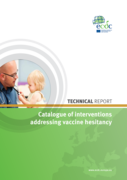
This catalogue provides tools and information resources to support EU/EEA countries in addressing the challenging issue of vaccine hesitancy. The catalogue provides examples of practices that can serve as
...

UNFPA supports the Youth Health Line (YHL), launched in 2012, as a nationwide, youth friendly health service to provide information and counseling for adolescents and youth on issues related to thei
...
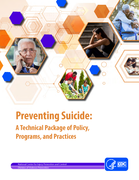
This technical package represents a select group of strategies based on the best available evidence to help communities and states sharpen their focus on prevention activities with the greatest potential to prevent suicide


front cover © Hannah Maule-Ffinch/Save the Children

In 2016, the risk of premature mortality1 from noncommunicable diseases (NCDs) in Ethiopia was 18.3%. The economic costs of NCDs are significant and are due principally to their impact on the non-he
...

Outbreak surveillance in humanitarian emergencies involves rapid detection, data collection, and analysis to identify disease threats, while response focuses on implementing timely control measures to prevent further spread.

Regional Network for Equity in Health in east and southern Africa (EQUINET): Disussion Paper 113
This report synthesises the learning across the full programme of work. It presents the method ...
This report synthesises the learning across the full programme of work. It presents the method ...
Nat Med (2021). https://doi.org/10.1038/s41591-021-01381-y

Populations affected by emergencies are continually at risk of outbreaks of epidemic-prone diseases and other public health hazards. This operational guidance aims to guide decision-making on when and how to implement and strengthen Early Warning Alert and Response (EWAR)
...

The active participation and engagement of health and care workers (HCWs) in health emergency preparedness, readiness and response is crucial to support risk communication, community engagement and infodemic management (RCCE-IM) interven
...

Tips for Engaging Communities during COVID-19 in Low-Resource Settings, Remotely and In-Person
recommended
This brief provides key considerations for engaging communities on COVID-19 and tips for how to engage where there are movement restrictions and physical distancing measures in place, particularly in
...

This new guidance aims to support programme implementers, coordinators and others in humanitarian settings in their actions to counter suicide and self-harm
...
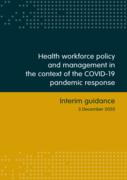
This guide is available in English, French, Spanish, Russian, Arabic and Chinese
This guide consolidates COVID-19 guidance for human resources for health managers and policy-makers at national, subnational and facility levels to design, manage and
...
