
Filter
61
Text search:
C.
Servili
Featured
14
7
Language
Document type
33
10
6
5
4
2
1
Countries / Regions
3
3
3
2
2
2
1
1
1
1
Authors & Publishers
Publication Years
Category
9
6
4
3
2
2
Toolboxes
40
6
5
4
3
2
2
2
1
1
1
1

[Updated 2015]
Scoping question: What is the effectiveness of psychosocial interventions, including caregiver skills training, for emotional disorders in children and adolescents?

The Thinking Health manual outlines an evidence-based approach describing how community health workers can reduce prenatal depression through evidence-based cognitive-behavioural techniques recommended by the mhGAP programme.
This manual is the first volume of WHO’s new series on low-intensity p
...
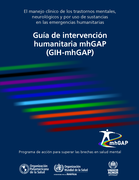
La Guía de intervención humanitaria mhGAP es una herramienta sencilla y práctica destinada a ayudar a los servicios de salud generales en contextos de emergencias humanitarias, a detectar y tratar los trastornos mentales, neurológicos y por uso de sustancias psicoactivas. Se trata de una adapta
...
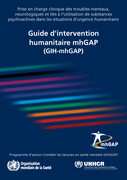
Prise en charge clinique des troubles mentaux,
neurologiques et liés à l'utilisation de substances
psychoactives dans les situations d'urgence humanitaire
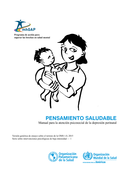
Este es un manual para capacitar a los agentes de salud de la comunidad sobre la manera de apoyar a las madres con depresión mediante técnicas cognitivo-conductuales basadas en datos científicos, que recomienda el programa mhGAP.
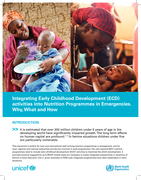
This document is written for local and international staff running nutrition programmes in emergencies, and for local, regional and national authorities and donors involved in such programmes.
The note explains why nutrition programmes need to include early childhood development (ECD) activities t
...
Las directrices actualizadas del mhGAP, la retroalimentación de
información y la evaluación de la versión 1.0 de la GI-mhGAP
por los usuarios han permitido la revisión y elaboración de esta
versión actualizada de la guía. En el año 2015, se llevó a cabo y
se publicó una actualización
...

The report “Dementia: a public health priority” has been jointly developed by WHO and Alzheimer's Disease International. The purpose of this report is to raise awareness of dementia as a public health priority, to articulate a public health approach and to advocate for action at international a
...
WHO mhGAP Guideline update
recommended
Update of the Mental Health Gap Action Programme
(mhGAP) Guideline for Mental, Neurological and Substance use Disorders May 2015
La demencia es una enfermedad gravemente incapacitante para aquellos que la padecen y suele ser devastadora para sus cuidadores y familiares. Se estima que en la actualidad 35.6 millones de personas viven con demencia a nivel mundial. Este número se habrá casi duplicado para el 2030 y más que tri
...

The World Health Organization (WHO) is releasing the second edition of its Global Accelerated Action for the Health of Adolescents (AA-HA!) guidance. The document aims to equip governments to respond to the health and well-being challenges, opportunities and needs of adolescents.
The guidance pro
...
The Updated guidelines on Management of tuberculosis in children and adolescents include new recommendations that cover diagnostic approaches for TB, shorter treatment for children with non-severe drug-susceptible TB, a new option for the treatment of TB meningitis, the use of bedaquiline and delama
...

It summarizes guidance on how to manage – and when to refer – children and adolescents presenting with common complaints and conditions. It includes information to enable primary health care providers to coordinate the continued care of children and adolescents with long-term conditions and dise
...

The mhGAP community toolkit: field test version is an integral part of WHO's Mental Health Gap Action Programme (mhGAP), and aims at scaling up services for people with mental health conditions to achieve universal health coverage.
The toolkit provides guidance for programme managers on how to i
...

Download (7.4 MB)
Overview
Epilepsy is one of the most common neurological disorders globally. The WHO epilepsy technical brief aims to strengthen action for epilepsy and complements the Intersectoral global action plan on epilepsy and other neurological disorders 2022–2031.
The technical bri
...
Plus de 700 000 personnes perdent la vie par suicide chaque année. La réduction d’un tiers du taux mondial de mortalité par suicide d’ici à 2030 est à la fois un indicateur et une cible (la seule pour la santé mentale) dans les objectifs de développement durable des Nations Unies et dans
...

The overall objective of the framework is to support WHO and Members States in meaningful engagement of people living with NCDs, and mental health and neurological conditions to co-create and enhance related policies, programmes and services. This framework will contribute to advancing understanding
...
L’objectif général de ce cadre est de permettre à l’OMS et à ses États Membres d’assurer la participation significative des personnes vivant avec des maladies non transmissibles, des problèmes de santé mentale et neurologiques, via un processus de cocréation et de renforcement des poli
...
