
Filter
64
Text search:
Brozek,
J.
L.
Featured
16
15
Language
Document type
32
21
8
1
1
1
Countries / Regions
5
4
3
2
2
2
2
2
2
1
1
1
1
1
1
1
1
Authors & Publishers
Publication Years
Category
15
13
12
6
2
1
Toolboxes
13
12
7
4
3
3
3
2
2
1
1
1
1
1
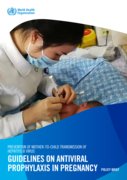
WHO estimates that in 2015, 257 million people were living with chronic hepatitis B virus (HBV) infection worldwide, and that 900 000 died from HBV infection, mostly through the development of cirrhosis and hepatocellular carcinoma. Worldwide, the majority of persons with chronic hepatitis B infecti
...


Guidance statement
Recommendations on contraceptive methods used by
women at high risk of HIV
WHO Living guideline: Drugs to prevent COVID-19
recommended
Interim guidance 2 march 2021
Current use of drugs to prevent COVID-19 is variable, reflecting large-scale uncertainty. Numerous randomized trials of many different drugs are underway to inform practice. This first version of the Drugs to prevent COVID-19: A WHO living guideline contains new inform
...
La presente publicación describe un resumen de la evidencia científica disponible sobre el uso de Cloroquina e hidroxicloroquina, así como su profilaxis y tratamiento para COVID-19.
Esta publicación pertenece al compendio Publicaciones Minsa sobre COVID-19
Esta primeira versão de Medicamentos para prevenção da COVID-19: Orientação dinâmica da OMS aborda o uso de hidroxicloroquina para prevenção da COVID-19. Segue-se a publicação de uma análise sistemática e NMA que reuniu dados de seis estudos com 6.059 participantes que não tinham COVID-
...
Resumo: o que é esta orientação dinâmica?
Pergunta clínica: qual é o papel dos medicamentos na prevenção da COVID-19?
Público-alvo: o público-alvo são os médicos e os tomadores de decisão na área da saúde.
Prática atual: o uso atual de medicamentos para prevenção da COVID-19 é
...
The purpose of this document is to guide clinicians in the care of patients with or at risk of severe illness from influenza virus infection, including those caused by seasonal influenza viruses, pandemic influenza viruses and zoonotic (novel influenza A) viruses.

Therapeutics for Ebola virus disease
recommended
The WHO Ebola Virus Disease (EVD) Clinical management: living guidance contains the Organization’s most up-to-date recommendations for the clinical management of people with EVD. Providing guidance that is comprehensive and holistic for the optimal care of patients with EVD throughout their il
...
The primary audience for these recommendations includes health professionals who are responsible for developing national and local health-care guidelines and protocols and health workers involved in the provision of care to women and their newborns during pregnancy, labour and childbirth; this inclu
...

The primary audience for these recommendations includes health professionals who are responsible for developing national and local health-care guidelines and protocols and health workers involved in the provision of care to women and their newborns during pregnancy, labour and childbirth; this inclu
...
The primary audience for these recommendations includes health professionals who are responsible for developing national and local health-care guidelines and protocols and health workers involved in the provision of care to women and their newborns during pregnancy, labour and childbirth; this inclu
...

The WHO Living guideline: Drugs to prevent COVID-19 contains the Organization’s most up-to-date recommendations for the use of drugs to prevent COVID-19. The latest version of this living guideline is available in pdf format (via the ‘Download’ button) and via an online platform.
Guidelines
...

Trustworthy, evidence-based health guidelines form the basis of national policies affecting both patients and health-care workers. Emphasizing the link between robust evidence and people’s trust in their health systems, Dr Hans Henri P. Kluge, WHO Regional Director for Europe said at the launch ev
...
Under-diagnosis of asthma in ‘under-fives’ may be alleviated by improved inquiry into disease history. We assessed a questionnaire-based screening tool for asthma among 614 ‘under-fives’ with severe respiratory illness in Uganda. The questionnaire responses were compared to post hoc consensu
...
ev Panam Salud Publica. 2020;44;e28. https://doi.org/10.26633/RPSP.2020.28
This document highlights the latest WHO recommendations designed to optimize health outcomes, streamline delivery and address persistent barriers to prevention and care. It especially focuses on people often left behind in service delivery, including adolescents and young people, key populations and
...
Following review of the latest evidence, WHO recommends that TB-LAMP can be used as a replacement for microscopy for the diagnosis of pulmonary TB in adults with signs and symptoms of TB. It can also be considered as a follow-on test to microscopy in adults with signs and symptoms of pulmonary TB, e
...

The new WHO recommendations for the treatment of isoniazid-resistant, rifampicin-susceptible TB are based upon a review of evidence from patients treated with such regimens by a Guideline Development Group in conformity with WHO requirements for evidence-based policies.
