
Filter
716
Text search:
medicine
prices
Featured
67
219
Language
Document type
351
206
72
35
27
10
7
6
2
Countries
43
30
23
18
18
17
14
13
13
12
12
12
12
11
11
10
10
9
8
8
8
8
8
7
7
7
6
6
6
6
5
5
5
4
4
4
4
4
4
4
3
3
3
3
3
3
3
2
2
2
2
2
2
2
1
1
1
1
1
1
1
1
1
1
1
1
1
1
1
1
1
1
1
1
1
1
1
1
1
1
1
1
1
1
1
1
1
Authors & Publishers
Publication Years
Category
308
62
44
26
19
14
3
Toolboxes
56
54
47
44
35
27
27
21
18
17
15
13
11
11
10
9
7
4
3
2
1
1
1
COMPENDIUM of health system responses to large-scale migration in the WHO European Region
recommended
The scale of international migration in the WHO European Region has increased substantially in the last decade. The dynamics of large-scale migration pose specific challenges and opportunities to health systems, and responses will differ from country to country. Strengthening health system responses
...
Results
Recommendations• NGOs should provide MHPSS services with a focus on empowerment and self-reliance
• Introduce interventions focusing on pain mechanisms, coping strategies and physical resilience
• Implement livelihood programmes
• Increase service accessibility and outreach activ
...
The EYE strategy is a comprehensive and long-term strategy built on lessons learned that aims at ending yellow fever epidemics by 2026, and consists of three strategic objectives:
protect at-risk populations;
prevent international spread; and
contain outbreaks rapidly.

WHO Recommendations 2018 Update
The primary audience for these recommendations includes health professionals who are responsible for developing national and local health care guidelines and protocols (particularly those related to PPH prevention and treatment) and those involved in the provision of
...
Germany has become a visible actor in global health in the past 10 years. In this Series paper, we describe how this development complements a broad change in perspective in German foreign policy.
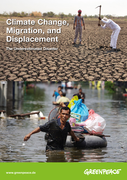
What at first glance appears to be simple causality – climate change leading to more and more migration – has triggered intense academic debate over the past ten years because the circumstances are complex. There is need for a thorough analysis in the ground between denying the problem and asser
...
The HEARTS technical package provides a strategic approach to improving cardiovascular health in countries. It comprises six modules and an implementation guide. This package supports Ministries of Health to strengthen CVD management in primary health care settings. The practical, step-by step modul
...
The World Drug Report 2022 is aimed not only at fostering greater international cooperation to counter the impact of the world drug problem on health, governance and security, but also, with its special insights, at assisting Member States in anticipating and address-ing threats from drug markets an
...
Constituting the second part of the World Drug Report 2022, the present booklet contains an overview of the global demand for and supply of drugs.
The first chapter of the booklet begins with the latest estimates of the number of people who use drugs, the distribution of those users by type of drug
...
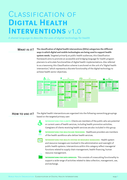
The classification of digital health interventions (DHIs) categorizes the different ways in which digital and mobile technologies are being used to support health system needs. Historically, the diverse communities working in digital health—including government stakeholders, technologists, clinic
...
Antimicrobial resistance is a global crisis that threatens a century of progress in health and achievement of the Sustainable Development Goals. There is no time to wait. Unless the world acts urgently, antimicrobial resistance will have disastrous impact within a generation.
South African Health Review 2019
recommended
22nd edition
The purpose of the SAHR has always been to analyse and assess progress and challenges in key areas of the health system, and to propose recommendations for improvement. We are pleased to continue this tradition in the 2019 edition, which presents a unique collection of perspectives on
...

16-24 February 2020

In this paper we aim to provide information on the importance of efficiency measurement of health care facilities in developing countries. We state that efficiency measurement can be a substantial contribution to saving lives. Therefore we analyse the performance of health centres in rural Burkina F
...

Over the reporting period, economic actors continued to carry out their activities with little regard for their impacts on the livelihoods of the communities living in the surrounding areas. In Doo Tha Htoo (Thaton) District, cold dust from a Tatmadaw-run cement factory contaminated nearby waterways
...

The infectious disease burden in India is among the highest in the world. A large amount of antibiot-ics are consumed in fighting infections, some of them saving lives, but every use adding to antibiotic resistance in bacteria. Antibiotic use is increasing steadily (table 1), particularly
...
In Kenya, the bacterial infections that contribute most to human disease are often those in which re-‐sistance is most evident. Examples are multidrug-‐resistant enteric bacterial pathogens such as typhoid,
...

Spread of resistance to antimicrobial agents (AMR) does not know national borders and has reached dimensions, which require immediate actions at the national, regional and global levels.
Antibiotic resistance is a natural biological response to improper use of antimicrobial agents (AMA); increasing
...
ON LIFE SUPPORT3The Democratic Republic of Congo’s Ebola outbreak has been contained, but confl ict and under-development leave over three million children at risk from measles and other killer diseases. The country’s medical services – ill-equipped and under-resourced – are on life support
...
