
Filter
5776
Text search:
laboratory
Featured
Recommendations
631
New Publications
1531
Language
Document type
No document type
3029
Guidelines
991
Studies & Reports
820
Manuals
305
Strategic & Response Plan
237
Fact sheets
145
Training Material
102
Situation Updates
68
Resource Platforms
28
Infographics
21
Online Courses
11
Brochures
10
Videos
8
App
1
Countries / Regions
India
312
Global
188
Sierra Leone
172
Liberia
155
Kenya
154
South Africa
132
Nigeria
125
Ethiopia
116
Uganda
113
Western and Central Europe
109
Tanzania
104
Rwanda
98
Africa
93
Zambia
87
Nepal
85
Latin America and the Carribbean
83
Ghana
74
Malawi
74
Bangladesh
69
Congo, Democratic Republic of
66
Namibia
54
Guinea
50
West and Central Africa
49
Eastern Europe
48
Zimbabwe
47
Myanmar / Burma
47
East and Southern Africa
47
Syria
44
Philippines
39
Ukraine
38
Russia
38
Mozambique
34
Brazil
33
Lesotho
33
South–East Asia Region
33
Senegal
32
Colombia
31
Middle East and North Africa
31
Cambodia
30
Asia
28
Botswana
26
Germany
25
South Sudan
23
Burkina Faso
22
Mali
20
Eswatini/ Swaziland
20
Cameroon
19
Pakistan
19
Eastern Europe and Central Asia
19
Indonesia
18
Haiti
17
Angola
16
Peru
14
Venezuela
14
USA
13
Yemen
13
Madagascar
12
Western Pacific Region
12
Côte d’Ivoire / Ivory Coast
11
Thailand
10
Benin
10
Ecuador
10
Afghanistan
9
Chad
9
Argentina
9
Paraguay
9
Albania
9
Tajikistan
9
Vietnam
9
Somalia
8
Moldova
8
Georgia
8
Spain
8
El Salvador
7
North America
7
Guinea-Bissau
6
Iraq
6
Lebanon
6
China
6
Sudan
6
Central African Republic
6
Bolivia
6
Saudi Arabia
5
Niger
5
Jordan
5
Papua New Guinea
5
North Macedonia
5
Burundi
5
Chile
5
Armenia
5
Laos
5
Togo
4
Sri Lanka
4
Palestine
4
Timor Leste/ East Timor
4
Gambia
3
Honduras
3
Libya
3
Bhutan
3
Poland
3
Southern Africa
3
Iran
3
Jamaica
3
United Kingdom
3
Portugal
3
Turkey
2
Egypt
2
Dominican Republic
2
Hungary
2
Guatemala
2
Mexico
2
Nicaragua
2
Fiji
2
Italy
2
Qatar
2
Bulgaria
2
Estonia
2
Romania
2
Uzbekistan
2
Gabon
2
Turkmenistan
2
Japan
2
France
2
Mauritius
2
Bosnia and Herzegovina
2
Morocco
1
Mauritania
1
Switzerland
1
Serbia
1
Greece
1
Cape Verde
1
Djibouti
1
Mongolia
1
Congo-Brazzaville
1
Canada
1
Lithuania
1
Slovakia
1
Australia
1
Kazakhstan
1
Uruguay
1
Denmark
1
Maldives
1
Tunisia
1
Azerbaijan
1
Belarus
1
Belize
1
Costa Rica
1
Panama
1
Authors & Publishers
Publication Years
Category
Countries
2267
Clinical Guidelines
539
Public Health
259
Key Resources
253
Pharmacy & Technologies
171
Women & Child Health
159
Capacity Building
102
Annual Report MEDBOX
1
Toolboxes
COVID-19
628
TB
513
HIV
451
Ebola & Marburg
312
NTDs
303
AMR
278
Rapid Response
201
Mental Health
145
Pharmacy
135
Caregiver
112
2.0 Rapid Response
106
Zika
101
Planetary Health
95
Malaria
94
Conflict
73
Cholera
68
NCDs
62
Polio
47
Refugee
46
Natural Hazards
41
Specific Hazards
38
Global Health Education
34
Health Financing Toolbox
31
Disability
27
Social Ethics
4
Typhoon
1

Malaria remains a significant public health concern in the SADC region, accounting for 20% of childhood deaths, as well as prompting numerous outpatient visits and hospitalisations. Around three-quarters of the population, including 35 million children under the age of five and 8.5 million pregnant
...
Tuberculosis (TB) remains a significant global health challenge, with an estimated annual death rate of approximately one per 100,000 people in countries with low TB prevalence. Rapid reductions in TB cases and deaths worldwide depend on research breakthroughs, including the development of new vac
...

For education to be competency-based and effective, appropriate training methodologies have to be used to support the learner to have the appropriate knowledge and to translate this knowledge into skills and competencies. Such education and training should lead to a change in attitudes, beliefs a
...

On 13 August 2024, the Africa Centres for Disease Control (Africa CDC) declared the multi-country mpox outbreak a public health emergency of continental security, with strong recommendations to improve surveillance and vaccine deployment in all AU Member States. On 14 August 2024, the WHO Director-G
...
Surveillance Mpox. Protocole de notification pour les états membres de l'union Africaine
recommended
On 13 August 2024, the Africa Centres for Disease Control (Africa CDC) declared the multi-country mpox outbreak a public health emergency of continental security, with strong recommendations to improve surveillance and vaccine deployment in all AU Member States. On 14 August 2024, the WHO Director-G
...
The global cholera statistics for 2024, showing an increase in both the number of people who fell sick and died from the disease.
Reported cholera cases rose by 5% and deaths by 50% in 2024 compared to 2023, with more than 6000 people dying from a disease that is both preventable and treatable. Whi
...

he UNFPA “Programmatic guidelines: Cash and Voucher Assistance in Sexual and Reproductive Health programming in Emergencies” explains how CVA can be effectively integrated into humanitarian responses to help women, girls, and other vulnerable groups access lifesaving and comprehensive SRH servic
...

On Global Handwashing Day, WHO and UNICEF have released the first-ever global Guidelines on Hand Hygiene in Community Settings to support governments and practitioners in promoting effective hand hygiene outside health care – across households, public spaces and institutions. Framing hand hygiene
...

This plan, approved by the Organization’s 62nd Directing Council, was shaped by extensive consultations with countries and stakeholders, and commits to transformative health outcomes over the next six years, tackling noncommunicable diseases (NCDs), mental health, health security, fragmented healt
...
The WHO handbook “Epidemiological Data Analysis for the Early Warning Alert and Response Network (EWARN) in Humanitarian Emergencies” explains how to collect, analyse, interpret, and share health data during crises such as conflicts or natural disasters. It is a practical guide for health and su
...

AIDS 2024, 38:1579–1588. Treatment interruptions are a barrier to successful antiretroviral therapy (ART). 'Fresh start messages', which leverage significant days on the calendar (e.g., new year, public holiday) in order to prompt action, have the potential to encourage people with HIV (PWH) to re
...

Adolescents and young adults aged 10-24 remain underserved in the global response against HIV. Combination prevention, treatment and care programmes use a mix of evidence-based interventions to meet the current HIV prevention needs of adolescents and young adults. However, there needs to be a focus
...
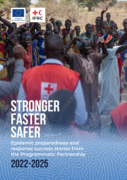
Epidemics and pandemics are some of the biggest threats to a safe and healthy world. But with effective preparedness and response measures, we can reduce their impacts and even stop them in their tracks.
Through the Programmatic Partnership with the European Union, 24 local Red Cross and Red Cres
...

In an era of constrained resources and tightening budgets, strategic prioritization in tuberculosis (TB) programming is more critical than ever. Countries must make informed decisions to allocate limited resources effectively - maximizing impact, preventing avoidable deaths, and sustaining progress
...

Global tuberculosis report 2025
recommended
The WHO Global tuberculosis report 2025 provides a comprehensive and up-to-date assessment of the TB epidemic and of progress in prevention, diagnosis and treatment of the disease, at global, regional and country levels. This is done in the context of global TB commitments, strategies and targets.
...

Abrupt reductions in international HIV assistance in 2025 have deepened existing funding shortfalls. The OECD estimates that external health assistance is projected to drop by 30–40% in 2025 compared with 2023, causing immediate and even more severe disruption to health services in low- and middle
...

The findings of the report are both urgent and devastating. At the current rate of progress, by 2040 we would still have 1.9 million new HIV infections and 990,000 AIDS-related deaths in children. But if funding for HIV prevention and treatment continues to fall as current trends suggest, the world
...

A job aid for cadres supporting adolescents living with HIV (ages 15-19) in Orphans and Vulnerable
Children (OVC) Programs

Program Considerations
