
Filter
776
Text search:
Containment
strategies
Featured
88
188
Language
Document type
275
169
160
76
59
15
12
7
1
1
1
Countries
41
39
37
33
23
19
18
18
17
16
15
15
15
13
13
12
12
11
10
8
8
8
8
8
8
8
7
7
7
6
6
6
5
5
4
4
4
4
4
4
3
3
3
3
3
3
3
3
2
2
2
2
2
2
2
2
2
2
2
2
2
2
2
2
2
1
1
1
1
1
1
1
1
1
1
1
1
1
1
1
1
1
1
1
1
1
1
1
Authors & Publishers
Publication Years
Category
303
53
35
32
11
10
8
Toolboxes
188
97
76
43
32
26
22
21
15
14
12
11
11
11
10
10
9
8
6
6
4
3
2
1

Available in English, French, Spanish, Russian, Chinese, Arabic and Portugues
Sub-Saharan African Journal of Medicine: Year : 2014 | Volume : 1 | Issue : 1 | Page : 1-14

Policy
25 February 2015 Vol 7 Issue 276 276fs8
Learning from the Use of Data, Information, and Digital Technologies in the West Africa Ebola Outbreak Response
Communication Risk in Public Health Emergencies
recommended
A WHO Guideline for Emergency Risk Communication (ERC) policy and practice.
Recent public health emergencies, such as the Ebola virus disease outbreak in West Africa (2014–2015), the emergence of the Zika virus syndrome in 2015–2016 and multi-country yellow fever outbreaks in Africa in 2016, h
...

Mission report: June 11-20, 2017

SITUATION ANALYSIS AND RECOMMENDATIONS
This practical manual is designed to support implementation of the World Health Organization (WHO) Guidelines on core components of infection prevention and control programmes at the national level, with special focus on countries with limited resources.
The Guidelines describe what is necessary
...
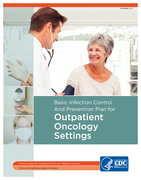
"This document has been developed for outpatient oncology
facilities to serve as a model for a basic infection
control and prevention plan. It contains policies
and procedures tailored to these settings to meet minimal
expectations of patient protections as described
in the CDC Guide to Infecti
...
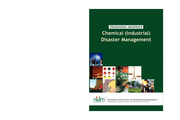
Key Features:
• Module Users: Disaster Management Trainers
• Training Targets: State Government and District
officials / Disaster Management Authorities / Disaster
Management Planners and Responders
• Training Duration: 5 working days (one week)
• Trainers Input: Multi-disciplinary
â€
...

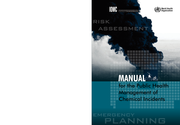
The purpose of the WHO Manual for the Public Health Management of Chemical Incidents is to provide a comprehensive overview of the principles and roles of public health in the management of chemical incidents and emergencies. While this information is provided for each phase of the emergency cycle,
...
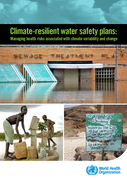
Long-term planning for an adequate and safe supply of drinking-water should be set in the context of growing external uncertainties arising from changes in the climate and environment. The water safety plan (WSP) process offers a systematic framework to manage these risks by considering the implica
...
In 2005, the World Health Organization (WHO) Member States adopted the revised International
Health Regulations (IHR) (2005). The Regulations provide a unique public health framework in the
form of obligations and recommendations that enable countries to better p
...

Overview: Risk communication and community engagement are essential for any disease outbreak response. This is particularly critical during outbreaks of Ebola which may create fear in the public and frontline responders alike due to severe presentation of symptoms, misunderstanding of the causes of
...

The Global Vaccine Action Plan (GVAP) 2011-2020, endorsed by Member States during the May 2012 World Health Assembly, has set ambitious targets to improve access to immunization and tackle vaccine-preventable diseases. This responsibility has been translated into firm commitments in February 2016, t
...
