
Filter
579
Text search:
Avert
Featured
Recommendations
47
New Publications
167
Language
Document type
No document type
291
Studies & Reports
126
Guidelines
65
Strategic & Response Plan
36
Manuals
29
Training Material
9
Situation Updates
8
Infographics
6
Fact sheets
6
Brochures
1
Resource Platforms
1
Online Courses
1
Countries / Regions
Global
43
Kenya
29
Ethiopia
25
India
22
Nigeria
12
Africa
11
Zambia
10
Sierra Leone
9
Uganda
9
Bangladesh
9
Myanmar / Burma
9
Yemen
9
South–East Asia Region
9
Asia
9
South Sudan
8
Philippines
7
Syria
7
Ukraine
7
Liberia
6
Ghana
6
Pakistan
6
Malawi
6
Senegal
5
Nepal
5
Tanzania
5
South Africa
5
Mali
4
Afghanistan
4
Namibia
4
Latin America and the Carribbean
4
Guinea
3
Congo, Democratic Republic of
3
Cameroon
3
Somalia
3
Germany
3
Cambodia
3
Sudan
3
East and Southern Africa
3
Western and Central Europe
3
Indonesia
2
Lesotho
2
Palestine
2
Burkina Faso
1
Niger
1
Togo
1
Iraq
1
Lebanon
1
Chad
1
Gambia
1
Rwanda
1
Mauritania
1
Mozambique
1
Central African Republic
1
Botswana
1
West and Central Africa
1
Middle East and North Africa
1
Western Pacific Region
1
Eastern Europe
1
Djibouti
1
Armenia
1
Tajikistan
1
Russia
1
Iran
1
Kyrgyzstan
1
Kazakhstan
1
Georgia
1
Vietnam
1
Authors & Publishers
Publication Years
Category
Countries
194
Clinical Guidelines
47
Key Resources
38
Women & Child Health
37
Public Health
28
Capacity Building
4
Pharmacy & Technologies
4
Toolboxes
HIV
82
COVID-19
53
Planetary Health
32
Conflict
27
TB
21
Mental Health
19
AMR
19
Global Health Education
17
Caregiver
15
Ebola & Marburg
13
Rapid Response
12
Health Financing Toolbox
12
Malaria
11
Refugee
10
Natural Hazards
9
NTDs
9
NCDs
9
2.0 Rapid Response
8
Specific Hazards
6
Polio
5
Disability
4
Pharmacy
4
Cholera
2
Zika
2
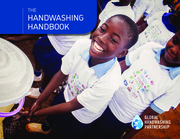
A guide for developing a hygiene promotion program to increase handwashing with soap
The WHO Framework for the clinical evaluation of devices for male circumcision
outlines a multi-phase process to ensure the safety, efficacy, and acceptability of new devices, especially for use in resource-limited settings
A Policy analysis

Cardiovascular disease (CVD) is the leading cause of global deaths, with the majority occurring in low- and middle-income countries (LMIC). The primary and secondary prevention of CVD is suboptimal throughout the world, but the evidence-practice gaps are much more pronounced in LMIC. Barriers at the
...

Latin America and the Caribbean is characterized by a matrix of social inequality whose axes —such as
socioeconomic stratum, gender, stage in the life cycle, ethnicity and race, territory, disability, and immigration
status— create multiple, often concurrent, situations of exclusion and discri
...
Overcoming HIV-related stigma and discrimination in health- care settings and beyond
UNAIDS 2017 | REFERENCE

A guide to facilitating community-managed disaster risk reduction in the Horn of Africa.
This manual describes how to help communities implement disaster risk reduction activities. It was written for development workers and community-based organizations in the Horn of Africa, but practitioners can
...

The Global Programme on Tuberculosis & Lung Health of the World Health Organization (WHO/GTB) is now combining all current recommendations into one overall set of consolidated guidelines on TB. The guidelines contain recommendations pertaining to all areas related to the programmatic management of T
...
Prepared by the Independent Panel for Pandemic Preparedness and Response for the WHO Executive Board, January 2021
“The world was not as prepared as it should have been, and it must do better,” concludes a WHO panel reviewing the pandemic response "

Available in English, French, Spanish, Russian, Chinese, Arabic and Portugues

The document contains preliminary report on all aspects of WHO’s response in the Ebola outbreak. WHO Member States will discuss the report at the sixty-eighth World Health Assembly.
Getting to Zero
Sustainable Financing of National HIV Responses


The Global Health Expenditure Report delves into the intricate landscape of global economies and health systems. This year, it focuses on health spending in 2022, the third year of the COVID-19 pandemic. It shows how countries around the world responded to the health and economic shocks of the pande
...

For this report, the Task Force commissioned
additional background papers on health taxes to
update the evidence, assess short-term revenue
potential, and understand the role of health taxes
in the current era of multiple crises. We find that
health taxes continue to be underutilized despite th
...

The COVID-19 pandemic exposed critical gaps in the global response to health crises, particularly in the financing of pandemic prevention, preparedness, response, recovery, and reconstruction. This chapter presents a comprehensive framework for pandemic financing that spans the entire pandemic cycle
...
