
Filter
2490
Text search:
USAID
&
WHO
Featured
146
877
Language
2254
121
58
42
19
13
10
7
5
5
4
4
3
3
2
2
2
2
2
2
2
2
2
2
2
2
2
2
2
2
2
2
2
2
2
2
2
2
2
1
1
1
1
1
1
1
1
1
1
1
1
1
1
1
1
1
1
1
1
1
1
1
1
1
1
1
1
1
1
1
1
1
1
1
1
1
1
1
1
1
1
1
1
1
1
1
1
1
1
1
1
1
1
1
1
1
1
1
1
Document type
1720
279
206
110
63
47
28
19
7
5
3
2
1
Countries / Regions
127
100
99
90
88
86
79
77
67
64
63
55
49
45
39
39
38
37
36
35
30
29
29
27
25
25
25
25
25
24
20
19
17
17
16
15
14
13
13
12
11
10
9
9
8
8
7
7
7
6
6
6
5
5
5
4
4
4
4
4
4
4
3
3
3
3
3
3
3
3
2
2
2
2
2
2
2
2
2
2
2
2
2
2
2
2
2
1
1
1
1
1
1
1
1
1
1
1
1
1
1
1
1
1
1
1
1
1
Authors & Publishers
222
182
114
104
57
50
45
42
38
34
32
29
24
18
17
16
15
15
15
15
14
14
14
13
13
13
13
12
12
11
11
11
11
11
11
10
9
9
9
9
9
9
8
8
8
8
8
7
7
7
7
7
7
6
6
6
6
6
6
6
6
6
6
6
6
6
6
5
5
5
5
5
5
5
5
5
5
5
5
5
5
5
5
5
5
5
5
5
5
5
5
5
5
5
5
4
4
4
4
4
4
4
4
4
4
4
4
4
4
4
4
4
4
4
4
4
4
4
4
4
4
4
4
4
4
4
3
3
3
3
3
3
3
3
3
3
3
3
3
3
3
3
3
3
3
3
3
3
3
3
3
3
3
3
3
3
3
3
3
3
3
3
3
3
3
3
3
3
3
3
3
3
3
3
3
3
3
3
3
3
3
3
3
3
3
3
3
3
3
3
3
3
3
3
3
3
3
2
2
2
2
2
2
2
2
2
2
2
2
2
2
2
2
2
2
2
2
2
2
2
2
2
2
2
2
2
2
2
2
2
2
2
2
2
2
2
2
2
2
2
2
2
2
2
2
2
2
2
2
2
2
2
2
2
2
2
2
2
2
2
2
2
2
2
2
2
2
2
2
2
2
2
2
2
2
2
2
2
2
2
2
2
2
2
2
2
2
2
2
2
2
2
2
2
2
2
2
2
2
2
2
2
2
2
2
2
2
2
2
2
2
2
2
2
2
2
2
2
2
2
2
2
2
2
2
2
2
2
2
2
2
2
2
2
2
2
2
2
2
2
2
2
2
2
2
2
2
2
2
2
2
2
2
2
2
2
2
2
2
2
2
2
2
2
2
2
2
2
2
2
2
2
2
2
2
2
2
1
1
1
1
1
1
1
1
1
1
1
1
1
1
1
1
1
1
1
1
1
1
1
1
1
1
1
1
1
1
1
1
1
1
1
1
1
1
1
1
1
1
1
1
1
1
1
1
1
1
1
1
1
1
1
1
1
1
1
1
1
1
1
1
1
1
1
1
1
1
1
1
1
1
1
1
1
1
1
1
1
1
1
1
1
1
1
1
1
1
1
1
1
1
1
1
1
1
1
1
1
1
1
1
1
1
1
1
1
1
1
1
1
1
1
1
1
1
1
1
1
1
1
1
1
1
1
1
1
1
1
1
1
1
1
1
1
1
1
1
1
1
1
1
1
1
1
1
1
1
1
1
1
1
1
1
1
1
1
1
1
1
1
1
1
1
1
1
1
1
1
1
1
1
1
1
1
1
1
1
1
1
1
1
1
1
1
1
1
1
1
1
1
1
1
1
1
1
1
1
1
1
1
1
1
1
1
1
1
1
1
1
1
1
1
1
1
1
1
1
1
1
1
1
1
1
1
1
1
1
1
1
1
1
1
1
1
1
1
1
1
1
1
1
1
1
1
1
1
1
1
1
1
1
1
1
1
1
1
1
1
1
1
1
1
1
1
1
1
1
1
1
1
1
1
1
1
1
1
1
1
1
1
1
1
1
1
1
1
1
1
1
1
1
1
1
1
1
1
1
1
1
1
1
1
1
1
1
1
1
1
1
1
1
1
1
1
1
1
1
1
1
1
1
1
1
1
1
1
1
1
1
1
1
1
1
1
1
1
1
1
1
1
1
1
1
1
1
1
1
1
1
1
1
1
1
1
1
1
1
1
1
1
1
1
1
1
1
1
1
1
1
1
1
1
1
1
1
1
1
1
1
1
1
1
1
1
1
1
1
1
1
1
1
1
1
1
1
1
1
1
1
1
1
1
1
1
1
1
1
1
1
1
1
1
1
1
1
1
1
1
1
1
1
1
1
1
1
1
1
1
1
1
1
1
1
1
1
1
1
1
1
1
1
1
1
1
1
1
1
1
1
1
1
1
1
1
1
1
1
1
1
1
1
1
1
1
1
1
1
1
1
1
1
1
1
1
1
1
1
1
1
1
1
1
1
1
1
1
1
1
1
1
1
1
1
1
1
1
1
1
1
1
1
1
1
1
1
1
1
1
1
1
1
1
1
1
1
1
1
1
1
1
1
1
1
1
1
1
1
1
1
1
1
1
1
1
1
1
1
1
1
1
1
1
1
1
1
1
1
1
1
1
1
1
1
1
1
1
1
1
1
1
1
1
1
1
1
1
1
1
1
1
1
1
1
1
1
1
1
1
1
1
1
1
1
1
1
1
1
1
1
1
1
1
1
1
1
1
1
1
1
1
1
1
1
1
1
1
1
1
1
1
1
1
1
1
1
1
1
1
1
1
1
1
1
1
1
1
1
1
1
1
1
1
1
1
1
1
1
1
1
1
1
1
1
1
1
1
1
1
1
1
1
1
1
1
1
1
1
1
1
1
1
1
1
1
1
1
1
1
1
1
1
1
1
1
1
1
1
1
1
1
1
1
1
1
1
1
1
1
1
1
1
1
1
1
1
1
1
1
1
1
1
1
1
1
1
1
1
1
1
1
1
1
1
1
1
1
1
1
1
1
1
1
1
1
1
1
1
1
1
1
1
1
1
1
1
1
1
1
1
1
1
1
1
1
1
1
1
1
1
1
1
1
1
1
1
1
1
1
1
1
1
1
1
1
1
1
1
1
1
1
1
1
1
1
1
1
1
1
1
1
1
1
1
1
1
1
1
1
1
1
1
1
1
1
1
1
1
1
1
1
1
1
1
1
1
1
1
1
1
1
1
1
1
1
1
1
1
1
1
1
1
1
1
1
1
1
1
1
1
1
1
1
1
1
1
1
1
1
1
1
1
1
1
1
1
1
1
1
1
1
1
1
1
1
1
1
1
1
1
1
1
1
1
1
1
1
1
1
1
1
1
1
1
1
1
1
1
1
1
1
1
1
1
1
1
1
1
1
1
1
1
1
1
1
1
1
1
1
1
1
1
1
1
1
1
1
1
1
1
1
1
1
1
1
1
1
1
1
1
1
1
1
1
1
1
1
1
1
1
1
1
1
1
1
1
1
1
1
1
1
1
1
1
1
1
1
1
1
1
1
1
1
1
1
1
1
1
1
1
1
1
1
1
1
1
1
1
1
1
1
1
1
1
1
1
1
1
1
1
1
1
1
1
1
1
1
1
1
1
1
1
1
1
1
1
1
1
1
1
1
1
1
1
1
1
1
1
1
1
1
1
1
1
1
1
1
1
1
1
1
1
1
1
1
1
1
1
1
1
1
1
1
1
1
1
1
1
1
1
1
1
1
1
1
1
1
1
1
1
1
1
1
1
1
1
1
1
1
1
1
1
1
1
1
1
1
1
1
1
1
1
1
1
1
1
1
1
1
1
1
1
1
1
1
1
1
1
1
1
1
1
1
1
1
1
1
1
1
1
1
1
1
1
1
1
1
1
1
1
1
1
1
1
1
1
1
1
1
1
1
1
1
1
1
1
1
1
1
1
1
1
1
1
1
1
1
1
1
1
1
1
1
1
1
1
1
1
1
1
1
1
1
1
1
1
1
1
1
1
1
1
1
1
1
1
1
1
1
1
1
1
1
1
1
1
1
1
1
1
1
1
1
1
1
1
1
1
1
1
1
1
1
1
1
1
1
1
1
1
1
1
1
1
1
1
1
1
1
1
1
1
1
1
1
1
1
1
1
1
1
1
1
1
1
1
1
1
1
1
1
1
1
1
1
1
1
1
1
1
1
1
1
1
1
1
1
1
1
1
1
1
1
1
1
1
1
1
1
1
1
1
1
1
1
1
1
1
1
1
1
1
1
1
1
1
1
1
1
1
1
1
1
1
1
1
1
1
1
1
1
1
1
1
1
1
1
1
1
1
1
1
1
1
1
1
1
1
1
1
1
1
1
1
1
1
1
1
1
1
1
1
1
1
1
1
1
1
1
1
1
1
1
1
1
1
1
1
1
1
1
1
1
1
1
1
1
1
1
1
1
1
1
1
1
1
1
1
1
1
1
1
1
1
1
1
1
1
1
1
1
1
1
1
1
1
1
1
1
1
1
1
1
1
1
1
1
1
1
1
1
1
1
1
1
1
1
1
1
1
1
1
1
1
1
1
1
1
1
1
1
1
1
1
1
1
1
1
1
1
1
1
1
1
1
1
1
1
1
1
1
1
1
1
1
1
1
1
1
1
1
1
1
1
1
1
1
1
1
1
1
1
1
1
1
1
1
1
1
1
1
1
1
1
1
1
1
1
1
1
1
1
1
1
1
1
1
1
1
1
1
1
1
1
1
1
1
1
1
1
1
1
1
1
1
1
1
1
1
1
1
1
1
1
1
1
1
1
1
1
1
1
1
1
1
1
1
1
1
1
1
1
1
1
1
1
1
1
1
1
1
1
1
1
1
1
1
1
1
1
1
1
1
1
1
1
1
1
1
1
1
1
1
1
1
1
1
1
1
1
1
1
1
1
1
1
1
1
1
1
1
1
1
1
1
1
1
1
1
1
1
1
1
1
1
1
1
1
1
1
1
1
1
1
1
1
1
1
1
1
1
1
1
1
1
1
1
1
1
1
1
1
1
1
1
1
1
1
1
1
1
1
1
1
1
1
1
1
1
1
1
1
1
1
1
1
1
1
1
1
1
1
1
1
1
1
1
1
1
1
1
1
1
1
1
1
1
1
1
1
1
1
1
1
1
1
1
1
1
1
1
1
1
1
1
1
1
1
1
1
1
1
1
1
1
1
1
1
1
1
1
1
1
1
1
1
1
1
1
1
1
1
1
1
1
1
1
1
1
1
1
1
1
1
1
1
1
1
1
1
1
1
1
1
1
1
1
1
1
1
1
1
1
1
1
1
1
1
1
1
1
1
1
1
1
1
1
1
1
1
1
1
1
1
1
1
1
1
1
1
1
1
1
1
1
1
1
1
1
1
1
1
1
1
1
1
1
1
1
1
1
1
1
1
1
1
1
1
1
1
1
1
Publication Years
423
1832
229
6
Category
1302
185
145
131
111
63
24
Toolboxes
226
181
85
70
69
65
48
46
41
40
38
36
31
30
30
28
27
19
18
11
10
7
4
2
1
1
Policy Brief. More languages available here https://apps.who.int/iris/handle/10665/179517
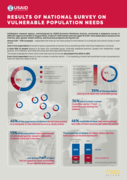
InfoSapiens research agency, commissioned by USAID Economic Resilience Activity, conducted a telephone survey in different regions of Ukraine in August 2022. A total of 1,000 women and men aged 16 to 60+ were asked about access to the Internet, jobs
...
, gender-based violence, and business prospects during the war.
Almost half – 45% of people – responded that they do not have access to the Internet or a computer and cannot study or work online.
One in five respondents is forced to save on groceries or borrow to buy something other than food (telephone, furniture).
more

This global progress report attempts to lay the groundwork for the kind of accelerated action needed. Section 1 presents key data, trends and developments in women’s, children’s and adolescents’ health and well-being. That is followed in Section 2 by a deeper dive into the impact of the COVID-
...
19 pandemic, which has created and contributed to many threats and challenges to progress for women, children and adolescents. In Section 3, the report concludes with recommendations for accelerating progress towards the achievement of the 2030 Agenda even in such challenging times, with an emphasis on partnership
and clear-eyed recognition of the consequences of failing to do better.
more
This policy brief aims to provide a review of the current progress on implementing the Kenya national action plan on AMR, identifies critical gaps, and highlights findings to accelerate further progress in the human health sector. The target audience includes all those concerned with implementing ac
...
tions to combat antimicrobial resistance in Kenya.
more

This Guide responds to requests from practitioners and country teams who have learned about the Nurturing care framework and want to understand how to adapt health and nutrition services to be supportive of nurturing care and strengthen caregiversâ€
...
™ capacity.
more
This brochure contains the most relevant information on the Zero Maternal Deaths from Haemorrhage initiative, promoted by CLAP/PAHO.

The 2030 health-related Sustainable Development Goals call on countries to end AIDS as a public health threat and also to achieve universal health coverage. The World Health Organization (WHO) promotes primary health care (PHC) as the key mechanism
...
for achieving universal health coverage, and the PHC approach is also essential for ending AIDS and reaching other Sustainable Development Goal targets.
The PHC approach is defined as a whole-of-society approach to health that aims to maximize the level and distribution of health and well-being through three components: (1) primary care and essential public health functions as the core of integrated health services; (2) multisectoral policy and action; and (3) empowered people and communities.
This publication helps decision-makers to consider and optimize the synergies between existing and future assets and investments intended for both PHC and disease-specific responses, including HIV. Specifically, it aims to:
• provide guidance to policy-makers, health system managers and programmatic leads from both PHC and HIV backgrounds regarding opportunities to jointly advance their respective efforts to strengthen PHC and end AIDS as a public health threat; and
• provide a resource for all stakeholders who seek to contribute to strengthening PHC and ending AIDS as a public health threat in a synergistic manner, including people living with HIV, members of key and vulnerable populations, community and civil society representatives, people working in all areas of health systems, researchers, funders and private-sector decision-makers.
more

WHO today released its first roadmap to tackle postpartum haemorrhage (PPH) – defined as excessive bleeding after childbirth - which affects millions of women annually and is the world’s leading cause of maternal deaths.
Despite being prevent
...
able and treatable, PPH results in around 70 000 deaths every year. For those who survive, it can cause disabilities and psychological trauma that last for years.
“Severe bleeding in childbirth is one of the most common causes of maternal mortality, yet it is highly preventable and treatable,” said Dr Tedros Adhanom Ghebreyesus, WHO Director-General. “This new roadmap charts a path forward to a world in which more women have a safe birth and a healthy future with their families.”
The Roadmap aims to help countries address stark differences in survival outcomes from PPH, which reflect major inequities in access to essential health services. Over 85% of deaths from PPH happen in sub-Saharan Africa and South Asia. Risk factors include anaemia, placental abnormalities, and other complications in pregnancy such as infections and pre-eclampsia.
Many risk factors can be managed if there is quality antenatal care, including access to ultrasound, alongside effective monitoring in the hours after birth. If bleeding starts, it also needs to be detected and treated extremely quickly. Too often, however, health facilities lack necessary healthcare workers or resources, including lifesaving commodities such as oxytocin, tranexamic acid or blood for transfusions.
“Addressing postpartum haemorrhage needs a multipronged approach focusing on both prevention and response - preventing risk factors and providing immediate access to treatments when needed - alongside broader efforts to strengthen women’s rights,” said Dr Pascale Allotey, WHO Director for Sexual and Reproductive Health and HRP, the UN’s special programme on research development and training in human reproduction. “Every woman, no matter where she lives, should have access to timely, high quality maternity care, with trained health workers, essential equipment and shelves stocked with appropriate and effective commodities – this is crucial for treating postpartum bleeding and reducing maternal deaths.”
more
Anaemia is a serious global public health problem that particularly affects young children, menstruating adolescent girls and women, and pregnant and postpartum women. It is a condition in which the number of red blood cells or the haemoglobin concentration within them is lower than normal, affectin
...
g the blood’s ability to carry oxygen to the body’s tissues.
To reliably monitor the prevalence of anaemia at a population level, it is vital to measure the haemoglobin concentration in an accurate and precise way. In large-scale surveys, however, haemoglobin is most commonly measured using single-drop capillary blood specimens in point-of-care devices. Emerging evidence suggests that the use of single-drop capillary blood can introduce random and/or systematic errors, which may lead to inaccurate estimates, complicating effective anaemia programming.
This technical brief describes the current best practices for haemoglobin measurement, providing guidance to help plan or implement field surveys to assess anaemia at a population level. Continuing work to review emerging evidence is led by members of the WHO-UNICEF Technical Expert Advisory group on nutrition Monitoring (TEAM).
more
Developed under the USAID-supported HRH2030 Capacity Building for Malaria (CBM) initiative, this guide offers a comprehensive framework for advising National Malaria Control Programmes (NMCPs) through the use of long-term technical advisors (LTTAs).
...
It sets out key practices for implementing partners and advisors, covering advisor selection, onboarding, contextual analysis and capacity-building strategies at individual and organisational levels. It emphasises collaborative work planning, continuous performance monitoring, stakeholder engagement and the use of assessment tools such as the Capability Maturity Model (CMM) and the Organisational Development Assessment (ODA). The guide is designed to strengthen the leadership and operational effectiveness of NMCPs, promoting sustainable improvements in malaria control through structured mentorship, knowledge transfer and strategic partnerships.
more
The MalariaCare Toolkit. Tools for maintaining high-quality malaria
case management services.
Developed by MalariaCare, this module supports health supervisors in improving the management of severe malaria by providing focused, case-based learning and mentorship. It provides clinical supervisors w
...
ith the necessary tools to guide healthcare providers during outreach training and supportive supervision (OTSS) visits. The module is designed to strengthen diagnostic and treatment skills, particularly in areas that are often overlooked, such as severe malaria. It uses real-life case studies and guided discussions to assess and enhance clinical understanding. Its flexible structure can be adapted based on the knowledge level of the provider, promoting effective, practical learning in healthcare settings.
Accessed on 03/07/2025.
more

a landscape report of voluntary medical male circumcision priority countries.
This report provides the findings from the baseline implementation of these tools in 15 VMMC priority countries in 2021. It is intended for VMMC national programme leaders and implementing and global partners. Its goals a
...
re to describe the baseline status of national VMMC programmes with respect to sustainability, identify programme strengths and weaknesses, and lay out a preliminary vision of the path towards sustainability
more
Following review of the latest evidence, WHO recommends that TB-LAMP can be used as a replacement for microscopy for the diagnosis of pulmonary TB in adults with signs and symptoms of TB. It can also be considered as a follow-on test to microscopy i
...
n adults with signs and symptoms of pulmonary TB, especially when further testing of sputum smear-negative specimens is necessary.
more
A Step-by-Step Guide.
It is intended for health planners, dengue or vector control programme managers and individuals, nongovernmental organizations (NGOs) and other agencies with interests and/or expertise in developing biological, chemical, environmental and communication interventions to prevent
...
and control dengue fever.
more
This handbook builds on lessons learned from surveys implemented 2015-2017 and advice provided by the Global task force on TB patient cost surveys. It provides a standardized methodology for conducting health facility-based cross-sectional surveys to assess the direct and indirect costs incurred by
...
TB patients and their households. In addition, it provides recommendations on results dissemination, engaging across sectors in policy dialogue and enabling action and related research for effective modifications in care delivery models, in patient support, and wider cross-sectoral interventions.
more
Report of a regional workshop, New Delhi, India, 29–30 September 2014
To reduce the burden of cardiovascular disease and its subsequent problems, the WHO Regional Office for South-East Asia organized a regional workshop on sodium intake and i ... odized salt for Member States in the South-East Asia Region. The general objective of the workshop was to strengthen an integrated approach for sodium reduction and salt iodization programmes in the Member States of the Region. The specific objectives included reviewing the current sodium reduction and salt iodization strategies in the Member States of South-East Asia, provide training to the participants in standardized approaches for dietary estimation of salt/sodium and urinary iodine estimation. more
To reduce the burden of cardiovascular disease and its subsequent problems, the WHO Regional Office for South-East Asia organized a regional workshop on sodium intake and i ... odized salt for Member States in the South-East Asia Region. The general objective of the workshop was to strengthen an integrated approach for sodium reduction and salt iodization programmes in the Member States of the Region. The specific objectives included reviewing the current sodium reduction and salt iodization strategies in the Member States of South-East Asia, provide training to the participants in standardized approaches for dietary estimation of salt/sodium and urinary iodine estimation. more
2nd edition. The 2018 Roadmap incorporates an additional critical population: adolescents. Despite making up 1 in 6 of the world’s people, adolescents have been largely overlooked as global momentum to address TB has grown. Spanning the ages of 10–19 years, adolescents are both at risk of TB and
...
represent an important population for TB control. They often present with infectious TB and frequently have multiple contacts in congregate settings, such as schools and other educational institutions. Nevertheless, few countries capture TB data in suitably age-disaggregated ways to allow full understanding of its impact in this group and even fewer provide the adolescent-friendly services our young people need to access diagnosis and care.
more

This annual report highlights the work of the WHO from January to June 2021 ( December 2021). The activities featured herein are by no means exhausted but implemented with technical and financial support through
...
WHO in Nigeria; facilitated by its presence at all levels of governance (national, state, local government, and wards).
more

In 2008 the Ministry of Health and Social Services (MOHSS) commissioned a national health and social service system review which found that although some progress has been made in primary health care, provision of health services did not go beyond the health facilities, irrespective of the fast dist
...
ances between the Health facilities and community. The review then recommended that health services should be extended in a structured manner to communities through the establishment of paid health workers.
more
