
Filter
5061
Text search:
medical
equipment
Featured
573
1387
Language
4827
137
102
54
49
34
24
17
12
10
7
6
6
5
4
3
3
3
3
3
2
2
2
2
2
2
2
2
2
2
2
2
2
2
1
1
1
1
1
1
1
1
1
1
1
1
1
1
1
1
1
1
1
1
1
1
Document type
2674
857
680
310
220
100
94
68
21
18
9
4
3
1
Countries / Regions
259
185
176
165
152
130
128
123
108
105
89
83
81
80
78
78
77
76
73
62
58
54
54
53
47
46
43
40
40
37
35
34
33
33
33
32
31
29
29
27
27
26
25
23
18
18
17
17
17
16
16
14
14
14
13
13
13
13
12
12
12
12
12
11
10
10
10
10
10
9
9
8
8
8
8
7
7
6
6
6
6
6
6
5
5
5
4
4
4
4
4
4
4
4
4
4
4
3
3
3
3
3
3
3
2
2
2
2
2
2
2
2
2
2
2
2
2
1
1
1
1
1
1
1
1
1
1
1
1
1
1
1
1
1
1
1
1
1
1
Authors & Publishers
705
247
141
125
102
86
85
80
64
45
38
35
31
30
30
29
29
27
24
22
22
21
21
21
20
20
19
19
19
19
18
18
18
18
17
17
16
16
15
14
14
14
14
13
13
13
13
13
13
13
13
13
12
12
12
12
12
12
12
12
12
11
11
11
11
11
11
11
10
10
10
10
10
10
10
10
9
9
9
9
9
8
8
8
8
8
8
8
8
7
7
7
7
7
7
7
7
7
7
7
7
7
7
7
7
7
6
6
6
6
6
6
6
6
6
6
6
6
6
6
6
6
6
6
6
6
6
6
6
6
5
5
5
5
5
5
5
5
5
5
5
5
5
5
5
5
5
5
5
5
5
5
5
5
5
5
5
5
5
5
5
5
5
5
5
5
4
4
4
4
4
4
4
4
4
4
4
4
4
4
4
4
4
4
4
4
4
4
4
4
4
4
4
4
4
4
4
4
4
4
4
4
4
4
4
4
4
4
4
4
4
4
4
4
4
4
4
4
4
3
3
3
3
3
3
3
3
3
3
3
3
3
3
3
3
3
3
3
3
3
3
3
3
3
3
3
3
3
3
3
3
3
3
3
3
3
3
3
3
3
3
3
3
3
3
3
3
3
3
3
3
3
3
3
3
3
3
3
3
3
3
3
3
3
3
3
3
3
3
3
3
3
3
3
3
3
3
3
3
3
3
3
3
3
3
3
3
3
3
3
3
3
3
3
3
3
2
2
2
2
2
2
2
2
2
2
2
2
2
2
2
2
2
2
2
2
2
2
2
2
2
2
2
2
2
2
2
2
2
2
2
2
2
2
2
2
2
2
2
2
2
2
2
2
2
2
2
2
2
2
2
2
2
2
2
2
2
2
2
2
2
2
2
2
2
2
2
2
2
2
2
2
2
2
2
2
2
2
2
2
2
2
2
2
2
2
2
2
2
2
2
2
2
2
2
2
2
2
2
2
2
2
2
2
2
2
2
2
2
2
2
2
2
2
2
2
2
2
2
2
2
2
2
2
2
2
2
2
2
2
2
2
2
2
2
2
2
2
2
2
2
2
2
2
2
2
2
2
2
2
2
2
2
2
2
2
2
2
2
2
2
2
2
2
2
2
2
2
2
2
2
2
2
2
2
2
2
2
2
2
2
2
2
2
2
2
2
2
2
2
2
2
2
2
2
2
2
2
2
2
2
2
2
2
2
2
2
2
2
2
2
2
2
2
2
2
2
2
2
2
2
2
2
2
2
2
2
2
2
2
2
2
2
2
2
2
2
2
2
2
2
2
2
2
2
2
2
2
2
2
2
2
2
2
2
2
2
2
2
2
2
2
2
2
2
2
2
2
2
2
2
2
2
2
2
1
1
1
1
1
1
1
1
1
1
1
1
1
1
1
1
1
1
1
1
1
1
1
1
1
1
1
1
1
1
1
1
1
1
1
1
1
1
1
1
1
1
1
1
1
1
1
1
1
1
1
1
1
1
1
1
1
1
1
1
1
1
1
1
1
1
1
1
1
1
1
1
1
1
1
1
1
1
1
1
1
1
1
1
1
1
1
1
1
1
1
1
1
1
1
1
1
1
1
1
1
1
1
1
1
1
1
1
1
1
1
1
1
1
1
1
1
1
1
1
1
1
1
1
1
1
1
1
1
1
1
1
1
1
1
1
1
1
1
1
1
1
1
1
1
1
1
1
1
1
1
1
1
1
1
1
1
1
1
1
1
1
1
1
1
1
1
1
1
1
1
1
1
1
1
1
1
1
1
1
1
1
1
1
1
1
1
1
1
1
1
1
1
1
1
1
1
1
1
1
1
1
1
1
1
1
1
1
1
1
1
1
1
1
1
1
1
1
1
1
1
1
1
1
1
1
1
1
1
1
1
1
1
1
1
1
1
1
1
1
1
1
1
1
1
1
1
1
1
1
1
1
1
1
1
1
1
1
1
1
1
1
1
1
1
1
1
1
1
1
1
1
1
1
1
1
1
1
1
1
1
1
1
1
1
1
1
1
1
1
1
1
1
1
1
1
1
1
1
1
1
1
1
1
1
1
1
1
1
1
1
1
1
1
1
1
1
1
1
1
1
1
1
1
1
1
1
1
1
1
1
1
1
1
1
1
1
1
1
1
1
1
1
1
1
1
1
1
1
1
1
1
1
1
1
1
1
1
1
1
1
1
1
1
1
1
1
1
1
1
1
1
1
1
1
1
1
1
1
1
1
1
1
1
1
1
1
1
1
1
1
1
1
1
1
1
1
1
1
1
1
1
1
1
1
1
1
1
1
1
1
1
1
1
1
1
1
1
1
1
1
1
1
1
1
1
1
1
1
1
1
1
1
1
1
1
1
1
1
1
1
1
1
1
1
1
1
1
1
1
1
1
1
1
1
1
1
1
1
1
1
1
1
1
1
1
1
1
1
1
1
1
1
1
1
1
1
1
1
1
1
1
1
1
1
1
1
1
1
1
1
1
1
1
1
1
1
1
1
1
1
1
1
1
1
1
1
1
1
1
1
1
1
1
1
1
1
1
1
1
1
1
1
1
1
1
1
1
1
1
1
1
1
1
1
1
1
1
1
1
1
1
1
1
1
1
1
1
1
1
1
1
1
1
1
1
1
1
1
1
1
1
1
1
1
1
1
1
1
1
1
1
1
1
1
1
1
1
1
1
1
1
1
1
1
1
1
1
1
1
1
1
1
1
1
1
1
1
1
1
1
1
1
1
1
1
1
1
1
1
1
1
1
1
1
1
1
1
1
1
1
1
1
1
1
1
1
1
1
1
1
1
1
1
1
1
1
1
1
1
1
1
1
1
1
1
1
1
1
1
1
1
1
1
1
1
1
1
1
1
1
1
1
1
1
1
1
1
1
1
1
1
1
1
1
1
1
1
1
1
1
1
1
1
1
1
1
1
1
1
1
1
1
1
1
1
1
1
1
1
1
1
1
1
1
1
1
1
1
1
1
1
1
1
1
1
1
1
1
1
1
1
1
1
1
1
1
1
1
1
1
1
1
1
1
1
1
1
1
1
1
1
1
1
1
1
1
1
1
1
1
1
1
1
1
1
1
1
1
1
1
1
1
1
1
1
1
1
1
1
1
1
1
1
1
1
1
1
1
1
1
1
1
1
1
1
1
1
1
1
1
1
1
1
1
1
1
1
1
1
1
1
1
1
1
1
1
1
1
1
1
1
1
1
1
1
1
1
1
1
1
1
1
1
1
1
1
1
1
1
1
1
1
1
1
1
1
1
1
1
1
1
1
1
1
1
1
1
1
1
1
1
1
1
1
1
1
1
1
1
1
1
1
1
1
1
1
1
1
1
1
1
1
1
1
1
1
1
1
1
1
1
1
1
1
1
1
1
1
1
1
1
1
1
1
1
1
1
1
1
1
1
1
1
1
1
1
1
1
1
1
1
1
1
1
1
1
1
1
1
1
1
1
1
1
1
1
1
1
1
1
1
1
1
1
1
1
1
1
1
1
1
1
1
1
1
1
1
1
1
1
1
1
1
1
1
1
1
1
1
1
1
1
1
1
1
1
1
1
1
1
1
1
1
1
1
1
1
1
1
1
1
1
1
1
1
1
1
1
1
1
1
1
1
1
1
1
1
1
1
1
1
1
1
1
1
1
1
1
1
1
1
1
1
1
1
1
1
1
1
1
1
1
1
1
1
1
1
1
1
1
1
1
1
1
1
1
1
1
1
1
1
1
1
1
1
1
1
1
1
1
1
1
1
1
1
1
1
1
1
1
1
1
1
1
1
1
1
1
1
1
1
1
1
1
1
1
1
1
1
1
1
1
1
1
1
1
1
1
1
1
1
1
1
1
1
1
1
1
1
1
1
1
1
1
1
1
1
1
1
1
1
1
1
1
1
1
1
1
1
1
1
1
1
1
1
1
1
1
1
1
1
1
1
1
1
1
1
1
1
1
1
1
1
1
1
1
1
1
1
1
1
1
1
1
1
1
1
1
1
1
1
1
1
1
1
1
1
1
1
1
1
1
1
1
1
1
1
1
1
1
1
1
1
1
1
1
1
1
1
1
1
1
1
1
1
1
1
1
1
1
1
1
1
1
1
1
1
1
1
1
1
1
1
1
1
1
1
1
1
1
1
1
1
1
1
1
1
1
1
1
1
1
1
1
1
1
1
1
1
1
1
1
1
1
1
1
1
1
1
1
1
1
1
1
1
1
1
1
1
1
1
1
1
1
1
1
1
1
1
1
1
1
1
1
1
1
1
1
1
1
1
1
1
1
1
1
1
1
1
1
1
1
1
1
1
1
1
1
1
1
1
1
1
1
1
1
1
1
1
1
1
1
1
1
1
1
1
1
1
1
1
1
1
1
1
1
1
1
1
1
1
1
1
1
1
1
1
1
1
1
1
1
1
1
1
1
1
1
1
1
1
1
1
1
1
1
1
1
1
1
1
1
1
1
1
1
1
1
1
1
1
1
1
1
1
1
1
1
1
1
1
1
1
1
1
1
1
1
1
1
1
1
1
1
1
1
1
1
1
1
1
1
1
1
1
1
1
1
1
1
1
1
1
1
1
1
1
1
1
1
1
1
1
1
1
1
1
1
1
1
1
1
1
1
1
1
1
1
1
1
1
1
1
1
1
1
1
1
1
1
1
1
1
1
1
1
1
1
1
1
1
1
1
1
1
1
1
1
1
1
1
1
1
1
1
1
1
1
1
1
1
1
1
1
1
1
1
1
1
1
1
1
1
1
1
1
1
1
1
1
1
1
1
1
1
1
1
1
1
1
1
1
1
1
1
1
1
1
1
1
1
1
1
1
1
1
1
1
1
1
1
1
1
1
1
1
1
1
1
1
1
1
1
1
1
1
1
1
1
1
1
1
1
1
1
1
1
1
1
1
1
1
1
1
1
1
1
1
1
1
1
1
1
1
1
1
1
1
1
1
1
1
1
1
1
1
1
1
1
1
1
1
1
1
1
1
1
1
1
1
1
1
1
1
1
1
1
1
1
1
1
1
1
1
1
1
1
1
1
1
1
1
1
1
1
1
1
1
1
1
1
1
1
1
1
1
1
1
1
1
1
1
1
1
1
1
1
1
1
1
1
1
1
1
1
1
1
1
1
1
1
1
1
1
1
1
1
1
1
1
1
1
1
1
1
1
1
1
1
1
1
1
1
1
1
1
1
1
1
1
1
1
1
1
1
1
1
1
1
1
1
1
1
1
1
1
1
1
1
1
1
1
1
1
1
1
1
1
1
1
1
1
1
1
1
1
1
1
1
1
1
1
1
1
1
1
1
1
1
1
1
1
1
1
1
1
1
1
1
1
1
1
1
1
1
1
1
1
1
1
1
1
1
1
1
1
1
1
1
1
1
1
1
1
1
1
1
1
1
1
1
1
1
1
1
1
1
1
1
1
1
1
1
1
1
1
1
1
1
1
1
1
1
1
1
1
1
1
1
1
1
1
1
1
1
1
1
1
1
1
1
1
1
1
1
1
1
1
1
1
1
1
1
1
1
1
1
1
1
1
1
1
1
1
1
1
1
1
1
1
1
1
1
1
1
1
1
1
1
1
1
1
1
1
1
1
1
1
1
1
1
1
1
1
1
1
1
1
1
1
1
1
1
1
1
1
1
1
1
1
1
1
1
1
1
1
1
1
1
1
1
1
1
1
1
1
1
1
1
1
1
1
1
1
1
1
1
1
1
1
1
1
1
1
1
1
1
1
1
1
1
1
1
1
1
1
1
1
1
1
1
1
1
1
1
1
1
1
1
1
1
1
1
1
1
1
1
1
1
1
1
1
1
1
1
1
1
1
1
1
1
1
1
1
1
1
1
1
1
1
1
1
1
1
1
1
1
1
1
1
1
1
1
1
1
1
1
1
1
1
1
1
1
1
1
1
1
1
1
1
1
1
1
1
1
1
1
1
1
1
1
1
1
1
1
1
1
1
1
1
1
1
1
1
1
1
1
1
1
1
1
1
1
1
1
1
1
1
1
1
1
1
1
1
1
1
1
1
1
1
1
1
1
1
1
1
1
1
1
1
1
1
1
1
1
1
1
1
1
1
1
1
1
1
1
1
1
1
1
1
1
1
1
1
1
1
1
1
1
1
1
1
1
1
1
1
1
1
1
1
1
1
1
1
1
1
1
1
1
1
1
1
1
1
1
1
1
1
1
1
1
1
1
1
1
1
1
1
1
1
1
1
1
1
1
1
1
1
1
1
1
1
1
1
1
1
1
1
1
1
1
1
1
1
1
1
1
1
1
1
1
1
1
1
1
1
1
1
1
1
1
1
1
1
1
1
1
1
1
1
1
1
1
1
1
1
1
1
1
1
1
1
1
1
1
1
1
1
1
1
1
1
1
1
1
1
1
1
1
1
1
1
1
1
1
1
1
1
1
1
1
1
1
1
1
1
1
1
1
1
1
1
1
1
1
1
1
1
1
1
1
1
1
1
1
1
1
1
1
1
1
1
1
1
1
1
1
1
1
1
1
1
1
1
1
1
1
1
1
1
1
1
1
1
1
1
1
1
1
1
1
1
1
1
1
1
1
1
1
1
1
1
1
1
1
1
1
1
1
1
1
1
1
1
1
1
1
1
1
1
1
1
1
1
1
1
1
1
1
1
1
1
1
1
1
1
1
1
1
1
1
1
1
1
1
1
1
1
1
1
1
1
1
1
1
1
1
1
1
1
1
1
1
1
1
1
1
1
1
1
1
1
1
1
1
1
1
1
1
1
1
1
1
1
1
1
1
1
1
1
1
1
1
1
1
1
1
1
1
1
1
1
1
1
1
1
1
1
1
1
1
1
1
1
1
1
1
1
1
1
1
1
1
1
1
1
1
1
1
1
1
1
1
1
1
1
1
1
1
1
1
1
1
1
1
1
1
1
1
1
1
1
1
1
1
1
1
1
1
1
1
1
1
1
1
1
1
1
1
1
1
1
1
1
1
1
1
1
1
1
1
1
1
1
1
1
1
1
1
1
1
1
1
1
1
1
1
1
1
1
1
1
1
1
1
1
1
1
1
1
1
1
1
1
1
1
1
1
1
1
1
1
1
1
1
1
1
1
1
1
1
1
1
1
1
1
1
1
1
1
1
1
1
1
1
1
1
1
1
1
1
1
1
1
1
1
1
1
1
1
1
1
1
1
1
1
1
1
1
1
1
1
1
1
1
1
1
1
1
1
1
1
1
1
1
1
1
1
1
1
1
1
1
1
1
1
1
1
1
1
1
1
1
1
1
1
1
1
1
1
1
1
1
1
1
1
1
1
1
1
1
1
1
1
1
1
1
1
1
1
1
1
1
1
1
1
1
1
1
1
1
1
1
1
1
1
1
1
1
1
1
1
1
1
1
1
1
1
1
1
1
1
1
1
1
1
1
1
1
1
1
1
1
1
1
1
1
1
1
1
1
1
1
1
1
1
1
1
1
1
1
1
1
1
1
1
1
1
1
1
1
1
1
1
1
1
1
1
1
1
1
1
1
1
1
1
1
1
1
1
1
1
1
1
1
1
1
1
1
1
1
1
1
1
1
1
1
1
1
1
1
1
1
1
1
1
1
1
1
1
1
1
1
1
1
1
1
1
1
1
1
1
1
1
1
1
1
1
1
1
1
1
1
1
1
1
1
1
1
1
1
1
1
1
1
1
1
1
1
1
1
1
1
1
1
1
1
1
1
1
1
1
1
1
1
1
1
1
1
1
1
1
1
1
1
1
1
1
1
1
1
1
1
1
1
1
1
1
1
1
1
1
1
1
1
1
1
1
1
1
1
1
1
1
1
1
1
1
1
1
1
1
1
1
1
1
1
1
1
1
1
1
1
1
1
1
1
1
1
1
1
1
1
1
1
1
1
1
1
1
1
1
1
1
1
1
1
1
1
1
1
1
1
1
1
1
1
1
1
1
1
1
1
1
1
1
1
1
1
1
1
1
1
1
1
1
1
1
1
1
1
1
1
1
1
1
1
1
1
1
1
1
1
1
1
1
1
1
1
1
1
1
1
1
1
1
1
1
1
1
1
1
1
1
1
1
1
1
1
1
1
1
1
1
1
1
1
1
1
1
1
1
1
1
Publication Years
1558
2904
549
48
2
Category
2356
382
338
226
221
98
96
Toolboxes
637
292
201
198
188
187
175
157
140
114
104
99
94
82
71
70
68
60
38
38
35
33
23
21
6
3
1

PLOS Glob Public Health 4(12): e0004035. https://doi. org/10.1371/journal.pgph.0004035.
A new formulation of praziquantel, arpraziquantel (arPZQ), has been developed for preschool-
aged children (PSAC) to fill the treatment gap for this age group in schistosomiasis control and
elimination program
...
s. There is now a priority to ensure that the drug reaches all at-risk PSAC
in endemic areas, including hard-to-reach areas and populations. This study aimed to deter-
mine schistosomiasis treatment-related contextual factors among fishermen and island popu-
lations in Homa Bay County, Kenya, and to identify a suitable platform to deliver arPZQ.
more
Infect Dis Poverty (2021) 10:15.
Real-time polymerase chain reaction (PCR) is a sensitive and specific method for diagnosing schistoso-
miasis. However, this method should be performed in a laboratory, usually located distant from the sample collection
site. Therefore, it is important to have fas
...
t sampling preservation methods, which allow simple transport prior to DNA
extraction and amplification. The aim of this study was to verify if blood samples applied to filter paper are suitable for
analysis of Schistosoma mansoni DNA by real-time PCR.
more
PLoS Negl Trop Dis 18(7): e0012282.
This review highlights common diagnostic
approaches for detecting schistosomiasis in field and clinical settings, major challenges,
and provides new and novel opportunities and diagnosis pathways that will be critical in sup-
porting elimination of schistosomi
...
asis.
more
- The goal of diagnostic testing for Ebola and Marburg virus diseases is to identify cases to provide timely and appropriate care and to stop disease transmission.
- All individuals meeting the case definition for Ebola or Marburg virus diseases should be tested.
- The recommended sample type
...
for testing for orthoebolaviruses and orthomarburgviruses is whole blood or plasma for living patients, and oral swab for deceased individuals.
- Laboratory confirmation of Orthoebolavirus and Orthomarburgvirus infections and further species identification should be done using nucleic acid amplification testing (NAAT).
- If a suspected case tests negative (living patient) and the blood was drawn less than 72 hours after symptom onset, a second test should be performed with blood drawn more than 72 hours after symptom onset.
- All manipulations in laboratory settings of samples originating from suspected, probable or confirmed cases of Ebola and Marburg virus diseases should be conducted with appropriate biosafety measures according to a risk-based approach.
- Whole or partial genome sequencing can be used to characterize viruses and complement epidemiologic investigations.
- Member States are strongly encouraged to share genetic sequence data (GSD) in publicly accessible databases.
- Member States are required to immediately notify the World Health Organization (WHO) under the International Health Regulations (IHR) 2005 of positive laboratory results.
more
The effective vaccine management (EVM) workshop, jointly organized by WHO and UNICEF, was attended by participants from 13 countries, who reviewed the various EVM benchmarks, identified the gaps in policies, guidelines, SOPs and job aids, and developed respective country action plans to fill these g
...
aps. This meeting report outlines the proceedings and outcomes of the workshop conducted in Bangkok, Thailand, in December 2024
more

This interim operational guide outlines infection prevention, control, and water, sanitation, and hygiene measures for home care and isolation of mpox in resource-limited settings. It focuses on practical strategies to manage and prevent the spread of the virus when persons with mpox are isolated at
...
home in settings with limited resources. This document is intended for health and care workers, caregivers, and public health authorities.
more

Guidelines approved by the WHO Guidelines -Review Committee; second edition

Mpox, previously known as monkeypox, is a viral illness caused by the monkeypox virus (MPXV).1
It causes a painful rash, enlarged lymph nodes, fever, headache, muscle ache, back pain and low energy or feeling sick. In most cases, the symptoms of mpox go away within a few weeks with supportive care
...
. In some people, the illness can be severe
or lead to complications and even death.
more

Nearly 800 women die every day from preventable maternal causes, and in 2022 alone, an estimated 2.3 million newborns died. For every maternal death, countless more women endure life-altering injuries, infections, and disabilities related to childbirth.
Maternal deaths are concentrated in the poo
...
rest regions and conflict-affected areas. In 2020, sub-Saharan Africa accounted for nearly 70% of all maternal deaths, with just 22 countries responsible for 81% of the global total. Humanitarian crises and fragile health systems exacerbate these challenges, with maternal mortality rates in crisis-affected areas often double the global average. The barriers to progress are multifaceted, including inadequate funding, poor-quality healthcare, harmful gender and social norms, and critical gaps in data and accountability.
more
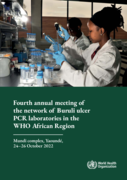
n October 2019, WHO convened the first meeting of the Buruli ulcer laboratory network (BU-LABNET) in Yaoundé, Cameroon, bringing together 11 laboratories from nine countries at the Pasteur Centre of Cameroon (CPC), the network’s Coordinating Centre. The network was formally established at th
...
is meeting (1) and its members were those present. The objective of BU LABNET is to improve diagnosis of Buruli ulcer based on polymerase chain reaction (PCR) using standardized testing protocols, involving external quality assurance programmes and sharing knowledge among member laboratories.
more
The Zithromax® Supply Chain Assessment Tool is designed to guide assessment team members through a series of interviews
with key informants and to establish inspection procedures when conducting logistics field assessments. The protocol allows
the assessment team to examine the readiness of the N
...
ational Trachoma Control Program and the District- level health
management structures to receive, manage, distribute and administer donated Zithromax® for mass drug administrati
more

The "National Guideline for Cholera Surveillance and Outbreak Response" by the Ethiopian Public Health Institute (EPHI) provides a comprehensive approach to combating cholera outbreaks in Ethiopia. It emphasizes the importance of a multisectoral approach, including case management, WASH measures, an
...
d the use of cholera vaccines. A key component is the establishment of Cholera Treatment Centers (CTCs) that provide 24/7 care. Additionally, the guideline stresses water quality monitoring and hygiene practices to prevent the spread of cholera and protect public health.
more
The document provides a comprehensive overview of malaria, covering its global impact, transmission, symptoms, diagnosis, treatment, prevention strategies, and the role of public health interventions—especially in high-risk regions like sub-Saharan Africa—to reduce its incidence and mortality.

The document “Malaria Elimination Programme Review, India 2022”, published by the WHO Country Office for India, provides an in-depth assessment of India’s progress toward malaria elimination. It evaluates the structure, implementation, and effectiveness of national and subnational malaria prog
...
rams, focusing on surveillance, diagnosis, treatment, vector control, and community engagement. The review identifies strengths, challenges, and areas for improvement, offering evidence-based recommendations to accelerate India's efforts to eliminate malaria by 2030.
more

The "Regional Action Plan 2017–2030: Towards a Malaria-Free South-East Asia Region" by the World Health Organization (WHO) outlines a strategic framework to eliminate malaria in the 11 countries of the WHO South-East Asia Region by 2030. It focuses on reducing transmission, particularly of Plasmod
...
ium falciparum and P. vivax, addressing multidrug resistance, improving surveillance, and ensuring universal access to diagnosis, treatment, and prevention. The plan sets clear objectives and milestones and emphasizes strong governance, cross-border collaboration, community involvement, and sustainable financing to achieve and maintain a malaria-free status across the region.
more

Insufficient funding is hindering the achievement of malaria elimination targets in Africa, despite the pressing need for increased investment in malaria control. While Western donors attribute their inaction to financial constraints, the global health community has limited knowledge of China’s ex
...
panding role in malaria prevention. This knowledge gap arises from the fact that China does not consistently report its foreign development assistance activities to established aid transparency initiatives. Our work focuses on identifying Chinese-funded malaria control projects throughout Africa and linking them to official data on malaria prevalence. By doing so, we aim to shed light on China’s contributions to malaria control efforts, analysing their investments and assessing their impact. This would provide valuable insights into the development of effective financing mechanisms for future malaria control in Africa.
more

Africa’s health sector is facing an unprecedented financing crisis, driven by a sharp decline of 70% in Official Development Assistance (ODA) from 2021 to 2025 and deep-rooted structural vulnerabilities. This collapse is placing immense pressure on Africa’s already fragile health systems as ODA
...
is seen as the backbone of critical health programs: pandemic preparedness, maternal and child health services, disease control programs are all at
risk, threatening Sustainable Development Goal 3 and Universal Health Coverage. Compounding this is Africa’s spiraling debt, with countries expected to service USD 81 billion by 2025—surpassing anticipated external financing inflows—further eroding fiscal space for health investments. Level of domestic resources is low. TThe Abuja Declaration of 2001, a pivotal commitment made by African Union (AU) member states, aimed to reverse this trend by pledging to allocate at least 15% of national budgets to the health sector. However, more than two decades later, only three countries—Rwanda, Botswana, and Cabo Verde—have
consistently met or exceeded this target (WHO, 2023). In contrast, over 30 AU member states remain well below the 10% benchmark, with some allocating as little as 5–7% of their national budgets to health.
In addition, only 16 (29%) of African countries currently have updated versions of National Health Development Plan (NHDP) supported by a National Health Financing Plan (NHFP). These two documents play a critical role in driving internal resource mobilisation. At the same time, public health emergencies are surging, rising 41%—from 152 in 2022 to
213 in 2024—exposing severe under-resourcing of health infrastructure and workforce. Recurring outbreaks (Mpox, Ebola, cholera, measles, Marburg…) alongside effects of climate change and humanitarian crises in Eastern DRC, the Sahel, and Sudan, are overwhelming systems stretched by chronic underfunding. The situation is worsened by Africa’s heavy dependency with over 90% of vaccines, medicines, and diagnostics being externally sourced—leaving countries vulnerable to global supply chain shocks. Health worker shortages persist, with only 2.3 professionals
per 1,000 people (below the WHO’s recommended 4.45), and fewer than 30% of systems are digitized, undermining disease surveillance and early warning. Without decisive action, Africa CDC projects the continent could reverse two decades of health progress, face 2 to 4 million additional preventable deaths annually, and a heightened risk of a pandemic emerging from within. Furthermore, 39 million more
Africans could be pushed into poverty by 2030 due to intertwined health and economic shocks. This is not just a sectoral crisis—it is an existential threat to Africa’s political, social, and economic resilience, and global stability. In response, African leaders, under Africa CDC’s stewardship, are advancing a comprehensive three-pillar strategy centered on domestic resource mobilization, innovative financing, and blended finance.
more

Development assistance for health (DAH)
plays a vital role in supporting health programmes in lowand middle-income countries. While DAH has historically
focused on infectious diseases and maternal and child
health, there is a lack of comprehensive analysis of DAH
trends, strategic shifts and the
...
ir impact on health systems
and outcomes. This study aims to provide a comprehensive
review of DAH from 1990 to 2022, examining its evolution
and funding allocation shifts.
more

The Council was established in late 2020 by Dr Tedros Adhanom
Ghebreyesus (Director-General, WHO) to provide new economic thinking – reassessing how health and wellbeing are valued, produced and distributed across the economy. An all-female group of 10 distinguished economists and area experts, t
...
he Council has focused on reimagining how to put Health for All at the heart of government decision-making and private sector collaboration at regional, national and international levels.
more
