Filter
1250
Text search:
clinical
specimens
Featured
205
327
Language
Document type
602
323
130
90
34
32
22
11
3
1
1
1
Countries
85
45
37
35
35
31
31
28
26
22
21
19
19
17
16
15
15
14
13
12
11
11
11
10
10
9
8
8
8
8
7
7
7
7
6
5
5
5
5
5
4
4
4
4
3
3
3
3
3
3
2
2
2
2
2
2
2
2
2
2
1
1
1
1
1
1
1
1
1
1
1
1
1
1
1
1
1
1
1
1
1
1
1
Authors & Publishers
Publication Years
Category
475
171
62
36
35
29
20
Toolboxes
186
167
89
83
67
56
55
52
25
23
20
18
17
13
13
13
12
9
6
3
2
2
1
PLoS Negl Trop Dis 16(11): e0010908. https://doi.org/10.1371/journal.pntd.0010908

Antimicrobials are medicines, including antibiotics, antivirals, antifungals, and antiparasitics, that are used to prevent and treat infections in humans, animals, and plants. Antimicrobial Resistance (AMR) arises when bacteria, viruses, fungi, and parasites no longer respond to these medicines, ren
...
Communicable Diseases Control in Emergencies
recommended
A field manual

These guidelines have been extracted from the WHO manual Surgical Care at the District
Hospital (SCDH), which is a part of the WHO Integrated Management Package on Emergency
and Essential Surgical Care (IMPEESC).
Refer for details on anaesthesia, head, gunshot and landmine injuries in chapters

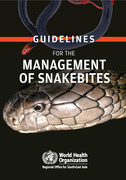
Snakebites are well-known medical emergencies in many parts of the world, especially in rural areas. Agricultural workers and children are the most affected. The incidence of snakebite mortality is particularly high in South-East Asia. Rational use of snake anti-venom can substantially reduce mortal
...
A guide for field health workers
Education material for teachers of midwifery
Midwifery education modules - second edition
based on the WHO Bench Aids for the diagnosis of intestinal parasites;
Tutor’s Guide: perform specific laboratory techniques; identify intestinal parasites by genus and species; quantify helminth eggs in faeces by Kato-Katz procedure.
Rreport of a WHO Consultative Meeting Kolkata India 2012

Pink Book's chapter

2nd edition.
Like the original, this second edition of the guidance aims to inform the revision of existing national guidelines and standards for managing Tuberculosis (TB), many of which include guidance on children. It includes recommendations, based on the best available evidence, for improving
...
5th edition.