
Filter
840
Text search:
WHO
Ebola
Response
Team
Featured
Recommendations
108
New Publications
325
Language
Document type
No document type
453
Studies & Reports
136
Guidelines
112
Manuals
62
Strategic & Response Plan
48
Situation Updates
10
Training Material
9
Fact sheets
9
Infographics
1
Countries / Regions
Sierra Leone
134
Liberia
117
Congo, Democratic Republic of
59
Guinea
51
Global
41
Uganda
31
Nigeria
28
Rwanda
25
South Sudan
23
West and Central Africa
21
Ghana
19
Africa
17
Kenya
15
East and Southern Africa
13
Mali
12
Senegal
11
Ethiopia
9
Germany
9
India
8
Zambia
8
South Africa
8
Mozambique
7
Central African Republic
7
Middle East and North Africa
7
Western and Central Europe
7
Burkina Faso
6
Togo
6
Nepal
6
Syria
6
Côte d’Ivoire / Ivory Coast
5
Afghanistan
5
Tanzania
5
Benin
5
Guinea-Bissau
4
Cameroon
4
Bangladesh
4
Namibia
4
Burundi
4
Latin America and the Carribbean
4
Haiti
3
Gambia
3
China
3
Malawi
3
Myanmar / Burma
3
South–East Asia Region
3
Asia
3
Russia
3
Vietnam
3
Somalia
2
Pakistan
2
Jordan
2
Chad
2
Cambodia
2
Ukraine
2
Angola
2
Yemen
2
Western Pacific Region
2
Eastern Europe and Central Asia
2
Eastern Europe
2
Niger
1
Zimbabwe
1
Lebanon
1
Mauritania
1
Sudan
1
Brazil
1
Botswana
1
Libya
1
Madagascar
1
Mexico
1
Sri Lanka
1
Venezuela
1
Palestine
1
Armenia
1
Laos
1
Congo-Brazzaville
1
Iran
1
Mauritius
1
Authors & Publishers
Publication Years
Category
Countries
246
Key Resources
75
Public Health
41
Clinical Guidelines
31
Women & Child Health
24
Capacity Building
9
Pharmacy & Technologies
9
Annual Report MEDBOX
3
Toolboxes
Ebola & Marburg
274
COVID-19
153
Rapid Response
45
2.0 Rapid Response
38
Conflict
24
Mental Health
21
Global Health Education
21
HIV
17
Caregiver
17
Health Financing Toolbox
17
Planetary Health
15
Natural Hazards
12
AMR
12
Disability
10
TB
8
NTDs
7
Refugee
6
Polio
5
Specific Hazards
5
Pharmacy
4
Malaria
3
Zika
2
NCDs
2
Advising principles. The purpose of this document is to support competent authorities in charge of IHR implementation to improve national capacities for the prevention, detection and control of events, by strengthening communications and coordination between points of entry and the national health s
...

Clinical care for severe acute respiratory infection: toolkit: COVID-19 adaptation
his practical Guide serves as a companion to the “WHO guideline: recommendations on digital interventions for health system strengthening” and provides a systematic process for countries to develop a costed implementation plan for digital health
...
Health care-associated infections (HAI) are one of the most common adverse events in care delivery and a major public health problem with an impact on morbidity, mortality and quality of life. At any one time, up to 7% of patients in developed and 10% in developing countries will acquire at least on
...

Laboratory Biossafety Manual

22 December 2020
The COVID-19 vaccine safety guidance manual has been developed upon recommendation and guidance of GACVS members, as well as by experts incorporating current and available information critical to all stakeholders when COVID-19 vaccines will be introduced.
For ease of use, the man
...
The EYE strategy is a comprehensive and long-term strategy built on lessons learned that aims at ending yellow fever epidemics by 2026, and consists of three strategic objectives:
protect at-risk populations;
prevent international spread; and
contain outbreaks rapidly.

A study conducted by the World Health Organisation Regional Office for Africa. The COVID-19 pandemic has had a significant impact on older persons both globally and in the African region. Although overall the region’s population is younger relative to many other world regions, the
...

Health in All Policies (HiAP) promotes health and equity. It is based on the recognition that our greatest health challenges for example, non-communicable diseases, health inequities and inequalities, climate change, and spiraling health care costs are highly complex and often linked through the soc
...

This document, with a focus on the built environment and health care facilities, intends to guide the audience in preparing for and responding to SARI pandemics caused by existing and novel pathogens. It provides technical guidance on designing, establishing, and managing health care facilities for
...

Growing emergencies and displacements across the world demand increasingly complex interventions and responses. The World Health Organization (WHO) has developed Malaria control in emergencies: a field manual to provide technical guidance to help pa
...
Laboratory biosafety manual
recommended
4th edition
The WHO Laboratory Biosafety Manual (LBM) has been in broad use at all levels of clinical and public health laboratories, and other biomedical sectors globally, serving as a de facto global standard that presents best practices and sets
...
Community health nurses have the potential to make significant contributions to meet the health care needs of various population groups in a variety of community settings. In order to assess the extent to which CHNs are achieving this potential, WHO
...

This document aims to support those working in primary care to strengthen IPC, informed by existing WHO IPC guidance and implementation resources. Many of the existing WHO IPC guidance and implement
...
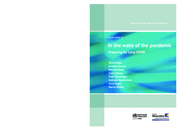
Policy Brief.
Our understanding of how to diagnose and manage Long COVID is still evolving but the condition can be very debilitating. It is associated with a range of overlapping symptoms including generalized chest and muscle pain, fatigue, shortness of breath, and cognitive dysfunction, and the
...

The most significant finding of the case study for integrating antimicrobial resistance (AMR)into existing programs and mobilising resources for funding in Nigeria, is that most of the AMR activities within the Nigerian National Action Plan (NAP)canalready be incorporated within exi
...
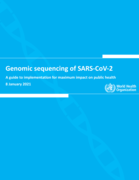
8 January 2021
Sequencing enabled the world to rapidly identify SARS-CoV-2 and develop diagnostic tests and other tools for outbreak management. Continued genome sequencing supports the monitoring of the disease’s spread and evolution of the virus. Accelerated integration of genome sequencing int
...

Poor quality health services are holding back progress on improving health in countries at all income levels.
Today, inaccurate diagnosis, medication errors, inappropriate or unnecessary treatment, inadequate or unsafe clinical facilities or practices, or providers ...
Today, inaccurate diagnosis, medication errors, inappropriate or unnecessary treatment, inadequate or unsafe clinical facilities or practices, or providers ...
