
Filter
4903
Text search:
high-risk
Featured
Recommendations
492
New Publications
1314
Language
Document type
No document type
2740
Guidelines
734
Studies & Reports
687
Manuals
240
Strategic & Response Plan
187
Fact sheets
141
Training Material
69
Situation Updates
55
Infographics
22
Brochures
13
Resource Platforms
6
Online Courses
4
Videos
2
App
1
Countries / Regions
India
274
Global
197
South Africa
121
Kenya
118
Western and Central Europe
106
Nepal
98
Sierra Leone
94
Ethiopia
88
Nigeria
87
Myanmar / Burma
82
Liberia
77
Uganda
73
Rwanda
67
Zambia
63
Bangladesh
63
Philippines
62
Tanzania
60
Latin America and the Carribbean
60
Africa
60
Syria
56
Congo, Democratic Republic of
54
Malawi
52
Ukraine
50
Indonesia
46
Ghana
44
Eastern Europe
42
Asia
38
South–East Asia Region
35
South Sudan
34
Guinea
32
Namibia
32
Cambodia
30
Zimbabwe
29
East and Southern Africa
28
Mozambique
26
Lesotho
26
West and Central Africa
22
Senegal
21
Russia
21
Brazil
19
Haiti
17
Middle East and North Africa
15
Western Pacific Region
15
Pakistan
14
Botswana
14
Yemen
14
Venezuela
14
Cameroon
13
Somalia
13
Afghanistan
13
Burkina Faso
12
Central African Republic
12
Colombia
11
Eastern Europe and Central Asia
11
Mali
10
Germany
10
Lebanon
10
Eswatini/ Swaziland
10
Tajikistan
10
Moldova
10
Georgia
10
Vietnam
10
USA
9
Thailand
9
Sudan
8
Madagascar
8
Guinea-Bissau
7
Côte d’Ivoire / Ivory Coast
7
China
7
Benin
7
Angola
7
Palestine
7
Laos
7
North Macedonia
6
Albania
6
North America
6
Jordan
5
Turkey
5
Sri Lanka
5
United Kingdom
5
Iraq
4
Egypt
4
Chad
4
Peru
4
Burundi
4
Armenia
4
Timor Leste/ East Timor
4
Kyrgyzstan
4
Kazakhstan
4
Togo
3
Gambia
3
Argentina
3
Bolivia
3
Mexico
3
Chile
3
Bhutan
3
Southern Africa
3
Iran
3
Niger
2
Malaysia
2
Ireland
2
Papua New Guinea
2
Vanuatu
2
Serbia
2
Honduras
2
Ecuador
2
Greece
2
Libya
2
Poland
2
North Korea
2
Canada
2
Uzbekistan
2
Portugal
2
Singapore
1
Switzerland
1
El Salvador
1
Bahamas
1
Paraguay
1
Fiji
1
Solomon Islands
1
Italy
1
Mongolia
1
Bulgaria
1
Romania
1
Australia
1
Turkmenistan
1
Belgium
1
France
1
Maldives
1
Mauritius
1
Tunisia
1
Spain
1
South Korea
1
Belarus
1
Latvia
1
Oman
1
Authors & Publishers
Publication Years
Category
Countries
1798
Clinical Guidelines
410
Women & Child Health
251
Key Resources
248
Public Health
239
Capacity Building
85
Pharmacy & Technologies
38
Toolboxes
HIV
524
COVID-19
516
TB
340
Mental Health
321
Ebola & Marburg
206
Conflict
121
Rapid Response
119
NTDs
118
NCDs
114
Planetary Health
109
AMR
94
Caregiver
88
Refugee
85
Disability
80
Natural Hazards
71
Malaria
67
Cholera
63
Polio
52
2.0 Rapid Response
52
Pharmacy
50
Global Health Education
41
Health Financing Toolbox
32
Zika
28
Specific Hazards
15
Typhoon
5
Social Ethics
4
South Sudan
2

Vector control, alongside case management, remains the most effective approach to controlling and eliminating malaria. Key interventions, such as indoor residual spraying (IRS) and long-lasting insecticidal nets (LLINs), have significantly reduced malaria transmission in many African countries. This
...

A historic funding crisis is threatening to unravel decades of progress unless countries can make radical shifts to HIV programming and funding. The report highlights the impact that the sudden, large-scale funding cuts from international donors are having on countries most affected by HIV. Yet it a
...

The National Strategic Plan on Malaria Prevention and Elimination Period 2021 – 2025 seeks to build on the previous national successes of the National Institute of Malariology, Parasitology, and Entomology (NIMPE) while addressing current challenges to reduce the overall burden of malaria in the S
...
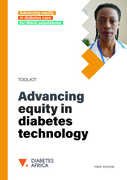
This toolkit suggests several approaches to addressing technology
access disparities. At its core is a comprehensive checklist that helps
teams systematically evaluate their current practices and identify
opportunities for improvement. This structured self-assessment
tool spans both team-level a
...

This handbook is designed to provide essential information as well as quick tips to improve foot care for people with dark skin tone living with diabetes.

This toolkit is a comprehensive set of practical tools and resources designed to support country-level risk communication and community engagement (RCCE) practitioners, decision-makers and partners to plan and implement readiness and response activities for Ebola disease outbreaks. The toolkit conta
...

This toolkit is a comprehensive set of practical tools and resources designed to support country-level risk communication and community engagement (RCCE) practitioners, decision-makers, and partners to plan and implement readiness and response activities for yellow fever outbreaks. The toolkit conta
...
STANDARD OPERATING PROCEDURES - PREVENTION AND CARE FOR CHILD SURVIVORS

This publication provides guidance for planning country-specific programming to achieve the triple elimination of mother-to-child (or vertical) transmission of HIV, syphilis and hepatitis B virus. It is based on the WHO Triple Elimination Framework, which promotes an integrated, person-centred appro
...
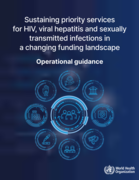
This operational guidance provides a structured approach to support countries in sustaining priority services for HIV, viral hepatitis and sexually transmitted infections in the context of reduced external funding. The guidance is intended for national governments, public health programmes, communit
...

WHO guidelines for clinical management of arboviral diseases: dengue, chikungunya, Zika and yellow fever
recommended
The new WHO guidelines provide clinical management recommendations for four of the most widespread arboviruses affecting humans: dengue, chikungunya, Zika, and yellow fever.
An integrated approach is vital, as these four diseases often present with similar symptoms, especially in the early stages
...

Despite being a preventable and curable infectious disease, tuberculosis (TB) has continued to elude global controll efforts. In 2023, 8.2 milion people with TB were diagnosed and notified to the WHO, the hightest number ever reported since WHO began tracking.

This publication provides an overview of evidence and guidance on the growing challenge of workplace heat stress in the context of climate change. It highlights the health and productivity risks faced by billions of workers, especially in manual labor sectors. The report details the physiological, s
...

The annual bulletin of the Mekong Malaria Elimination (MME) programme is a yearly report that reviews ongoing efforts to combat multidrug resistance and eliminate malaria in the 6 countries of the Greater Mekong subregion (GMS): Cambodia, China (Yunnan province), Lao People's Democratic Republic, My
...

WHO guideline on balanced national controlled medicines policies to ensure medical access and safety
Access to medicines is essential for attainment of universal health coverage, which is central to achievement of the health-related Sustainable Development Goals. Controlled medicines include those such as opioids, benzodiazepines, barbiturates, amphetamines and others with identified or emergent cl
...

WHO guideline on HIV service delivery
recommended
Updated guidance on the integration of diabetes, hypertension and mental health services, and interventions to support adherence to antiretroviral therapy. The guideline offers practical implementation guidance for countries and key stakeholders as well as outlining key research gaps. As life expec
...

20 YEARS OF STRATEGIC HIV AND PUBLIC HEALTH DATA . beThe completion of the 6th South African National HIV Prevalence, Incidence and Behaviour Survey (SABSSM) report, coincides with the celebration of 30 years of democracy in South Africa; and marks 20 years of conducting nationally representative ho
...

On Global Handwashing Day, WHO and UNICEF have released the first-ever global Guidelines on Hand Hygiene in Community Settings to support governments and practitioners in promoting effective hand hygiene outside health care – across households, public spaces and institutions. Framing hand hygiene
...
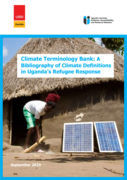
This Climate terminology bank provides key definitions and facts related to climate and resilience for Uganda’s refugee response. Its goal is to build a common understanding among stakeholders and support the integration of climate-smart practices in humanitarian efforts.
