
Filter
4061
Text search:
testing
strategy
Featured
445
1106
Language
3925
80
68
62
29
27
12
7
4
3
3
3
2
2
2
2
2
2
2
1
1
1
1
1
1
1
1
1
1
1
1
1
1
1
1
1
1
1
Document type
2001
690
655
241
229
95
87
37
9
5
5
2
1
Countries
185
180
148
102
98
95
95
93
84
82
79
77
76
73
73
57
56
53
51
48
44
43
39
35
32
32
31
30
29
28
28
27
27
25
23
23
23
23
20
20
18
15
14
14
14
14
14
13
12
12
11
11
10
10
10
9
8
8
7
7
7
7
6
6
6
6
6
6
6
5
5
5
5
5
4
4
4
4
4
4
3
3
3
3
3
3
3
3
3
3
3
2
2
2
2
2
2
2
2
2
2
2
2
2
2
2
2
2
2
2
2
2
2
1
1
1
1
1
1
1
1
1
1
1
1
1
1
1
1
1
1
1
1
1
1
1
Authors & Publishers
684
185
121
103
97
71
70
68
66
48
27
26
25
23
23
23
23
21
21
18
18
18
18
18
17
17
17
17
17
16
15
15
14
14
14
14
14
13
13
13
12
12
12
12
12
11
11
11
11
10
10
10
9
9
9
9
9
9
9
8
8
8
8
8
8
8
8
8
8
8
7
7
7
7
7
7
7
7
7
7
7
6
6
6
6
6
6
6
6
6
6
6
6
6
6
6
6
6
6
6
6
6
6
5
5
5
5
5
5
5
5
5
5
5
5
5
5
5
5
5
5
5
5
5
5
5
5
5
5
5
5
4
4
4
4
4
4
4
4
4
4
4
4
4
4
4
4
4
4
4
4
4
4
4
4
4
4
4
4
4
4
4
4
4
4
4
4
4
4
4
4
4
4
4
4
3
3
3
3
3
3
3
3
3
3
3
3
3
3
3
3
3
3
3
3
3
3
3
3
3
3
3
3
3
3
3
3
3
3
3
3
3
3
3
3
3
3
3
3
3
3
3
3
3
3
3
3
3
3
3
3
3
3
3
3
3
3
3
3
3
3
3
3
3
3
2
2
2
2
2
2
2
2
2
2
2
2
2
2
2
2
2
2
2
2
2
2
2
2
2
2
2
2
2
2
2
2
2
2
2
2
2
2
2
2
2
2
2
2
2
2
2
2
2
2
2
2
2
2
2
2
2
2
2
2
2
2
2
2
2
2
2
2
2
2
2
2
2
2
2
2
2
2
2
2
2
2
2
2
2
2
2
2
2
2
2
2
2
2
2
2
2
2
2
2
2
2
2
2
2
2
2
2
2
2
2
2
2
2
2
2
2
2
2
2
2
2
2
2
2
2
2
2
2
2
2
2
2
2
2
2
2
2
2
2
2
2
2
2
2
2
2
2
2
2
2
2
2
2
2
2
2
2
2
2
2
2
2
2
2
2
2
2
2
2
2
2
2
2
2
2
2
2
2
2
2
2
2
2
2
2
2
2
2
2
2
2
2
2
2
2
2
2
2
2
2
2
2
2
1
1
1
1
1
1
1
1
1
1
1
1
1
1
1
1
1
1
1
1
1
1
1
1
1
1
1
1
1
1
1
1
1
1
1
1
1
1
1
1
1
1
1
1
1
1
1
1
1
1
1
1
1
1
1
1
1
1
1
1
1
1
1
1
1
1
1
1
1
1
1
1
1
1
1
1
1
1
1
1
1
1
1
1
1
1
1
1
1
1
1
1
1
1
1
1
1
1
1
1
1
1
1
1
1
1
1
1
1
1
1
1
1
1
1
1
1
1
1
1
1
1
1
1
1
1
1
1
1
1
1
1
1
1
1
1
1
1
1
1
1
1
1
1
1
1
1
1
1
1
1
1
1
1
1
1
1
1
1
1
1
1
1
1
1
1
1
1
1
1
1
1
1
1
1
1
1
1
1
1
1
1
1
1
1
1
1
1
1
1
1
1
1
1
1
1
1
1
1
1
1
1
1
1
1
1
1
1
1
1
1
1
1
1
1
1
1
1
1
1
1
1
1
1
1
1
1
1
1
1
1
1
1
1
1
1
1
1
1
1
1
1
1
1
1
1
1
1
1
1
1
1
1
1
1
1
1
1
1
1
1
1
1
1
1
1
1
1
1
1
1
1
1
1
1
1
1
1
1
1
1
1
1
1
1
1
1
1
1
1
1
1
1
1
1
1
1
1
1
1
1
1
1
1
1
1
1
1
1
1
1
1
1
1
1
1
1
1
1
1
1
1
1
1
1
1
1
1
1
1
1
1
1
1
1
1
1
1
1
1
1
1
1
1
1
1
1
1
1
1
1
1
1
1
1
1
1
1
1
1
1
1
1
1
1
1
1
1
1
1
1
1
1
1
1
1
1
1
1
1
1
1
1
1
1
1
1
1
1
1
1
1
1
1
1
1
1
1
1
1
1
1
1
1
1
1
1
1
1
1
1
1
1
1
1
1
1
1
1
1
1
1
1
1
1
1
1
1
1
1
1
1
1
1
1
1
1
1
1
1
1
1
1
1
1
1
1
1
1
1
1
1
1
1
1
1
1
1
1
1
1
1
1
1
1
1
1
1
1
1
1
1
1
1
1
1
1
1
1
1
1
1
1
1
1
1
1
1
1
1
1
1
1
1
1
1
1
1
1
1
1
1
1
1
1
1
1
1
1
1
1
1
1
1
1
1
1
1
1
1
1
1
1
1
1
1
1
1
1
1
1
1
1
1
1
1
1
1
1
1
1
1
1
1
1
1
1
1
1
1
1
1
1
1
1
1
1
1
1
1
1
1
1
1
1
1
1
1
1
1
1
1
1
1
1
1
1
1
1
1
1
1
1
1
1
1
1
1
1
1
1
1
1
1
1
1
1
1
1
1
1
1
1
1
1
1
1
1
1
1
1
1
1
1
1
1
1
1
1
1
1
1
1
1
1
1
1
1
1
1
1
1
1
1
1
1
1
1
1
1
1
1
1
1
1
1
1
1
1
1
1
1
1
1
1
1
1
1
1
1
1
1
1
1
1
1
1
1
1
1
1
1
1
1
1
1
1
1
1
1
1
1
1
1
1
1
1
1
1
1
1
1
1
1
1
1
1
1
1
1
1
1
1
1
1
1
1
1
1
1
1
1
1
1
1
1
1
1
1
1
1
1
1
1
1
1
1
1
1
1
1
1
1
1
1
1
1
1
1
1
1
1
1
1
1
1
1
1
1
1
1
1
1
1
1
1
1
1
1
1
1
1
1
1
1
1
1
1
1
1
1
1
1
1
1
1
1
1
1
1
1
1
1
1
1
1
1
1
1
1
1
1
1
1
1
1
1
1
1
1
1
1
1
1
1
1
1
1
1
1
1
1
1
1
1
1
1
1
1
1
1
1
1
1
1
1
1
1
1
1
1
1
1
1
1
1
1
1
1
1
1
1
1
1
1
1
1
1
1
1
1
1
1
1
1
1
1
1
1
1
1
1
1
1
1
1
1
1
1
1
1
1
1
1
1
1
1
1
1
1
1
1
1
1
1
1
1
1
1
1
1
1
1
1
1
1
1
1
1
1
1
1
1
1
1
1
1
1
1
1
1
1
1
1
1
1
1
1
1
1
1
1
1
1
1
1
1
1
1
1
1
1
1
1
1
1
1
1
1
1
1
1
1
1
1
1
1
1
1
1
1
1
1
1
1
1
1
1
1
1
1
1
1
1
1
1
1
1
1
1
1
1
1
1
1
1
1
1
1
1
1
1
1
1
1
1
1
1
1
1
1
1
1
1
1
1
1
1
1
1
1
1
1
1
1
1
1
1
1
1
1
1
1
1
1
1
1
1
1
1
1
1
1
1
1
1
1
1
1
1
1
1
1
1
1
1
1
1
1
1
1
1
1
1
1
1
1
1
1
1
1
1
1
1
1
1
1
1
1
1
1
1
1
1
1
1
1
1
1
1
1
1
1
1
1
1
1
1
1
1
1
1
1
1
1
1
1
1
1
1
1
1
1
1
1
1
1
1
1
1
1
1
1
1
1
1
1
1
1
1
1
1
1
1
1
1
1
1
1
1
1
1
1
1
1
1
1
1
1
1
1
1
1
1
1
1
1
1
1
1
1
1
1
1
1
1
1
1
1
1
1
1
1
1
1
1
1
1
1
1
1
1
1
1
1
1
1
1
1
1
1
1
1
1
1
1
1
1
1
1
1
1
1
1
1
1
1
1
1
1
1
1
1
1
1
1
1
1
1
1
1
1
1
1
1
1
1
1
1
1
1
1
1
1
1
1
1
1
1
1
1
1
1
1
1
1
1
1
1
1
1
1
1
1
1
1
1
1
1
1
1
1
1
1
1
1
1
1
1
1
1
1
1
1
1
1
1
1
1
1
1
1
1
1
1
1
1
1
1
1
1
1
1
1
1
1
1
1
1
1
1
1
1
1
1
1
1
1
1
1
1
1
1
1
1
1
1
1
1
1
1
1
1
1
1
1
1
1
1
1
1
1
1
1
1
1
1
1
1
1
1
1
1
1
1
1
1
1
1
1
1
1
1
1
1
1
1
1
1
1
1
1
1
1
1
1
1
1
1
1
1
1
1
1
1
1
1
1
1
1
1
1
1
1
1
1
1
1
1
1
1
1
1
1
1
1
1
1
1
1
1
1
1
1
1
1
1
1
1
1
1
1
1
1
1
1
1
1
1
1
1
1
1
1
1
1
1
1
1
1
1
1
1
1
1
1
1
1
1
1
1
1
1
1
1
1
1
1
1
1
1
1
1
1
1
1
1
1
1
1
1
1
1
1
1
1
1
1
1
1
1
1
1
1
1
1
1
1
1
1
1
1
1
1
1
1
1
1
1
1
1
1
1
1
1
1
1
1
1
1
1
1
1
1
1
1
1
1
1
1
1
1
1
1
1
1
1
1
1
1
1
1
1
1
1
1
1
1
1
1
1
1
1
1
1
1
1
1
1
1
1
1
1
1
1
1
1
1
1
1
1
1
1
1
1
1
1
1
1
1
1
1
1
1
1
1
1
1
1
1
1
1
1
1
1
1
1
1
1
1
1
1
1
1
1
1
1
1
1
1
1
1
1
1
1
1
1
1
1
1
1
1
1
1
1
1
1
1
1
1
1
1
1
1
1
1
1
1
1
1
1
1
1
1
1
1
1
1
1
1
1
1
1
1
1
1
1
1
1
1
1
1
1
1
1
1
1
1
1
1
1
1
1
1
1
1
1
1
1
1
1
1
1
1
1
1
1
1
1
1
1
1
1
1
1
1
1
1
1
1
1
1
1
1
1
1
1
1
1
1
1
1
1
1
1
1
1
1
1
1
1
1
1
1
1
1
1
1
1
1
1
1
1
1
1
1
1
1
1
1
1
1
1
1
1
1
1
1
1
1
1
1
1
1
1
1
1
1
1
1
1
1
1
1
1
1
1
1
1
1
1
1
1
1
1
1
1
1
1
1
1
1
1
1
1
1
1
1
1
1
1
1
1
1
1
1
1
1
1
1
1
1
1
1
1
1
1
1
1
1
1
1
1
1
1
1
1
1
1
1
1
1
1
1
1
1
1
1
1
1
1
1
1
1
1
1
1
1
1
1
1
1
1
1
1
1
1
1
1
1
1
1
1
1
1
1
1
1
1
1
1
1
1
1
1
1
1
1
1
1
1
1
1
1
1
1
1
1
1
1
1
1
1
1
1
1
1
1
1
1
1
1
1
1
1
1
1
1
1
1
1
1
1
1
1
1
1
1
1
1
1
1
1
1
1
1
1
1
1
1
1
1
1
1
1
1
1
1
1
1
1
1
1
1
1
1
1
1
1
1
1
1
1
1
1
1
1
1
1
1
1
1
1
1
1
1
1
1
1
1
1
1
1
1
1
1
1
1
1
1
1
1
1
1
1
1
1
1
1
1
1
1
1
1
1
1
1
1
1
1
1
1
1
1
1
1
1
1
1
1
1
1
1
1
1
1
1
1
1
1
1
1
1
1
1
1
1
1
1
1
1
1
1
1
1
1
1
1
1
1
1
1
1
1
1
1
1
1
1
1
1
1
1
1
1
1
1
1
1
1
1
1
1
1
1
1
1
1
1
1
1
1
1
1
1
1
1
1
1
1
1
1
1
1
1
1
1
1
1
1
1
1
1
1
1
1
1
1
1
1
1
1
1
1
1
1
1
1
1
1
1
1
1
1
1
1
1
1
1
1
1
1
1
1
1
1
1
1
1
1
1
1
1
1
1
1
1
1
1
1
1
1
1
1
1
1
1
1
1
1
1
1
1
1
1
1
1
1
1
1
1
1
1
1
1
1
1
1
1
1
1
1
1
1
1
1
1
1
1
1
1
1
1
1
1
1
1
1
1
1
1
1
1
1
1
1
1
1
1
1
1
1
1
1
1
1
1
1
1
1
1
1
1
1
1
1
1
1
1
1
1
1
1
1
1
1
1
1
1
1
1
1
1
1
1
1
1
1
1
1
1
1
1
1
1
1
1
1
1
1
1
1
1
1
1
1
1
1
1
1
1
1
1
1
1
1
1
1
1
1
1
1
1
1
1
1
1
1
1
1
1
1
1
1
1
1
1
1
1
1
1
1
1
1
1
1
1
1
1
1
1
1
1
1
1
1
1
1
1
1
1
1
1
1
1
1
1
1
1
1
1
1
1
1
1
1
1
1
1
1
1
1
1
1
1
1
1
1
1
1
1
1
1
1
1
1
1
1
1
1
1
1
1
1
1
1
1
1
1
1
1
1
1
1
1
1
1
1
1
1
1
1
1
1
1
1
1
1
1
1
1
1
1
1
1
1
1
1
1
1
1
1
1
1
1
1
1
1
1
1
1
1
1
1
1
1
1
1
1
1
1
1
1
1
1
1
1
1
1
1
1
1
1
1
1
1
1
1
1
1
1
1
1
1
1
1
1
1
1
1
1
1
1
1
1
1
1
1
1
1
1
1
1
1
1
1
1
1
1
1
1
1
1
1
1
1
1
1
1
1
1
1
1
1
1
1
1
1
1
1
1
1
1
1
1
1
1
1
1
1
1
1
1
1
1
1
1
1
1
1
1
1
1
1
1
1
1
1
1
1
1
1
1
1
1
1
1
1
1
1
1
1
1
1
1
1
1
1
1
1
1
1
1
1
1
1
1
1
1
1
1
1
1
1
1
1
1
1
1
1
1
1
1
1
1
1
1
1
1
1
1
1
Publication Years
1401
2325
323
12
Category
1725
312
233
213
178
90
53
Toolboxes
424
360
225
159
159
151
107
93
93
93
89
86
74
70
65
64
50
41
34
34
33
28
25
18
4

Brazil‘s Social Policy Response to Covid-19: Healthcare and Poverty Alleviation
Massard da Fonseca, E.; Arantes Beatriz, L. B.; Portella, C.
Global Dynamics of Social Policy; Deutsche Forschungsgemeinschaft
(2022)
CC
During the pandemic, Brazil has provided its citizens with support in the areas of long-term care and disability, the labor market, social assistance, education, and pensions. This report focuses on two social policy areas, health-care and family benefits (including labor policies), as these were th
...
e most crucial social policies implemented in Brazil during the Covid-19 pandemic in terms of the resources allocated and the magnitude of social impact. Brazil’s relatively generous social policies were uncoordinated with public health interventions, which contributed to poor compliance with these public health interventions. This suggests that social policy initiatives alone are insufficient in mitigating the social consequences of the pandemic. They need to be accompanied by and coordinated with public health measures, including regulations on testing, social distancing and mask wearing.
more

Countries, partners, and donors are committed to the global elimination of blinding trachoma by 2020.
Achieving this public health milestone requires more than funding; it requires health personnel with the
right mix of skills, and well supported and managed health systems. Mass drug administratio
...
n (MDA)
with Zithromax®, the Pfizer, Inc. donated antibiotic, is a key component of the SAFE strategy, endorsed
by the World Health Organization. There is growing
recognition that improving all aspects of MDA, from
planning to training, recording to reporting, and
receipt of drug to distribution (the supply chain), will
be necessary if MDA programmes are going to reduce
the community burden of Chlamydia trachomatis, and
eliminate trachoma as a cause of blindness by 2020.
more

The Practical manual on laboratory strengthening, 2022 update provides practical guidance on implementation of WHO recommendations and best practices for TB laboratory strengthening. It is an updated version of the GLI Practical Guide to Laboratory Strengthening published in 2017 and provides the la
...
test practical guidance on use of newly recommended diagnostics as well as guidance in key technical areas, including quality assurance and quality management systems, specimen collection and registration, procurement and supply-chain management, diagnostic connectivity, biosafety, data management, human resources, strategic planning, and model algorithms. The key changes are:
inclusion of recent or updated WHO recommendations for tests to diagnose TB and detect drug resistance;
alignment with the latest WHO critical concentrations for phenotypic drug-susceptibility testing (DST) and the new definitions of pre-XDR-TB and XDR-TB;
updated information on building quality-assured TB testing and management capacity using the Stepwise Laboratory Quality Improvement Process Towards Accreditation (SLIPTA) approach (Score-TB package1);
updated information on assessing, analysing and optimising TB diagnostic networks; and
updated information on the use of next-generation sequencing (NGS) to detect mutations associated with drug resistance for surveillance purposes.
The document also provides references to resources and tools relevant for work on laboratory strengthening.
more
Gambiense human African trypanosomiasis is a deadly infectious disease affecting West and Central Africa, South Sudan and Uganda, and transmitted between humans by tsetse flies. The disease has caused several major epidemics, the latest one in the 1990s. Thanks to recent innovations such as rapid di
...
agnostic tests for population screening, a single-dose oral treatment and a highly efficient vector control strategy, interruption of transmission of the causative parasite is now within reach. If indeed gHAT has an exclusively human reservoir, this could even result in eradication of the disease. Even if there were an animal reservoir, on the basis of epidemiological data, it plays a limited role. Maintaining adequate postelimination surveillance in known historic foci, using the newly developed tools, should be sufficient to prevent any future resurgence.
more
The chapter Fostering Health Systems’ Monitoring to Better Serve Older Populations is part of the publication series entitled Decade of Healthy Aging: Situation and Challenges. The publications are designed to favor the prioritization of effective actions at the local level as well as the monitori
...
ng of data and public health policies, and providing evidence-based information. Along with the objective of presenting the available updated knowledge about the situation of health and aging at the beginning of the Decade of Healthy Aging in the Americas, this publication gives information about health systems’ monitoring to better serve the needs of older adults and emphasizes the need for societies and health systems to better adapt to an aging population. It introduces the 360-tool as a guide to adapt health systems through monitoring tracers/indicators and highlighting the data and information that is readily available, disaggregated by age. This information can aid in decision-making and resource allocation to support older adults’ needs. Concerning the 360-tool development, a consensus has been reached on seven tracer indicators with high relevance to informing policy, and case studies in selected countries have assessed the feasibility of this approach. The list of indicators and the process related to the development of the tool are presented in this publication. The Decade of Healthy Aging 2021-2030 is a period to guide action towards the transformation of societies by fostering the inclusion of older people in every decision. This publication intends to contribute to this strategy and highlight the upcoming challenges and opportunities on healthy aging.
more
With sustained economic growth in many parts of the developing world, an increasing number of countries are transitioning away from the most subsidized development finance as they exceed income and other qualification requirements. Cross-country evidence suggests that Development Assistance Committe
...
e (DAC) donors view the crossing over of the World Bank’s International Development Association (IDA) eligibility threshold to signal that a country needs less aid, with subsequent reductions in both IDA and other donors’ concessional funding. Within the health sector, it is particularly important to understand the implications of these status changes for children under five years of age since improving early childhood health is critical to fostering health and social and economic development. Therefore, we examine the implications of the IDA transition by measuring the extent t which World Bank commitments—including both IDA and IBRD—are directed to infant and child health needs in Nigeria. Ordinary Least Squares (OLS) models were used in a difference-indifferences (DID) strategy to compare World Bank IBRD/IDA lending before and after the crossover to regions with varying initial levels of under-five and infant need.
more

Vaccines are powerful weapons in the fight against pandemic viruses as shown by responses to both the 2009 H1N1 influenza and the COVID-19 pandemics. However, planning for accessing, allocating and deploying vaccines in a pandemic situation is a complex endeavour, beset with multiple challenges at a
...
ll levels – local, regional and global. The World Health Organization (WHO) and its partners have prepared this revised guidance document to assist countries update their national deployment and vaccination plans (NDVPs) by leveraging global learnings from past pandemic responses, including the recent COVID-19 vaccination effort. The development and testing of a NDVP would not only advance pandemic preparedness efforts but would also have benefits in terms of increasing national capabilities to manage other health emergencies which require emergency vaccination campaigns.
more
Guidelines for the management of asthma in adults and adolescents: Position statement of the South African Thoracic Society – 2021 update
Lalloo, U.G.; Kalla, I.S.; Abdool-Gaffar, S. et al.
African Journal of Thoracic and Critical Care Medicine
(2021)
CC
sthma prevalence is increasing worldwide, and surveys indicate that most patients in developed and developing countries, including South Africa, do not receive optimal care and are therefore not well controlled. Standard management guidelines adapted to in-country realities are important to support
...
optimal care. The South African Thoracic Society (SATS) first published a guideline for the management of chronic persistent asthma in 1992, which has subsequently been revised several times.
The main aim of the present document was to revise and update SATS’ statement on the suggested management of chronic asthma, based on the need to promote optimal care and control of asthma, together with the incorporation of new concepts and drug developments. This revised document reinforces optimal care and incorporates the following primary objectives to achieve the recent advances in asthma care:
• continued emphasis on the use of inhaled corticosteroids (ICS) as the foundation of asthma treatment
• to reduce the reliance on short-acting beta-2 agonist (SABA) monotherapy for asthma symptoms
• to incorporate the evidence and strategy for the use of the combination of an ICS and formoterol for acute symptom relief (instead of a SABA)
• to incorporate the evidence and strategy for the use of as-needed ICS-long-acting beta agonists (LABA) for patients with infrequent symptoms or ‘mild’ asthma
• to incorporate the evidence and strategy for the use of a long-acting muscarinic antagonist (LAMA) in combination with ICS-LABA; and
• to incorporate the evidence and strategy for the use of and management with a biologic therapy in severe asthma.
more

Care for persons with noncommunicable diseases (NCDs), such as cardiovascular disease, diabetes, cancer, and chronic obstructive pulmonary disease, is a major health priority for most countries worldwide, particularly for low-middle income countries where the problem seems to be worsening. Globally,
...
research demonstrates that the vast majority of people with NCDs receive suboptimal care. Many people living with chronic conditions remain undiagnosed and unaware of their condition, while many others remain untreated or with inadequate control. Meanwhile the premature mortality caused by NCDs remains high in many countries. In response to the global epidemic of NCDs, the World Health Organization (WHO) launched the Global Strategy for the Prevention and Control of Noncommunicable Diseases in 2012, which establishes 9 voluntary global targets and indicators to be considered by Member States when formu- lating national plans to combat NCDs.
more

HAT diagnosis relies on laboratory techniques because clinical signs and symptoms are unspecific. Serodiagnostic tests exist only for Tbg and are based on the detection of specific antibodies, thus they are not confirmatory of infection. With the current low disease prevalence, the positive predicti
...
ve value of serological tests is particularly low. Field-applicable tools include the card agglutination test for trypanosomiasis (CATT) used mainly in active screening by specialized mobile teams, and the rapid diagnostic tests that are more suitable for individual testing at point-of-care. Confirmation of Tbg infection requires microscopic examination of body fluids necessitating specific training. The best performing methods are laborious and reach 85–95% diagnostic sensitivity when performed by skilled personnel.
more

Africa’s health sector is facing an unprecedented financing crisis, driven by a sharp decline of 70% in Official Development Assistance (ODA) from 2021 to 2025 and deep-rooted structural vulnerabilities. This collapse is placing immense pressure on Africa’s already fragile health systems as ODA
...
is seen as the backbone of critical health programs: pandemic preparedness, maternal and child health services, disease control programs are all at
risk, threatening Sustainable Development Goal 3 and Universal Health Coverage. Compounding this is Africa’s spiraling debt, with countries expected to service USD 81 billion by 2025—surpassing anticipated external financing inflows—further eroding fiscal space for health investments. Level of domestic resources is low. TThe Abuja Declaration of 2001, a pivotal commitment made by African Union (AU) member states, aimed to reverse this trend by pledging to allocate at least 15% of national budgets to the health sector. However, more than two decades later, only three countries—Rwanda, Botswana, and Cabo Verde—have
consistently met or exceeded this target (WHO, 2023). In contrast, over 30 AU member states remain well below the 10% benchmark, with some allocating as little as 5–7% of their national budgets to health.
In addition, only 16 (29%) of African countries currently have updated versions of National Health Development Plan (NHDP) supported by a National Health Financing Plan (NHFP). These two documents play a critical role in driving internal resource mobilisation. At the same time, public health emergencies are surging, rising 41%—from 152 in 2022 to
213 in 2024—exposing severe under-resourcing of health infrastructure and workforce. Recurring outbreaks (Mpox, Ebola, cholera, measles, Marburg…) alongside effects of climate change and humanitarian crises in Eastern DRC, the Sahel, and Sudan, are overwhelming systems stretched by chronic underfunding. The situation is worsened by Africa’s heavy dependency with over 90% of vaccines, medicines, and diagnostics being externally sourced—leaving countries vulnerable to global supply chain shocks. Health worker shortages persist, with only 2.3 professionals
per 1,000 people (below the WHO’s recommended 4.45), and fewer than 30% of systems are digitized, undermining disease surveillance and early warning. Without decisive action, Africa CDC projects the continent could reverse two decades of health progress, face 2 to 4 million additional preventable deaths annually, and a heightened risk of a pandemic emerging from within. Furthermore, 39 million more
Africans could be pushed into poverty by 2030 due to intertwined health and economic shocks. This is not just a sectoral crisis—it is an existential threat to Africa’s political, social, and economic resilience, and global stability. In response, African leaders, under Africa CDC’s stewardship, are advancing a comprehensive three-pillar strategy centered on domestic resource mobilization, innovative financing, and blended finance.
more

Social and Behaviour Change Communication (SBCC) is essential for the effective control, prevention and elimination of malaria. The 2018–2030 Strategic Framework for Malaria SBCC guides countries and partners in strengthening capacities, refining strategies and sharing best practices, all of which
...
are aligned with the WHO Global Technical Strategy for Malaria. Despite progress, malaria continues to threaten billions of people, and success hinges on access to interventions and behavioural change. This framework emphasises advocacy, technical guidance and tools to ensure that SBCC is prioritised and resourced as an essential element in the global fight against malaria.
more
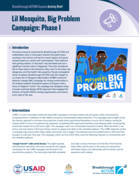
Activity Brief.Formative research revealed that gold miners in remote regions of Guyana viewed malaria as an unavoidable and minor risk compared to other dangers. Building on these insights, Breakthrough ACTION co-created the 'Lil Mosquito, Big Problem' (LMBP) social and behavioural change campaign,
...
which targeted miners in malaria-endemic areas (Regions 7 and 8). Adopting a human-centred design approach, the campaign collaborated with the Ministry of Health, mining organisations, and miners throughout its development. LMBP used visual, low-literacy materials featuring animated and live-action characters to raise awareness of the risks of malaria and encourage key behaviours such as timely testing, adhering to treatment and consistently using insecticide-treated nets. Launched in 2019 and scaled up until 2024, this multi-channel campaign aimed to change attitudes and improve malaria prevention in these hard-to-reach communities.
Accessed on 20/06/2025.
more

This toolkit is a comprehensive set of practical tools and resources designed to support country-level risk communication and community engagement (RCCE) practitioners, decision-makers and partners to plan and implement readiness and response activities for Ebola disease outbreaks. The toolkit conta
...
ins: information about Ebola disease; RCCE considerations on how to approach key issues during Ebola disease outbreaks; tools for understanding the context in which Ebola disease outbreaks occur; methods for collecting data to inform strategy development and bring evidence into the planning and implementation of activities; guidance to support prevention and response interventions; and links to existing RCCE tools and training. It is one of a suite of toolkits on RCCE readiness and response to a range of disease and response areas.
more

This toolkit is a comprehensive set of practical tools and resources designed to support country-level risk communication and community engagement (RCCE) practitioners, decision-makers, and partners to plan and implement readiness and response activities for yellow fever outbreaks. The toolkit conta
...
ins: information about yellow fever; RCCE considerations for how to approach key issues during yellow fever outbreaks; tools for understanding the context in which yellow fever outbreaks occur; methods for collecting data to inform strategy development and bring evidence into planning and implementation of activities; guidance to support vector control and immunization campaigns; and links to existing RCCE tools and training. It is one of a suite of toolkits on RCCE readiness and response to a range of disease and response areas.
more

WHO guidelines for clinical management of arboviral diseases: dengue, chikungunya, Zika and yellow fever
recommended
The new WHO guidelines provide clinical management recommendations for four of the most widespread arboviruses affecting humans: dengue, chikungunya, Zika, and yellow fever.
An integrated approach is vital, as these four diseases often present with similar symptoms, especially in the early stages
...
of infection, and multiple arboviruses may circulate simultaneously in certain regions. This makes clinical differentiation challenging, particularly where diagnostic testing is not readily available.
This guideline is available in online format on the MAGICapp platform
more
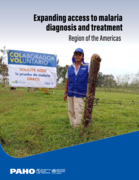
The overall objective of this approach is to accelerate efforts toward malaria elimination by increasing
access to early diagnosis and treatment. The specific objectives are to: Minimize the barriers that the population faces in accessing timely, quality diagnosis and treatment. Reduce the time bet
...
ween diagnosis and the start of treatment. Reduce the parasite reservoir in symptomatic infected persons through early treatment. Maximize the transmission-blocking strategy by taking early action on gametocytes. Decrease the incidence of P. vivax relapses.Ultimately, disrupt malaria transmission and prevent mortalit.
more

This document provides technical guidance for manufacturers seeking World Health Organization (WHO) prequalification of in vitro diagnostic devices (IVDs) for malaria, with a focus on rapid diagnostic tests (RDTs) for symptomatic patients. It summarises the minimum performance requirements, includin
...
g analytical and clinical performance standards, and emphasises considerations relating to diverse specimen types, testing environments and user populations in low- and middle-income countries. The guidance is aligned with the criteria and prequalification processes of the WHO Global Malaria Programme, while clarifying that demonstration of clinical utility is outside the scope of prequalification.
more
This document provides technical guidance for manufacturers seeking World Health Organization (WHO) prequalification of in vitro diagnostic devices (IVDs) for malaria, with a focus on rapid diagnostic tests (RDTs) for symptomatic patients. It summarises the minimum performance requirements, includin
...
g analytical and clinical performance standards, and emphasises considerations relating to diverse specimen types, testing environments and user populations in low- and middle-income countries. The guidance is aligned with the criteria and prequalification processes of the WHO Global Malaria Programme, while clarifying that demonstration of clinical utility is outside the scope of prequalification.
more

The document is a report by an expert group that presents a framework for improving future pandemic preparedness and emergency response, particularly in the context of India but with relevance to global health systems. It analyzes lessons learned from COVID-19 and past epidemics, identifies key weak
...
nesses in areas such as governance, surveillance, data management, research, and coordination, and proposes a comprehensive strategy to address them. The report emphasizes the importance of early detection, strong public health infrastructure, coordinated governance, scientific innovation, and international collaboration. A central idea is the ability to respond effectively within the first 100 days of an outbreak by having systems, resources, and policies already in place. Overall, it aims to strengthen resilience and ensure faster, more efficient responses to future health crises.
more
