Filter
632
Text search:
convulsions
Featured
109
181
Language
Document type
360
127
42
40
37
12
7
3
2
2
Countries
74
20
17
15
15
14
13
12
11
11
9
9
9
8
7
7
7
7
6
6
6
6
5
5
4
4
4
3
3
3
3
3
2
2
2
2
2
2
2
2
2
2
1
1
1
1
1
1
1
1
1
1
1
1
1
1
1
1
1
1
1
1
1
Authors & Publishers
Publication Years
Category
268
127
96
29
20
12
2
Toolboxes
54
43
32
25
19
17
15
15
13
13
12
11
9
8
6
5
4
3
3
2
2
2
2
mhGAP Training Manual for the mhGAP Intervention Guide for mental, neurological and substance use disorders in non-specialized health settings – version 2.0 (for field testing)
Int J Crit Illn Inj Sci. 2012 May-Aug; 2(2): 82–97.
doi: 10.4103/2229-5151.97273
PMCID: PMC3401822
PMID: 22837896

Brochure d’information destinée aux collaborateurs rémunérés et bénévoles intervenant auprès de réfugiés traumatisés
Neurological, Psychiatric, and Developmental Disorders: Meeting the Challenge in the Developing World
Institute of Medicine (US) Committee on Nervous System Disorders in Developing Countries.
Washington (DC): National Academies Press (US); 2001.
An update from the EU Early Warning System

Perspectives sur les drogues
Mental Health First Aid Guidelines
Accessed: 14.03.2019
Manual for use in primary care.
There is substantial evidence for the benefits of screening and brief intervention in primary health care for alcohol problems. However, there is a need for screening and brief interventions with cross-cultural relevance for substances other than alcohol or tobacco,
...

This block contains a wide variety of disorders that differ in severity (from uncomplicated intoxication and harmful use to obvious psychotic disorders and dementia), but that are all attributable to the use of one or more psychoactive substances (which may or may not have been medically prescribed)
...
Développement de protocoles à adopter avec les réfugiés et les personnes déplacées dans leur propre pays. Edition révisée
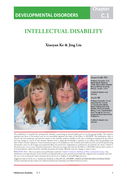
This publication seeks to describe the best treatments and practices based on the scientific evidence available at the time of writing as evaluated by the authors and may change as a result of new research. Readers need to apply this knowledge to patients in accordance with the guidelines and laws o
...

Substance use disorders
Chapter G.3

Divers
Chapitre J.1
Edition en français
Traduction : Laure Woestelandt, Jordan Sibeoni Sous la direction de : Marie-Rose Moro Avec le soutien de la SFPEADA
Introduction
Chapitre A.5
Edition en français
Traduction : Eleanor O’Boyle
Sous la direction de : Priscille Gérardin
Avec le soutien de la SFPEADA
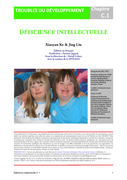
retard mental, est définie comme un arrêt du développement mental ou un développement mental
incomplet, caractérisé essentiellement par une insuffisance des facultés qui déterminent
le niveau global d’intelligence, c’est-à-dire les fonctions cognitives, le langage, la motricité
et l
...
Q3: What approaches are available to enable non-specialized health care providers to identify children with intellectual disabilities, including intellectual disabilities due to specific causes?
SIGN 143. A national clinical guideline
Published May 2015, Revised 2018
DHS Further Analysis Reports No. 115