Filter
476
Text search:
antiretrovirals
Featured
Recommendations
28
New Publications
86
Language
Document type
No document type
317
Studies & Reports
58
Guidelines
56
Manuals
20
Infographics
10
Fact sheets
6
Strategic & Response Plan
5
Training Material
3
Online Courses
1
Countries / Regions
Kenya
19
South Africa
16
Zambia
15
Malawi
13
Latin America and the Carribbean
13
Global
13
Rwanda
11
Africa
11
Uganda
10
Nigeria
9
Namibia
9
Zimbabwe
8
Mozambique
7
Lesotho
7
Asia
7
Liberia
6
Ghana
6
India
6
Tanzania
6
Senegal
5
Cambodia
5
East and Southern Africa
5
Venezuela
5
Sierra Leone
4
Congo, Democratic Republic of
4
Ethiopia
4
Nepal
4
South–East Asia Region
4
Cameroon
3
Haiti
3
Philippines
3
Indonesia
3
Eswatini/ Swaziland
3
Brazil
3
Ukraine
3
Botswana
3
West and Central Africa
3
Russia
3
Burkina Faso
2
Thailand
2
Bangladesh
2
Benin
2
Central African Republic
2
Argentina
2
North Macedonia
2
Colombia
2
Angola
2
Myanmar / Burma
2
Middle East and North Africa
2
Western Pacific Region
2
Eastern Europe and Central Asia
2
Western and Central Europe
2
Albania
2
Georgia
2
Guinea
1
Mali
1
Guinea-Bissau
1
Germany
1
Peru
1
Bolivia
1
Libya
1
Chile
1
Other region
1
Paraguay
1
Eastern Europe
1
Laos
1
Vietnam
1
Authors & Publishers
Publication Years
Category
Countries
187
Clinical Guidelines
42
Women & Child Health
19
Public Health
10
Key Resources
8
Pharmacy & Technologies
5
Capacity Building
3
Toolboxes
HIV
176
TB
31
Pharmacy
29
COVID-19
24
Caregiver
8
Mental Health
7
AMR
7
NTDs
4
Health Financing Toolbox
4
Disability
2
Ebola & Marburg
2
Conflict
2
Social Ethics
2
Malaria
2
Refugee
1
Global Health Education
1
NCDs
1
2.0 Rapid Response
1
Good practice examples from India

NSP Review
Engaging with South Africa’s National Strategic Plan for HIV, STIs and TB Edition 7 July – August 2013
A publication of the Treatment Action Campaign and SECTION27
GeneXpert: An imperfect rollout
TB in South African prisons: Where to now?
Decentralising DR-TB care: How far alon
...
Technical Update
Areas of Africa endemic for Buruli ulcer (BU), caused by Mycobacterium ulcerans, also have a high prevalence of human immunodeficiency virus (HIV), with adult prevalence rates between 1% and 5% (Maps). However, there is limited information on the prevalence of BU–HIV coinfection.
...
A Policy analysis
FOLLOW-UP TO THE 2011 POLITICAL DECLARATION ON HIV/AIDS: INTENSIFYING EFFORTS TO ELIMINATE HIV/AIDS | Reporting Period: January – December 2014


The information provided here can be used to understand the current situation, increase attention to preterm births in Rwanda and to inform dialogue and action among stakeholders. Data can be used to identify the most important risk factors to target and gaps in care in order to identify and impleme
...
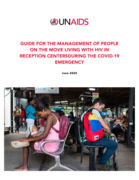
The COVID-19 pandemic has had an unprecedented impact on health care systems that, in many instances, worsened the already existing assistance gaps. When it comes to Latin America and Central America, this challenge adds to the consequences mass mobilizations have had in recent years, which have exc
...

The information provided here can be used to understand the current situation, increase attention to preterm births in Rwanda and to inform dialogue and action among stakeholders. Data can be used to identify the most important risk factors to target and gaps in care in order to identify and impleme
...

6th edition. The HIV epidemic Namibia is gradually being brouhgt under countrol as demonstrated by results in the preliminary report of Namibia Population-Based HIV Impact Assessment (NAMPHIA), a cross-sectional household-based survey that was conducted in 2017. Currently, it is estimated that about
...

The information provided here can be used to understand the current situation, increase attention to preterm births in Rwanda and to inform dialogue and action among stakeholders. Data can be used to identify the most important risk factors to target and gaps in care in order to identify and impleme
...

The information provided here can be used to understand the current situation, increase attention to preterm births in Rwanda and to inform dialogue and action among stakeholders. Data can be used to identify the most important risk factors to target and gaps in care in order to identify and impleme
...
Reporting Period 2010-2011