
Filter
456
Text search:
Inter-Agency
Standing
Committee
IASC
Featured
Recommendations
95
New Publications
121
Language
Document type
No document type
250
Guidelines
65
Manuals
46
Studies & Reports
39
Strategic & Response Plan
21
Training Material
18
Fact sheets
6
Situation Updates
5
Brochures
4
Infographics
1
Online Courses
1
Countries / Regions
Syria
27
Global
20
Ukraine
13
Nepal
12
Latin America and the Carribbean
11
South Sudan
10
Congo, Democratic Republic of
9
Mozambique
9
Myanmar / Burma
8
Yemen
8
Bangladesh
7
Middle East and North Africa
7
Russia
7
Sierra Leone
6
India
6
Haiti
5
Philippines
4
Germany
4
China
4
Western and Central Europe
4
Liberia
3
Ethiopia
3
Uganda
3
Somalia
3
Iraq
3
Jordan
3
Afghanistan
3
Indonesia
3
Sudan
3
Angola
3
East and Southern Africa
3
Africa
3
Venezuela
3
Laos
3
Portugal
3
Guinea
2
Nigeria
2
Senegal
2
Togo
2
Zimbabwe
2
Lebanon
2
Kenya
2
Cambodia
2
Malaysia
2
Brazil
2
Burundi
2
Colombia
2
Chile
2
West and Central Africa
2
Eastern Europe
2
Moldova
2
Spain
2
Belarus
2
Burkina Faso
1
Mali
1
Guinea-Bissau
1
Côte d’Ivoire / Ivory Coast
1
Niger
1
Pakistan
1
Turkey
1
Tanzania
1
Thailand
1
Rwanda
1
Singapore
1
Benin
1
Central African Republic
1
Argentina
1
Peru
1
Hungary
1
Madagascar
1
Mexico
1
Sri Lanka
1
South–East Asia Region
1
Western Pacific Region
1
Eastern Europe and Central Asia
1
Asia
1
Fiji
1
Poland
1
Italy
1
Bulgaria
1
Romania
1
Kyrgyzstan
1
Kazakhstan
1
Vietnam
1
Gabon
1
Japan
1
Denmark
1
France
1
Authors & Publishers
Publication Years
Category
Key Resources
126
Countries
100
Women & Child Health
35
Public Health
19
Clinical Guidelines
13
Capacity Building
10
Pharmacy & Technologies
1
Toolboxes
Mental Health
88
COVID-19
64
Conflict
53
Disability
25
Refugee
24
Natural Hazards
22
Rapid Response
11
HIV
8
Ebola & Marburg
5
2.0 Rapid Response
5
Zika
4
Planetary Health
4
Cholera
3
TB
3
Health Financing Toolbox
3
Typhoon
2
Specific Hazards
2
Global Health Education
2
Malaria
2
Caregiver
1
Pharmacy
1
NTDs
1
This guidance note is intended primarily for health actors working in emergency and disaster risk management (hereafter 'emergency risk management') at the local, national or international level, and in governmental or nongovernmental agencies. People with disabilities, those
...
This report aims to provide Syrian children with a platform to make their voices heard. Their stories highlight the urgent need to address the psychosocial well-being of children affected by the Syrian civil war, and in all emergencies
In an effort to improve the capabilities and accountability of humanitarian and economic practitioners, the SEEP (Small Enterprise Education and Promotion) Network's Minimum Economic Recovery Standards focus on minimum industry standards for facilitating economic recovery in crisis situations.
Th
...
This document is written for local and international staff running nutrition programmes in emergencies, and for local, regional and national authorities and donors involved in such programmes.
The note explains why nutrition programmes need to include early childhood development (ECD) activities t
...
On 9 February 2021, a first webinar entitled “Expanding our understanding of Post COVID-19 condition” was held under the auspices of WHO and in consultation with the International Severe Acute Respiratory and Emerging Infection Consortium(ISARIC), Global Research Collaboration for Infectious Dis
...
Unstable settings present challenges for the effective provision of antiretroviral treatment (ART). In this paper, we summarize the experience and results of providing ART and implementing contingency plans during acute instability in the Central African Republic (CAR) and Yemen.
The International Organization for Migration (IOM) is appealing for USD 158.9 million to respond to the urgent humanitarian needs of millions of Afghans and to support recovery and resilience within the country and the region.
IOM’s Comprehensive Action Plan for Afghanistan and Neighbouring Cou
...
This paper has been commissioned by RedR to identify gaps in skills, technology, and knowledge in urban humanitarian response in order to inform RedR’s project Ready to Respond which is looking to address these gaps in two specific areas:
Water supply, sanitation, and hygiene; Shelter res
...
Guidance | Preparedness - Response and early recovery - Recovery and reconstruction
In April and May 2015, Nepal was hit by two major earthquakes killing around 9,000 people and leaving many thousands more injured and homeless.
To optimize the speed and volume of critical humanitarian assistance, the HCT has developed this Plan to:
1. Reach a common understanding of earth ...
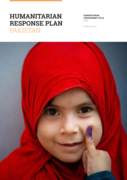
To optimize the speed and volume of critical humanitarian assistance, the HCT has developed this Plan to:
1. Reach a common understanding of earth ...

Looking forward, the 2019-2020 Regional Refugee Response Plan (RRRP) for the DRC situation aims at addressing the needs of new arrivals of Congolese refugees in the region, and those in protracted situations. By supporting livelihoods opportunities and through a resilience-based approach, refugees w
...