
Filter
4458
Text search:
Surveillance
Response
Featured
480
1228
Language
4131
266
111
95
71
53
34
25
4
4
3
3
2
2
1
1
1
1
1
1
1
1
1
1
1
1
1
Document type
1992
806
791
334
249
113
67
63
25
9
5
2
1
Countries
230
141
130
123
115
105
97
91
90
89
87
78
77
66
61
60
58
57
56
55
52
52
47
43
43
42
40
37
36
35
31
31
30
29
28
27
24
23
22
22
21
19
18
18
17
16
15
15
15
14
14
14
13
13
12
11
11
11
11
11
10
10
9
8
8
8
8
8
7
7
7
7
6
6
6
5
5
5
5
5
5
5
5
4
4
4
4
4
4
4
4
4
4
4
3
3
3
2
2
2
2
2
2
2
2
2
2
2
2
2
2
2
1
1
1
1
1
1
1
1
1
1
1
1
1
1
1
1
1
1
1
1
1
1
1
1
1
1
1
1
1
1
1
1
1
Authors & Publishers
868
231
158
132
98
64
60
50
48
45
44
42
41
40
35
28
26
24
22
22
20
20
20
18
18
17
17
17
16
15
15
15
14
14
14
14
14
13
13
13
13
12
12
12
12
12
12
11
11
11
11
11
11
10
10
10
10
10
10
10
9
9
9
9
9
9
9
9
9
9
9
9
9
9
8
8
8
8
7
7
7
7
7
7
7
7
7
7
7
7
6
6
6
6
6
6
6
6
6
6
6
6
6
6
6
6
6
6
6
6
6
6
6
6
5
5
5
5
5
5
5
5
5
5
5
5
5
5
5
5
5
5
5
5
5
4
4
4
4
4
4
4
4
4
4
4
4
4
4
4
4
4
4
4
4
4
4
4
4
4
4
4
4
4
4
4
4
4
4
4
4
4
4
3
3
3
3
3
3
3
3
3
3
3
3
3
3
3
3
3
3
3
3
3
3
3
3
3
3
3
3
3
3
3
3
3
3
3
3
3
3
3
3
3
3
3
3
3
3
3
3
3
3
3
3
3
3
3
3
3
3
3
3
3
3
3
3
2
2
2
2
2
2
2
2
2
2
2
2
2
2
2
2
2
2
2
2
2
2
2
2
2
2
2
2
2
2
2
2
2
2
2
2
2
2
2
2
2
2
2
2
2
2
2
2
2
2
2
2
2
2
2
2
2
2
2
2
2
2
2
2
2
2
2
2
2
2
2
2
2
2
2
2
2
2
2
2
2
2
2
2
2
2
2
2
2
2
2
2
2
2
2
2
2
2
2
2
2
2
2
2
2
2
2
2
2
2
2
2
2
2
2
2
2
2
2
2
2
2
2
2
2
2
2
2
2
2
2
2
2
2
2
2
2
2
2
2
2
2
2
2
2
2
2
2
2
2
2
2
2
2
2
2
2
2
2
2
2
2
2
2
2
2
2
2
2
2
2
2
2
2
2
2
2
2
2
2
2
2
2
2
2
2
2
2
2
2
2
2
2
2
2
2
2
2
2
2
2
2
2
2
1
1
1
1
1
1
1
1
1
1
1
1
1
1
1
1
1
1
1
1
1
1
1
1
1
1
1
1
1
1
1
1
1
1
1
1
1
1
1
1
1
1
1
1
1
1
1
1
1
1
1
1
1
1
1
1
1
1
1
1
1
1
1
1
1
1
1
1
1
1
1
1
1
1
1
1
1
1
1
1
1
1
1
1
1
1
1
1
1
1
1
1
1
1
1
1
1
1
1
1
1
1
1
1
1
1
1
1
1
1
1
1
1
1
1
1
1
1
1
1
1
1
1
1
1
1
1
1
1
1
1
1
1
1
1
1
1
1
1
1
1
1
1
1
1
1
1
1
1
1
1
1
1
1
1
1
1
1
1
1
1
1
1
1
1
1
1
1
1
1
1
1
1
1
1
1
1
1
1
1
1
1
1
1
1
1
1
1
1
1
1
1
1
1
1
1
1
1
1
1
1
1
1
1
1
1
1
1
1
1
1
1
1
1
1
1
1
1
1
1
1
1
1
1
1
1
1
1
1
1
1
1
1
1
1
1
1
1
1
1
1
1
1
1
1
1
1
1
1
1
1
1
1
1
1
1
1
1
1
1
1
1
1
1
1
1
1
1
1
1
1
1
1
1
1
1
1
1
1
1
1
1
1
1
1
1
1
1
1
1
1
1
1
1
1
1
1
1
1
1
1
1
1
1
1
1
1
1
1
1
1
1
1
1
1
1
1
1
1
1
1
1
1
1
1
1
1
1
1
1
1
1
1
1
1
1
1
1
1
1
1
1
1
1
1
1
1
1
1
1
1
1
1
1
1
1
1
1
1
1
1
1
1
1
1
1
1
1
1
1
1
1
1
1
1
1
1
1
1
1
1
1
1
1
1
1
1
1
1
1
1
1
1
1
1
1
1
1
1
1
1
1
1
1
1
1
1
1
1
1
1
1
1
1
1
1
1
1
1
1
1
1
1
1
1
1
1
1
1
1
1
1
1
1
1
1
1
1
1
1
1
1
1
1
1
1
1
1
1
1
1
1
1
1
1
1
1
1
1
1
1
1
1
1
1
1
1
1
1
1
1
1
1
1
1
1
1
1
1
1
1
1
1
1
1
1
1
1
1
1
1
1
1
1
1
1
1
1
1
1
1
1
1
1
1
1
1
1
1
1
1
1
1
1
1
1
1
1
1
1
1
1
1
1
1
1
1
1
1
1
1
1
1
1
1
1
1
1
1
1
1
1
1
1
1
1
1
1
1
1
1
1
1
1
1
1
1
1
1
1
1
1
1
1
1
1
1
1
1
1
1
1
1
1
1
1
1
1
1
1
1
1
1
1
1
1
1
1
1
1
1
1
1
1
1
1
1
1
1
1
1
1
1
1
1
1
1
1
1
1
1
1
1
1
1
1
1
1
1
1
1
1
1
1
1
1
1
1
1
1
1
1
1
1
1
1
1
1
1
1
1
1
1
1
1
1
1
1
1
1
1
1
1
1
1
1
1
1
1
1
1
1
1
1
1
1
1
1
1
1
1
1
1
1
1
1
1
1
1
1
1
1
1
1
1
1
1
1
1
1
1
1
1
1
1
1
1
1
1
1
1
1
1
1
1
1
1
1
1
1
1
1
1
1
1
1
1
1
1
1
1
1
1
1
1
1
1
1
1
1
1
1
1
1
1
1
1
1
1
1
1
1
1
1
1
1
1
1
1
1
1
1
1
1
1
1
1
1
1
1
1
1
1
1
1
1
1
1
1
1
1
1
1
1
1
1
1
1
1
1
1
1
1
1
1
1
1
1
1
1
1
1
1
1
1
1
1
1
1
1
1
1
1
1
1
1
1
1
1
1
1
1
1
1
1
1
1
1
1
1
1
1
1
1
1
1
1
1
1
1
1
1
1
1
1
1
1
1
1
1
1
1
1
1
1
1
1
1
1
1
1
1
1
1
1
1
1
1
1
1
1
1
1
1
1
1
1
1
1
1
1
1
1
1
1
1
1
1
1
1
1
1
1
1
1
1
1
1
1
1
1
1
1
1
1
1
1
1
1
1
1
1
1
1
1
1
1
1
1
1
1
1
1
1
1
1
1
1
1
1
1
1
1
1
1
1
1
1
1
1
1
1
1
1
1
1
1
1
1
1
1
1
1
1
1
1
1
1
1
1
1
1
1
1
1
1
1
1
1
1
1
1
1
1
1
1
1
1
1
1
1
1
1
1
1
1
1
1
1
1
1
1
1
1
1
1
1
1
1
1
1
1
1
1
1
1
1
1
1
1
1
1
1
1
1
1
1
1
1
1
1
1
1
1
1
1
1
1
1
1
1
1
1
1
1
1
1
1
1
1
1
1
1
1
1
1
1
1
1
1
1
1
1
1
1
1
1
1
1
1
1
1
1
1
1
1
1
1
1
1
1
1
1
1
1
1
1
1
1
1
1
1
1
1
1
1
1
1
1
1
1
1
1
1
1
1
1
1
1
1
1
1
1
1
1
1
1
1
1
1
1
1
1
1
1
1
1
1
1
1
1
1
1
1
1
1
1
1
1
1
1
1
1
1
1
1
1
1
1
1
1
1
1
1
1
1
1
1
1
1
1
1
1
1
1
1
1
1
1
1
1
1
1
1
1
1
1
1
1
1
1
1
1
1
1
1
1
1
1
1
1
1
1
1
1
1
1
1
1
1
1
1
1
1
1
1
1
1
1
1
1
1
1
1
1
1
1
1
1
1
1
1
1
1
1
1
1
1
1
1
1
1
1
1
1
1
1
1
1
1
1
1
1
1
1
1
1
1
1
1
1
1
1
1
1
1
1
1
1
1
1
1
1
1
1
1
1
1
1
1
1
1
1
1
1
1
1
1
1
1
1
1
1
1
1
1
1
1
1
1
1
1
1
1
1
1
1
1
1
1
1
1
1
1
1
1
1
1
1
1
1
1
1
1
1
1
1
1
1
1
1
1
1
1
1
1
1
1
1
1
1
1
1
1
1
1
1
1
1
1
1
1
1
1
1
1
1
1
1
1
1
1
1
1
1
1
1
1
1
1
1
1
1
1
1
1
1
1
1
1
1
1
1
1
1
1
1
1
1
1
1
1
1
1
1
1
1
1
1
1
1
1
1
1
1
1
1
1
1
1
1
1
1
1
1
1
1
1
1
1
1
1
1
1
1
1
1
1
1
1
1
1
1
1
1
1
1
1
1
1
1
1
1
1
1
1
1
1
1
1
1
1
1
1
1
1
1
1
1
1
1
1
1
1
1
1
1
1
1
1
1
1
1
1
1
1
1
1
1
1
1
1
1
1
1
1
1
1
1
1
1
1
1
1
1
1
1
1
1
1
1
1
1
1
1
1
1
1
1
1
1
1
1
1
1
1
1
1
1
1
1
1
1
1
1
1
1
1
1
1
1
1
1
1
1
1
1
1
1
1
1
1
1
1
1
1
1
1
1
1
1
1
1
1
1
1
1
1
1
1
1
1
1
1
1
1
1
1
1
1
1
1
1
1
1
1
1
1
1
1
1
1
1
1
1
1
1
1
1
1
1
1
1
1
1
1
1
1
1
1
1
1
1
1
1
1
1
1
1
1
1
1
1
1
1
1
1
1
1
1
1
1
1
1
1
1
1
1
1
1
1
1
1
1
1
1
1
1
1
1
1
1
1
1
1
1
1
1
1
1
1
1
1
1
1
1
1
1
1
1
1
1
1
1
1
1
1
1
1
1
1
1
1
1
1
1
1
1
1
1
1
1
1
1
1
1
1
1
1
1
1
1
1
1
1
1
1
1
1
1
1
1
1
1
1
1
1
1
1
1
1
1
1
1
1
1
1
1
1
1
1
1
1
1
1
1
1
1
1
1
1
1
1
1
1
1
1
1
1
1
1
1
1
1
1
1
1
1
1
1
1
1
1
1
1
1
1
1
1
1
1
1
1
1
1
1
1
1
1
1
1
1
1
1
1
1
1
1
1
1
1
1
1
1
1
1
1
1
1
1
1
1
1
1
1
1
1
1
1
1
1
1
1
1
1
1
1
1
1
1
1
1
1
1
1
1
1
1
1
1
1
1
1
1
1
1
1
1
1
1
1
1
1
1
1
1
1
1
1
1
1
1
1
1
1
1
1
1
1
1
1
1
1
1
1
1
1
1
1
1
1
1
1
1
1
1
1
1
1
1
1
1
1
1
1
1
1
1
1
1
1
1
1
1
1
1
1
1
1
1
1
1
1
1
1
1
1
1
1
1
1
1
1
1
1
1
1
1
1
1
1
1
1
1
1
1
1
1
1
1
1
1
1
1
1
1
1
1
1
1
1
1
1
1
1
1
1
1
1
1
1
1
1
1
1
1
1
1
1
1
1
1
1
1
1
1
1
1
1
1
1
1
1
1
1
1
1
1
1
1
1
1
1
1
1
1
1
1
1
1
1
1
1
1
1
1
1
1
1
1
1
1
1
1
1
1
1
1
1
1
1
1
1
1
1
1
1
1
1
1
1
1
1
1
1
1
1
1
1
1
1
1
1
1
1
1
1
1
1
1
1
1
1
1
1
1
1
1
1
1
1
1
1
1
1
1
1
1
1
1
1
1
1
1
1
1
1
1
1
1
1
1
1
1
1
1
1
1
1
1
1
1
1
1
1
1
1
1
1
1
1
1
1
1
1
1
1
1
1
1
1
1
1
1
1
1
1
1
1
1
1
1
1
1
1
1
1
1
1
1
1
1
1
1
1
1
1
1
1
1
1
1
1
1
1
1
1
1
1
1
1
1
1
1
1
1
1
1
1
1
1
1
1
1
1
1
1
1
1
1
1
1
1
1
1
1
1
1
1
1
1
1
1
1
1
1
1
1
1
1
1
1
1
1
1
1
1
1
1
1
1
1
1
1
1
1
1
1
1
1
1
1
1
1
1
1
1
1
1
1
1
1
1
1
1
1
1
1
1
1
1
1
1
1
1
1
1
1
1
1
1
1
1
1
1
1
1
1
1
1
1
1
1
1
1
1
1
1
1
1
1
1
1
1
1
1
1
1
1
1
1
1
1
1
1
1
1
1
1
1
1
1
1
1
1
1
1
1
1
1
1
1
1
1
1
1
1
1
1
1
1
1
1
1
1
1
1
1
1
1
1
1
1
1
1
1
1
1
1
1
1
1
1
1
1
1
1
1
1
1
1
1
1
1
1
1
1
1
1
1
1
1
1
1
1
1
1
1
1
1
1
1
1
1
1
1
1
1
1
1
1
1
1
1
1
Publication Years
1741
2414
286
17
Category
1720
337
267
244
139
53
43
Toolboxes
613
269
254
204
190
184
162
120
119
117
113
91
78
70
70
69
68
64
63
61
49
40
31
27
6
4

The "Integrated Management of Malaria Training – Health Worker’s Manual" is a practical guide developed by Uganda’s Ministry of Health to train healthcare workers at all levels in the effective diagnosis, treatment, prevention, and management of malaria. It aligns with national malaria treatme
...
nt guidelines and aims to improve the quality of care and reduce malaria-related illness and death. The manual covers key topics such as clinical assessment of fever, use of rapid diagnostic tests (RDTs), case management of uncomplicated and severe malaria, malaria in pregnancy, co-infections like HIV, as well as community engagement and proper documentation. It includes structured training sessions, case studies, and job aids designed to strengthen the skills of health workers in both public and private sectors, and to ensure standardized, evidence-based malaria care across the country.
more
Le Infezioni in Medicina, n. 1, 3-10, 2019

Offering additional pre-exposure prophylaxis (PrEP) choices has the potential to increase uptake and effective use of PrEP, and of HIV prevention overall, as it allows people to choose a method that they prefer.
In this guideline, WHO recommends an offering long-acting injectable lenacapavir (LEN
...
) as an additional HIV prevention choice, as part of combination HIV prevention approaches. LEN, administered twice a year as PrEP, has been shown to be highly effective at reducing the risk of HIV acquisition. In this guideline, WHO also recommends using HIV rapid diagnostic tests (RDTs) for individuals initiating or continuing long-acting injectable PrEP, such as LEN and long acting injectable cabotegravir (CAB-LA). Flexible HIV testing approaches are essential for ensuring that testing does not become a barrier to accessing or continuing PrEP, including long-acting injectable options.
more

Guidelines on lenacapavir for HIV prevention and testing strategies for long-acting injectable pre-exposure prophylaxis. Web Annex B

This policy brief presents a summary of current evidence on vulnerability to TB and proposes interventions for equitable, person-centred, and human rights-based TB prevention and care. It aligns with WHO policies and guidance on TB prevention and screening, management of TB and comorbidities, access
...
to health care, universal health coverage, determinants of TB, TB-associated impairment and disability, social protection, as well as ethics, equity and human rights.
more

This document highlights the latest WHO recommendations designed to optimize health outcomes, streamline delivery and address persistent barriers to prevention and care. It especially focuses on people often left behind in service delivery, including adolescents and young people, key populations and
...
people with advanced HIV disease. The guidance emphasizes integration, simplification, choice and equity.
more

This publication provides guidance for planning country-specific programming to achieve the triple elimination of mother-to-child (or vertical) transmission of HIV, syphilis and hepatitis B virus. It is based on the WHO Triple Elimination Framework, which promotes an integrated, person-centred appro
...
ach to efficiently and holistically prevent transmission of these infections from mothers to their infants along four pillars.
more

WHO guidelines for clinical management of arboviral diseases: dengue, chikungunya, Zika and yellow fever
recommended
The new WHO guidelines provide clinical management recommendations for four of the most widespread arboviruses affecting humans: dengue, chikungunya, Zika, and yellow fever.
An integrated approach is vital, as these four diseases often present with similar symptoms, especially in the early stages
...
of infection, and multiple arboviruses may circulate simultaneously in certain regions. This makes clinical differentiation challenging, particularly where diagnostic testing is not readily available.
This guideline is available in online format on the MAGICapp platform
more

Access to safe, effective and quality-assured health products and technologies is crucial for achieving universal health coverage and primary health care goals. The continued growth of the aging population; increasing burden of noncommunicable diseases; growing burden of mental health issues; climat
...
e change; shifting patterns of vector borne diseases, fungal disease and waterborne diseases; antimicrobial resistance; and new infectious hazards create an ongoing need for equitable access to safe, effective and quality-assured health products and technologies, and renewed investments in research and development for innovative health products and technologies.
The coronavirus pandemic exposed the inequalities in access to health products, highlighting the need for longer-term strategies to strengthen access to health products and technologies outside of and in emergency situations. While technological and scientific advances present an opportunity to increase access to health products and technologies, the risk of increasing inequality due to higher prices for new health products and technologies; the persisting problem of substandard and falsified medical products; a lack of skilled workforce in many low- and middle-income countries; and a lack of data for decisionmaking and for measuring progress present significant challenges.
more

The ongoing global pandemic of SARS-CoV-2 (Covid-19) poses unique diagnostic and clinical management challenges in regions where seasonal epidemic-prone diseases are endemic. Diseases such as dengue, malaria, seasonal influenza, leptospirosis, chikungunya, scrub typhus and bacterial infections often
...
present with febrile syndromes that mimic or co-exist with SARS-CoV-2 infection, complicating diagnosis and treatment. This document provides guidelines for preventing, diagnosing and managing such co-infections. A high level of suspicion is essential during the monsoon and post-monsoon seasons, taking into account region-specific disease prevalence. While the WHO's case definition for SARS-CoV-2 is broad and sensitive, the need for parallel testing for co-infections, in accordance with the protocols of the MoHFW, ICMR, NVBDCP and NCDC, is necessitated by overlapping clinical features. Ensuring the availability of reliable rapid diagnostic kits and applying integrated clinical and laboratory approaches are crucial to improving patient outcomes in the context of concurrent infections.
Accessed on 26/08/2025.
more

The 2022 report reviews the global malaria diagnostics market and technological landscape to support Unitaid’s 2023–2027 strategy for quality malaria case management. The report highlights the stalled progress of malaria control efforts, the gaps in access to diagnostics and the public health im
...
plications of P. falciparum HRP2/3 gene deletions, which compromise the accuracy of the widely used HRP2-detecting rapid diagnostic tests (RDTs). The report analyses the malaria RDT market, noting supplier diversification, price trends and production shifts resulting from the pandemic. It also addresses the emerging point-of-care G6PD testing market, which is required to ensure the safe radical cure of P. vivax infections. It surveys technological innovation, including digital microscopy, hemozoin tests, nucleic acid detection and biosensors, while emphasising that RDTs and microscopy will remain the mainstay of case management in the near term. The report identifies market shortcomings, access barriers and opportunities to improve malaria case management and diagnostic coverage.
more

Drawing on the World Health Organization’s package of NCD best buys, the report demonstrates how these evidence-based measures can help countries reduce premature deaths, strengthen health systems, and advance progress towards the Sustainable Development Goals. It provides policymakers, donors, ad
...
vocates, and partners with a clear economic and social rationale for scaling up implementation of proven solutions. By framing NCD prevention and control as both a health and development priority, the report offers a roadmap for action that delivers benefits across populations, economies, and generations. The evidence is clear: investing in WHO’s best buys is not only possible—it is imperative. The time to act is now.
more

WHO guideline on balanced national controlled medicines policies to ensure medical access and safety
Access to medicines is essential for attainment of universal health coverage, which is central to achievement of the health-related Sustainable Development Goals. Controlled medicines include those such as opioids, benzodiazepines, barbiturates, amphetamines and others with identified or emergent cl
...
inical indications. WHO recognizes that these medicines are necessary for pre- and post-operative care, for sedation, for the management of both acute and chronic pain, for palliative care, as anticonvulsants (anti-epileptics), for the management of anxiety disorders and for the management of substance use disorders, including as opioid agonist therapy (OAT).
more
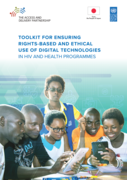
This Toolkit for ensuring rights-based and ethical use of digital technologies in HIV and health programmes is derived from the comprehensive UNDP Guidance on the rights-based and ethical use of digital technologies in HIV and health programmes document. The foundational UNDP Guidance document outli
...
nes key ethical, human rights and technical considerations for countries adopting digital technologies for health, detailing human rights risks, norms and standards, and provides a practical checklist for assessment.
The Toolkit serves as a quick reference guide for UNDP staff, governments, partners, technology developers, and civil society organizations, designed to provide practical guidance for implementing ethical digital health solutions by distilling and structuring the in-depth information from the broader UNDP Guidance into six easy-access modules. Each module addresses a specific key issue by outlining definitions, ethical principles, key considerations, and recommendations that align with the comprehensive framework established by the UNDP Guidance.
more

This plan, approved by the Organization’s 62nd Directing Council, was shaped by extensive consultations with countries and stakeholders, and commits to transformative health outcomes over the next six years, tackling noncommunicable diseases (NCDs), mental health, health security, fragmented healt
...
h systems and services, and the elimination of communicable diseases, amongst others.
“The COVID-19 pandemic taught us that the Region of the Americas is stronger when we work together,” said Dr. Jarbas Barbosa, PAHO Director. “This Strategic Plan harnesses our collective strength to build resilient health systems, reduce disease burden, and improve health and well-being for all across the Americas.”
The plan builds on lessons from the COVID-19 pandemic, which exposed gaps in health systems while highlighting the power of joint action. It targets measurable impacts in countries, such as reducing maternal mortality, reversing rising suicide rates, and eliminating diseases like leprosy and Chagas.
more

This document, with a focus on the built environment and health care facilities, intends to guide the audience in preparing for and responding to SARI pandemics caused by existing and novel pathogens. It provides technical guidance on designing, establishing, and managing health care facilities for
...
severe acute respiratory infections (SARI), covering point of entry, treatment centers, entry to health system facilities, quarantine and community facilities, and home care and quarantine.
more

This resource was written to support persons who seek to initiate a support group for suicide loss survivors. Suicide bereavement support groups offer a wide range of benefits that can help individuals to navigate the difficult time following a loss. First and foremost, a support group provides a ch
...
ance to break the silence and reduce the stigma surrounding suicide by creating a space where individuals can openly discuss their grief. It also serves as a source of information about suicide and bereavement. It is important to note that support groups are not a replacement for professional help and that support groups may not be for everyone.
more

In an era of constrained resources and tightening budgets, strategic prioritization in tuberculosis (TB) programming is more critical than ever. Countries must make informed decisions to allocate limited resources effectively - maximizing impact, preventing avoidable deaths, and sustaining progress
...
towards ending TB.
more

Global tuberculosis report 2025
recommended
The WHO Global tuberculosis report 2025 provides a comprehensive and up-to-date assessment of the TB epidemic and of progress in prevention, diagnosis and treatment of the disease, at global, regional and country levels. This is done in the context of global TB commitments, strategies and targets.
...
The 2025 edition of the report is, as usual, based primarily on data gathered by WHO from national ministries of health in annual rounds of data collection. In 2025, 184 countries and areas with more than 99% of the world’s population and TB cases reported data.
more

These guidelines update earlier WHO recommendations to maximize the HIV prevention impact of safe VMMC services and aim to guide the transition to the sustained provision of interventions with a focus on the health and well-being of both adolescent boys and men.
