Filter
483
Text search:
90-90-90
Featured
Recommendations
26
New Publications
146
Language
Document type
No document type
350
Studies & Reports
64
Guidelines
37
Infographics
7
Strategic & Response Plan
7
Fact sheets
5
Manuals
4
Training Material
4
Brochures
2
Situation Updates
1
Resource Platforms
1
Countries / Regions
South Africa
22
Malawi
18
Kenya
17
Ethiopia
16
Zambia
15
Ukraine
14
Asia
14
India
13
Uganda
11
Africa
11
Senegal
10
Lesotho
10
Russia
10
Sierra Leone
9
Myanmar / Burma
9
Latin America and the Carribbean
9
Ghana
8
Nepal
8
Namibia
8
Global
7
Liberia
6
Eastern Europe
6
Nigeria
5
Congo, Democratic Republic of
5
Tanzania
5
Bangladesh
5
Mozambique
5
Burkina Faso
4
Zimbabwe
4
Syria
4
Cambodia
4
Botswana
4
Western and Central Europe
4
Paraguay
4
Tajikistan
4
Philippines
3
Rwanda
3
Haiti
2
Pakistan
2
Germany
2
Papua New Guinea
2
Benin
2
Peru
2
Yemen
2
East and Southern Africa
2
Venezuela
2
Armenia
2
Southern Africa
2
Georgia
2
Vietnam
2
Guinea-Bissau
1
Cameroon
1
Indonesia
1
Sudan
1
Eswatini/ Swaziland
1
Burundi
1
Chile
1
Middle East and North Africa
1
South–East Asia Region
1
Albania
1
Moldova
1
Kyrgyzstan
1
Kazakhstan
1
Authors & Publishers
Publication Years
Category
Countries
240
Clinical Guidelines
16
Women & Child Health
6
Capacity Building
3
Pharmacy & Technologies
3
Key Resources
2
Annual Report MEDBOX
1
Public Health
1
Toolboxes
HIV
166
TB
49
Mental Health
10
COVID-19
8
Ebola & Marburg
5
Disability
4
Conflict
4
Refugee
4
Caregiver
3
NTDs
3
Cholera
2
Global Health Education
2
Health Financing Toolbox
2
Polio
1
Zika
1
Planetary Health
1
Pharmacy
1
2.0 Rapid Response
1
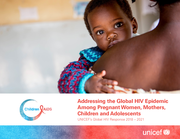
UNICEF’s Global HIV Response 2018 – 2021
Accessed: 02.11.2019

UNAIDS/WHO Working group
HIV/AIDS and STI surveillance 2015 / Reference
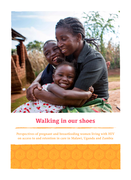
The study sought to understand the factors that facilitate women to adhere to treatment and return to health facilities for routine care from their own perspective. The researchers focused on Malawi, Uganda and Zambia, early adopters of the global guidance to provide lifelong treatment for pregnant
...
Reporting period: January 2014 – December 2014
The human immunodeficiency virus (HIV) epidemic in Myanmar is concentrated among men who have sex with men (MSM), people who inject drugs (PWID) and female sex workers (FSW). HIV prevalence in the adult population aged 15 years and older was esti ...
The human immunodeficiency virus (HIV) epidemic in Myanmar is concentrated among men who have sex with men (MSM), people who inject drugs (PWID) and female sex workers (FSW). HIV prevalence in the adult population aged 15 years and older was esti ...

This revised trainer's guide contains a prototype training schedule for four days. Teaching and learning strategies are highly interactive, using participatory and experiential approach. Training outcomes include developing skills in assessment of clients for risk factors; conduct basic screening pr
...
Accessed: 29.09.2019

Cambodia drafted and adopted the National Action Plan for Disaster Risk Reduction 2014-2018 in 2014. This plan finalized the required policies and legal processes to strengthen DRM in Cambodia. It also focused on capacity building at national and sub-national levels and provided dedicated resources
...

While many of the countries hit by the COVID-19 in the first few months of the year are now beginning to relax lockdown measures as infection and death rates fall, in the regions most affected by HIV, TB and malaria, such as Africa, South Asia and Latin America, the pandemic continues to accelerate.
...

Supplement Article
J Acquir Immune Defic Syndr Volume 78, Supplement 1, August 15, 2018 www.jaids.com

Background: Community health worker (CHW) programmes are a valuable component of primary care in resource-poor settings. The evidence supporting their effectiveness generally shows improvements in disease-specific outcomes relative to the absence of a CHW programme. In this study, we evaluated expan
...
A Cost-Efficiency Analysis for the Kyrgyz Republi
L’expansion de la mise en œuvre des approches de suivi du traitement par la réalisation de tests de mesure de la charge virale et de tests de diagnostic chez le nourrisson sera indispensable pour garantir la qualité des soins et des traitements ainsi que le succès des programmes. Le fait de ch
...