
Filter
4306
Text search:
United
Healthcare
Featured
Recommendations
374
New Publications
959
Language
Document type
No document type
1899
Studies & Reports
1022
Guidelines
641
Manuals
268
Strategic & Response Plan
219
Fact sheets
102
Training Material
63
Situation Updates
55
Resource Platforms
16
Infographics
11
Brochures
4
Online Courses
2
App
1
Videos
1
Countries / Regions
Global
254
Kenya
132
Western and Central Europe
106
India
101
South Africa
93
Nigeria
91
Sierra Leone
83
Africa
76
Ethiopia
73
Tanzania
71
Latin America and the Carribbean
68
Syria
67
Liberia
66
Ukraine
59
Zambia
57
Myanmar / Burma
57
Uganda
54
Nepal
54
Ghana
53
Namibia
53
Bangladesh
49
Malawi
42
Rwanda
41
Congo, Democratic Republic of
33
Philippines
32
South–East Asia Region
30
East and Southern Africa
27
Eastern Europe
27
Russia
27
Yemen
26
West and Central Africa
26
Eastern Europe and Central Asia
26
Guinea
25
Mozambique
25
Senegal
24
South Sudan
24
Brazil
24
Middle East and North Africa
24
Asia
24
Burkina Faso
22
Indonesia
22
Pakistan
21
Cambodia
21
Zimbabwe
20
Venezuela
18
Haiti
17
Germany
17
Lebanon
17
Lesotho
16
Jordan
15
Afghanistan
15
Colombia
14
Sudan
12
Central African Republic
11
United Kingdom
11
Thailand
10
Vietnam
10
Mali
9
USA
9
Somalia
9
Eswatini/ Swaziland
9
Sri Lanka
9
Western Pacific Region
9
Moldova
9
Iraq
8
Botswana
8
Madagascar
8
Cameroon
7
China
7
Benin
7
Argentina
7
Albania
7
Georgia
7
Côte d’Ivoire / Ivory Coast
6
Turkey
6
Peru
6
Mexico
6
Chile
6
Laos
6
Libya
5
Palestine
5
Iran
5
Saudi Arabia
4
Egypt
4
North Macedonia
4
Ecuador
4
Armenia
4
Tajikistan
4
Chad
3
Hungary
3
Paraguay
3
Poland
3
Kyrgyzstan
3
Kazakhstan
3
North America
3
Jamaica
3
Mauritius
3
Spain
3
Belarus
3
Guinea-Bissau
2
Morocco
2
Niger
2
Togo
2
Burundi
2
El Salvador
2
Bolivia
2
Greece
2
Guatemala
2
Bhutan
2
Italy
2
Southern Africa
2
Canada
2
Timor Leste/ East Timor
2
Qatar
2
Estonia
2
Romania
2
Lithuania
2
Uzbekistan
2
Turkmenistan
2
Japan
2
France
2
Portugal
2
Gambia
1
Malaysia
1
Ireland
1
Papua New Guinea
1
Dominican Republic
1
Serbia
1
Croatia
1
Honduras
1
Angola
1
Nicaragua
1
North Korea
1
Djibouti
1
Mongolia
1
Congo-Brazzaville
1
Bulgaria
1
Slovakia
1
Gabon
1
Denmark
1
Belgium
1
Maldives
1
Tunisia
1
Norway
1
Bosnia and Herzegovina
1
Belize
1
Costa Rica
1
Panama
1
Authors & Publishers
Publication Years
Category
Countries
1474
Clinical Guidelines
273
Public Health
262
Women & Child Health
230
Key Resources
227
Capacity Building
62
Pharmacy & Technologies
48
Annual Report MEDBOX
1
Toolboxes
COVID-19
459
HIV
412
Mental Health
302
AMR
197
TB
195
Caregiver
162
Planetary Health
149
Disability
141
Conflict
128
NCDs
118
Ebola & Marburg
115
Health Financing Toolbox
98
Refugee
89
Pharmacy
88
Global Health Education
85
NTDs
84
Rapid Response
73
Malaria
48
2.0 Rapid Response
44
Zika
31
Social Ethics
30
Natural Hazards
27
Cholera
23
Polio
20
Specific Hazards
17
Typhoon
1

Zambia has completed the implementation of the National TB Strategic Plan (2017-2021) that set in motion the TB elimination agenda in Zambia through coordinated and accelerated TB response. During this period, the National TB and Leprosy Programme (NTLP) registered tremendous success.
The NTLP is
...

The document outlines essential steps and provides guidance to countries on the adoption and deployment of c-IPTp so that it is integrated into the existing health system. It draws upon best practices and lessons learned from pilot implementation experiences in eight African countries and targets st
...

This Implementation Kit (I-Kit), developed by the Health Communication Capacity Collaborative (HC3), helps national and local stakeholders to design country-specific social and behavioural change communication (SBCC) campaigns that address the threat posed by substandard, spurious, falsified and fal
...

The WHO guidelines for malaria bring together the Organization’s most up-to-date recommendations for malaria in one user-friendly and easy-to-navigate online platform.
The WHO guidelines for malaria bring together the Organization’s most up-to-date recommendations for malaria in one user-frie
...

Meeting report, Kampala, Uganda,
7–8 November 2023

Community led-monitoring is based on the principle that «Nothing that is done for us should
be done without us”. The combination of this principle with evidence shows that community-led
monitoring is an important driver of improved service delivery and health outcomes that needs to
be re-empha
...

The National Strategic Plan for Malaria Elimination 2021–2025 outlines Bangladesh’s roadmap to achieve zero indigenous malaria cases by 2030, with an interim goal to reduce transmission to near-zero levels by 2025. The strategy builds upon earlier successes in malaria control and shifts focus to
...
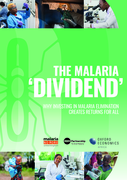
Getting back on track to cutting malaria by 90% could boost African economies by $127bn by 2030. This important new report shows we can save lives, boost economies and trade, creating a healthier world

This policy brief presents a summary of current evidence on vulnerability to TB and proposes interventions for equitable, person-centred, and human rights-based TB prevention and care. It aligns with WHO policies and guidance on TB prevention and screening, management of TB and comorbidities, access
...

The National Strategic Plan on Malaria Prevention and Elimination Period 2021 – 2025 seeks to build on the previous national successes of the National Institute of Malariology, Parasitology, and Entomology (NIMPE) while addressing current challenges to reduce the overall burden of malaria in the S
...

This toolkit is a comprehensive set of practical tools and resources designed to support country-level risk communication and community engagement (RCCE) practitioners, decision-makers and partners to plan and implement readiness and response activities for Ebola disease outbreaks. The toolkit conta
...

This toolkit is a comprehensive set of practical tools and resources designed to support country-level risk communication and community engagement (RCCE) practitioners, decision-makers, and partners to plan and implement readiness and response activities for yellow fever outbreaks. The toolkit conta
...

This toolkit is a comprehensive set of practical tools and resources designed to support country-level risk communication and community engagement (RCCE) practitioners, decision-makers, and partners to plan and implement readiness and response activities for yellow fever outbreaks. The toolkit conta
...

This document highlights the latest WHO recommendations designed to optimize health outcomes, streamline delivery and address persistent barriers to prevention and care. It especially focuses on people often left behind in service delivery, including adolescents and young people, key populations and
...

Access to safe, effective and quality-assured health products and technologies is crucial for achieving universal health coverage and primary health care goals. The continued growth of the aging population; increasing burden of noncommunicable diseases; growing burden of mental health issues; climat
...

Noncommunicable diseases (NCDs) (e.g., cardiovascular diseases, cancers, diabetes, and chronic respiratory diseases) and mental health conditions (e.g., Alzheimer’s disease and related dementias, depression, anxiety, autism spectrum disorders) are the world’s leading cause of preventable illness
...

This publication provides an overview of evidence and guidance on the growing challenge of workplace heat stress in the context of climate change. It highlights the health and productivity risks faced by billions of workers, especially in manual labor sectors. The report details the physiological, s
...

Malaria remains a significant public health concern in the SADC region, accounting for 20% of childhood deaths, as well as prompting numerous outpatient visits and hospitalisations. Around three-quarters of the population, including 35 million children under the age of five and 8.5 million pregnant
...

Tuberculosis (TB) remains a significant global health challenge, with an estimated annual death rate of approximately one per 100,000 people in countries with low TB prevalence. Rapid reductions in TB cases and deaths worldwide depend on research breakthroughs, including the development of new vac
...
These guidelines have been developed in simple, user-friendly language and they explain the procedures for patients’ access to and the safe management of Schedule I and II drugs that are necessary for the treatment and relief of moderate to severe pain. They provide both procedures for acquisition
...
