
Filter
4202
Text search:
environmental
quality
Featured
Recommendations
405
New Publications
1079
Language
Document type
No document type
2151
Studies & Reports
868
Guidelines
536
Manuals
266
Strategic & Response Plan
220
Fact sheets
57
Training Material
55
Situation Updates
21
Resource Platforms
13
Brochures
6
Infographics
6
Online Courses
2
App
1
Countries / Regions
Global
242
India
152
Kenya
135
South Africa
89
Ethiopia
88
Myanmar / Burma
87
Uganda
82
Western and Central Europe
81
Nigeria
80
Nepal
75
Sierra Leone
73
Latin America and the Carribbean
68
Africa
68
Liberia
66
Ghana
66
Bangladesh
66
Rwanda
62
Malawi
61
Zambia
60
Tanzania
56
Namibia
50
Congo, Democratic Republic of
36
Indonesia
32
Syria
31
Philippines
30
Ukraine
29
Zimbabwe
28
Haiti
27
South Sudan
26
South–East Asia Region
26
Cambodia
25
Eastern Europe
25
Lesotho
24
Senegal
22
Yemen
22
Asia
22
Botswana
19
Afghanistan
18
West and Central Africa
18
Pakistan
17
Mozambique
17
East and Southern Africa
15
USA
14
Lebanon
14
Middle East and North Africa
14
Guinea
13
Burkina Faso
13
Eswatini/ Swaziland
13
Russia
13
Vietnam
13
Sudan
12
Eastern Europe and Central Asia
12
Brazil
11
Western Pacific Region
11
Somalia
10
Jordan
10
Thailand
10
Colombia
10
Venezuela
10
Cameroon
9
China
9
Mali
8
Germany
7
Peru
7
Laos
7
North America
7
Central African Republic
6
Madagascar
6
Iraq
5
Palestine
5
Benin
4
Timor Leste/ East Timor
4
Moldova
4
Georgia
4
Portugal
4
Spain
4
Côte d’Ivoire / Ivory Coast
3
Egypt
3
Argentina
3
North Macedonia
3
Burundi
3
Ecuador
3
Chile
3
Paraguay
3
Tajikistan
3
Iran
3
Kyrgyzstan
3
Jamaica
3
Japan
3
United Kingdom
3
Morocco
2
Niger
2
Turkey
2
Dominican Republic
2
Serbia
2
Hungary
2
Honduras
2
Libya
2
Angola
2
Guatemala
2
Mexico
2
Sri Lanka
2
Poland
2
Canada
2
Turkmenistan
2
Belarus
2
Guinea-Bissau
1
Saudi Arabia
1
Togo
1
Chad
1
Gambia
1
Malaysia
1
Ireland
1
Singapore
1
Papua New Guinea
1
Croatia
1
El Salvador
1
Bolivia
1
Greece
1
Other region
1
Fiji
1
Italy
1
Albania
1
Armenia
1
Southern Africa
1
Qatar
1
Bulgaria
1
Romania
1
Australia
1
Kazakhstan
1
Denmark
1
France
1
Maldives
1
Mauritius
1
Tunisia
1
Norway
1
Azerbaijan
1
Israel
1
Bosnia and Herzegovina
1
Authors & Publishers
Publication Years
Category
Countries
1545
Key Resources
400
Public Health
306
Clinical Guidelines
203
Women & Child Health
146
Capacity Building
65
Pharmacy & Technologies
49
Annual Report MEDBOX
1
Toolboxes
Planetary Health
358
Mental Health
278
COVID-19
250
Disability
247
AMR
171
NTDs
149
TB
144
Global Health Education
132
Caregiver
127
HIV
118
NCDs
107
Conflict
100
Rapid Response
100
Natural Hazards
94
Ebola & Marburg
83
Pharmacy
74
2.0 Rapid Response
74
Malaria
52
Refugee
51
Cholera
48
Health Financing Toolbox
41
Polio
35
Specific Hazards
31
Zika
26
Social Ethics
20
Typhoon
4
South Sudan
2

This training module on malaria case management has been developed to support the staff involved in malaria control and elimination programmes in the effective organization of malaria diagnosis and case management services

This toolkit is a comprehensive set of practical tools and resources designed to support country-level risk communication and community engagement (RCCE) practitioners, decision-makers, and partners to plan and implement readiness and response activities for yellow fever outbreaks. The toolkit conta
...

This guide provides strategic direction for host countries, event organizers, health authorities, and key stakeholders to effectively plan and conduct Simulation Exercises (SimEx) and After Action Reviews (AARs) for mass gathering events. Packed with practical tools, it empowers users to seamlessly
...

The Multi-Hazard Early Warning System (MHEWS) Checklist is a practical tool consisting of major components and actions that national governments, community organizations and partners within
and across all sectors can refer when developing or evaluating early warning systems

Growing emergencies and displacements across the world demand increasingly complex interventions and responses. The World Health Organization (WHO) has developed Malaria control in emergencies: a field manual to provide technical guidance to help partners respond effectively to malaria in emergency
...

Despite being a preventable and curable infectious disease, tuberculosis (TB) has continued to elude global controll efforts. In 2023, 8.2 milion people with TB were diagnosed and notified to the WHO, the hightest number ever reported since WHO began tracking.

Noncommunicable diseases (NCDs) (e.g., cardiovascular diseases, cancers, diabetes, and chronic respiratory diseases) and mental health conditions (e.g., Alzheimer’s disease and related dementias, depression, anxiety, autism spectrum disorders) are the world’s leading cause of preventable illness
...

Early Adolescent Skills for Emotions (EASE) is an evidence-based group psychological intervention to help 10–15-year-olds affected by internalizing problems (e.g. stress and symptoms of anxiety, depression) in communities exposed to adversity. Published by the World Health Organization (WHO) and U
...

This document outlines the plan for a continental cholera prevention and control with the implementation framework for the Cholera IMST, detailing its governance structure, strategic priorities, and operational modalities
Tobacco mythbusters: tools for debunking common myths promoted by the tobacco industry

PHSM are vital in reducing the risk and scale of infectious disease transmission and lowering hospitalization and deaths. Examples include contact tracing, quarantine and isolation, mask use, ventilation, school or workplace measures, mobility restrictions and travel requirements.
While these mea
...

These Frequently Asked Questions (FAQs) have been developed by the Infant Feeding in Emergencies (IFE) Core Group Infectious Disease Working Group based on the most recent recommendations, collective knowledge and evidence on cholera. The FAQs also draw on infant and young child feeding (IYCF) recom
...
Ces questions fréquemment posées (FAQs) ont été élaborées par le Groupe de travail sur les maladies infectieuses du Groupe l'alimentation central sur des nourrissons en situation d'urgence (IFE) en se basant sur les recommandations les plus récentes, les connaissances collectives et les donnÃ
...

Strengthening global health security to protect the world against future epidemics and pandemics requires well-tested and decentralized capacities for the local detection and rapid containment of outbreaks of infectious disease. For such capacities to translate into effective response actions, ind
...


Building true health security in a global age. Findings and recommendations of the Global Council. In landmark findings based on two years of research and convenings around the world, the new report shows that high levels of inequality are linked to outbreaks becoming pandemics and that inequality i
...

World malaria report 2025
recommended
Addressing the threat of antimalarial drug resistance. This year’s report spotlights the growing threat of antimalarial drug resistance. Partial resistance to artemisinin derivatives – the backbone of malaria treatments after failures of chloroquine and sulfadoxine-pyrimethamine – has now b
...

Why this document? The Waste Value Chain Analysis (WVCA) has been designed to help organizations understand local waste value chains, with the aim: To identify gaps and opportunities for improvement of local waste value chains (e.g. where shredding, baling can make recovery profitable) and much more
...
Data presentation is the basis for describing data and generating hypotheses for further testing. It consists of a number of methods for summarising data in order to support the identification of patterns. Data can be summarised in a number of forms, including tables or graphical representations s
...
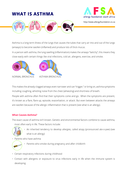
Asthma is a long term illness of the lungs that causes the tubes that carry air into and out of the lungs (airways) to become swollen (inflamed) and produce lots of thick mucus.
In a person with asthma, the lung swelling (inflammation) makes the airways “twitchy”; this means they close easily
...
