
Filter
1977
Text search:
soap
Featured
260
539
Language
Document type
959
360
173
144
88
68
64
47
46
17
7
4
Countries
114
101
92
67
66
63
57
56
46
40
39
37
30
29
28
28
28
26
23
22
21
21
20
20
20
18
18
16
14
14
14
14
14
13
13
11
11
10
10
8
8
8
7
6
6
6
6
6
6
5
5
5
5
4
4
4
4
4
4
4
4
4
4
3
3
3
3
3
3
3
3
3
2
2
2
2
2
2
2
2
2
1
1
1
1
1
1
1
1
1
1
1
1
1
1
1
1
1
1
1
1
1
1
1
1
1
Authors & Publishers
Publication Years
Category
829
241
132
128
65
58
22
Toolboxes
421
205
86
84
48
48
46
45
45
43
37
35
34
28
27
24
22
20
11
8
6
6
5
1
1
1

Available translations: Albanian, Armenian, Azerbaijani, Bosnian, Bulgarian, Croatian, Czech, Danish, French, Georgian, German, Greek, Hungarian, Italian, Lithuanian, Macedonian, Polish, Romanian, Russian, Serbian, Slovenian, Spanish, Turkish, Ukrainian
Go to the website: https://www.cö.int/en/web
...
Community use of face masks
recommended
Update 1 October 2020.
This document provides guidance to Member States on the effective use of face masks/coverings in the community by individuals without COVID-19 symptoms in order to reduce potential transmission of SARS-CoV-2.a It also provides advice on the use of masks during home care for
...

Accessed: 25.04.2020
COVID-19 represents a dramatic new threat to life in war-torn countries. International humanitarian law (IHL) is a key legal framework that provides crucial safeguards to people affected by armed conflicts. This overview summarizes some of the main provisions of IHL that may
...
Covid19 - Standard Operating Procedures – UNHAS ROSS
This SOP defines WFP Aviation/UNHAS procedures to be followed when operating in areas affected by the current outbreak of the coronavirus disease (COVID-19). This SOP will be communicated to UNHAS staff, Operators, and user organisations.
Acco
...

Many countries are taking strict measures to prevent the spread of COVID-19 with lockdowns, curfews, and closure of public spaces and services. As a result of stress and uncertainty caused by these strict measures, women and girls are at even greater risk of violence at a time when their access to s
...
временное руководство, 13 мая 2020 г.
Целью настоящего документа является предоставле- ние временных рекомендаций по биологической без- опасности в лабораторных услÐ
...
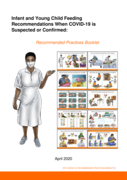
Recommended practices booklet (April 2020)
The set includes 10 Counselling Cards and a Recommended Practices Booklet. Infant and young child feeding (IYCF) counselling in the context of COVID-19 remains a critical nutrition intervention for the protection and support of pregnant women, caregivers,
...
Updted Sept.2021
Hesperian stated producing COVID-19 related materials beginning with, English and Spanish versions, even as they were transitioning to remote work. They understood that accurate information from a credible source circulated as early as possible would be critical. Faster than had ev
...
In response to the COVID-19 outbreak, this guidance provides information on infection and prevention control (IPC) for older people, their friends and families, carers, and healthcare providers. Anyone who manages, works, volunteers or provides care at any type of facilities where older people recei
...
Accessed: 01.05.2020
Breastmilk is the best source of nutrition for infants, including infants whose mothers have confirmed or suspected coronavirus infection. As long as an infected mother takes appropriate precautions—outlined below—she can breastfeed her baby. Breastmilk contains antibodie
...

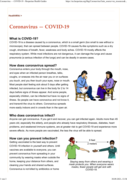
Coronavirus disease 2019 is also known as COVID-19. It is a viral illness that infects the lungs. It is caused by a virus called SARS-associated coronavirus (SARS-CoV-2). This illness was first seen in late 2019 in China and has spread across the world.
The signs of COVID-19 are like the flu, and y
...

Accessed: 02.05.2020
Coronaviruses are a large family of viruses that are known to cause illness ranging from the common cold to more severe diseases such as Middle East Respiratory Syndrome (MERS) and Severe Acute Respiratory Syndrome (SARS).
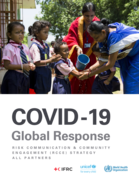
This strategy, produced by IFRC, UNICEF and WHO, provides an overview of RCCE coordination approach and priorities across the different phases of the COVID-19 preparedness and response

Here are the answers to the most common queries about the novel coronavirus based on our discussion with the various experts from the reputed institutes and analysis of the CDC, WHO, and MoHFW guidelines.

This guidance note developed by UNICEF helps WASH staff in their preparedness and response to the current COVID-19 pandemic. It provides an overview of Infection Prevention and Control (IPC) and its intersection with water, sanitation and hygiene (WASH). It also provides key actions that staff can i
...

This guidance note developed by UNICEF is intended to help WASH staff in their preparedness and response to the current COVID-19 pandemic. It provides an overview of Infection Prevention and Control (IPC) and its intersection with water, sanitation and hygiene (WASH), and how staff can help prevent
...

Mothers and healthcare workers who support them have many questions and concerns about whether it is safe for mothers with confirmed or suspected COVID-19 to be close to and breastfeed their babies during the pandemic.
To address their questions, WHO has released a list of Frequently asked question
...
Training Material - Power Point

According to WHO, infection prevention and control (IPC) is a scientific approach and practical solution designed to prevent harm caused by infection to patients and health workers. It is grounded in infectious diseases, epidemiology, social science and health system strengthening. IPC occupies a un
...
This guidance note is for UNICEF Regional and Country Office WASH staff to help them in their preparedness and response to the current COVID-19 global pandemic. It provides an overview of Infection Prevention and Control (IPC) and its intersection with water, sanitation and hygiene (WASH) and how UN
...
