
Filter
703
Text search:
Government
of
India,
Planning
Commission
Featured
42
226
Language
Document type
440
131
50
33
22
10
7
6
3
Countries / Regions
89
51
48
24
20
18
14
13
11
9
9
8
7
7
7
6
6
6
5
5
4
4
4
4
3
3
3
3
3
3
2
2
2
2
2
2
2
2
2
2
2
1
1
1
1
1
1
1
1
1
1
1
1
1
1
1
1
1
1
1
1
1
1
1
1
1
1
1
1
Authors & Publishers
Publication Years
Category
258
59
57
32
19
7
3
Toolboxes
68
63
35
35
34
33
23
19
17
15
14
12
10
10
9
8
7
7
6
5
4
4
3
2
2
WHO QualityRights is an initiative which aims to improve the quality of care in mental health and related services and to promote the human rights of people with psychosocial, intellectual and cogni
...

The World Heart Federation (WHF) Roadmap series covers a large range of cardiovascular conditions. These Roadmaps identify potential roadblocks and their solutions to improve the prevention, detection and management
...

This Guide is part of WHO’s overall programme of work on Political Economy of Health Financing Reform: Analysis and Strategy to Support UHC. The
...

This policy brief presents a summary of current evidence on vulnerability to TB and proposes interventions for equitable, person-centred, and human rights-based TB prevention and care. It aligns with WHO policies and guidance on TB prevention and sc
...

The COVID-19 pandemic has exposed the inadequacy of investments in public health, the persistence of profound economic and social inequalities and the fragility
...

This paper presents a bibliometric analysis of the literature on private health aid and official health assistance between 2000 and 2022. It provides an overview of the sites and themes in the liter
...
Guidelines for drinking-water quality: Fourth edition incorporating the first and second addenda
recommended
Guidance has been updated on a number of chemicals: asbestos, bentazone, chromium, iodine, manganese, microcystins, nickel, silver, tetrachloroethene and trichloroethene. Guidance has also been added for chemicals not previously assessed in the Guid
...

The GHS Index is intended to be a key resource in the face of increasing risks of high-consequence and globally catastrophic biological events and in light
...

This integrated operational framework provides an overview of the connections between mental health, neurological and substance use (MNS) conditions, and their links to health, well-being and the broader public health and sustainable development age
...

WHO guideline on balanced national controlled medicines policies to ensure medical access and safety
Access to medicines is essential for attainment of universal health coverage, which is central to achievement of the health-related Sustainable Development Goals. Controlled medicines include those
...
A broad range of UNHCR’s key priorities overlap with MHPSS issues – for example, child protection and sexual and gender-based violence [SGBV] prevention and response.
Despite all these existent synergies, UNHCR’s current policies and guideli
...

The substantial burden of death and disability that results from interpersonal violence, road traffic injuries, unintentional injuries, occupational health risks, air pollution, climate change, and inadequate water and sanitation falls disproportion
...
Curricular Modules for Lecturers and Teachers.
The 2nd edition of the Global Public Health Curriculum has been published in the South Eastern European Journal of Public Health, end
...
The full range and scale of all forms of violence against children are only now becoming visible, as is the evidence of the harm it does. This book
...
PHARMA’S RESPONSE TO THE COVID-19 VACCINES CRISIS. Update Feb., 14, 2022. In September 2021, Amnesty International published A Double Dose of Inequality, which assessed the extent to which the pharmaceutical industry was restricting access to Covi
...
Building on our decades of commitment to human rights in medicine and healthcare, we have published a new report on emerging threats in health-related human rights both globally and in the UK.
'Health and human rights in the new world (dis)order'
...
The report surveyed 9 leading bilateral and multilateral education donors in respect of their approach to disability-inclusive education.

WHY THIS GUIDE?
Because, in the face of crises and emergencies, it is vital to include a human rights perspective in responses. Vulnerable groups face major obstacles to accessing and benefiting from prevention, mitigation, and health care policies
...
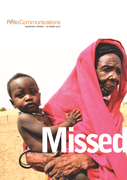
With a focus on Pakistan and Nigeria’s most vulnerable communities, this report provides insight about the role that community push-back is playing in the transmission of the polio virus and how the Global Polio Eradication Initiative (GPEI) can m
...
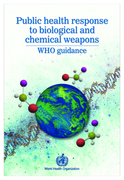
The message contained in this publication is clear: countries need a
public health system that can respond to the deliberate release of
chemical and biological agents. Regrettable though this message may
be, the use
...
