
Filter
1727
Text search:
World
Health
Organization
(WHO)
Regional
Office
for
Europe
Featured
Recommendations
170
New Publications
257
Language
Document type
No document type
747
Studies & Reports
425
Guidelines
249
Manuals
127
Strategic & Response Plan
67
Training Material
38
Fact sheets
38
Situation Updates
22
Brochures
5
Resource Platforms
4
Infographics
4
App
1
Countries / Regions
Western and Central Europe
142
Global
104
Ukraine
84
Eastern Europe
69
Russia
44
Eastern Europe and Central Asia
29
Syria
23
Latin America and the Carribbean
20
Sierra Leone
17
India
16
Liberia
14
Ethiopia
14
Africa
14
Asia
13
Moldova
12
Ghana
11
Uganda
11
Nepal
11
Tanzania
11
South–East Asia Region
11
Germany
10
Kenya
10
South Africa
10
Myanmar / Burma
10
Tajikistan
10
Zambia
9
Rwanda
9
Nigeria
8
Guinea
7
Middle East and North Africa
7
Albania
7
Kyrgyzstan
7
Georgia
7
Afghanistan
6
North Macedonia
6
Romania
6
Congo, Democratic Republic of
5
Pakistan
5
South Sudan
5
China
5
Bangladesh
5
Malawi
5
Mozambique
5
East and Southern Africa
5
West and Central Africa
5
Poland
5
Armenia
5
Kazakhstan
5
Zimbabwe
4
Philippines
4
Turkey
4
Thailand
4
Namibia
4
Venezuela
4
Belarus
4
Burkina Faso
3
USA
3
Somalia
3
Iraq
3
Jordan
3
Lebanon
3
Cambodia
3
Indonesia
3
Brazil
3
Hungary
3
Botswana
3
Greece
3
Sri Lanka
3
Yemen
3
Western Pacific Region
3
Estonia
3
Iran
3
Guinea-Bissau
2
Cameroon
2
Haiti
2
Sudan
2
Serbia
2
Laos
2
Bulgaria
2
Slovakia
2
Uzbekistan
2
Turkmenistan
2
Azerbaijan
2
Bosnia and Herzegovina
2
Senegal
1
Morocco
1
Saudi Arabia
1
Niger
1
Chad
1
Papua New Guinea
1
Peru
1
Eswatini/ Swaziland
1
Croatia
1
Burundi
1
Colombia
1
Angola
1
Lesotho
1
Mexico
1
Palestine
1
Canada
1
Lithuania
1
Vietnam
1
Belgium
1
Mauritius
1
Tunisia
1
United Kingdom
1
Portugal
1
Spain
1
Israel
1
Latvia
1
Authors & Publishers
Publication Years
Category
Countries
314
Clinical Guidelines
141
Key Resources
109
Public Health
102
Women & Child Health
97
Capacity Building
24
Pharmacy & Technologies
14
Toolboxes
HIV
211
Mental Health
199
COVID-19
179
TB
150
Planetary Health
120
Conflict
79
AMR
67
Refugee
61
Global Health Education
58
Disability
55
Caregiver
52
Rapid Response
50
Ebola & Marburg
32
Pharmacy
32
NCDs
29
2.0 Rapid Response
29
NTDs
28
Health Financing Toolbox
27
Zika
12
Specific Hazards
11
Polio
9
Natural Hazards
8
Cholera
5
Malaria
5
Typhoon
2
Social Ethics
2

Ebola disease and Marburg disease outbreaks continue to occur in Africa, with increased frequency. In addition to resulting in high mortality and morbidity, the outbreaks generate fear and mistrust about the response activities within the communities affected.
Infection prevention and control (IP
...
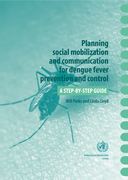
A Step-by-Step Guide.
It is intended for health planners, dengue or vector control programme managers and individuals, nongovernmental organizations (NGOs) and other agencies with interests and/or
...

Updated recommendations on simplified service delivery and diagnostics for hepatitis C infection
recommended
Policy Brief. 24 June 2022. This policy brief, one of two on the updated hepatitis C (HCV) guidelines, focuses on the new recommendations on simplified service delivery for a public health approach
...
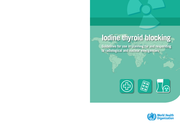
These guidelines provide a recommendation on iodine thyroid blocking (ITB), via oral administration of stable iodine, as an urgent protective action in responding to a nuclear accident. This recommendation aims to support emergency planners, policy makers, public
...
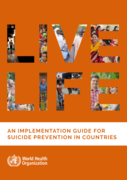
More than 700 000 people lose their life to suicide every year. The world is not on track to reach the 2030 suicide reduction targets. WHO advocates for
...
IPCAT2 will assist countries to determine the core components already in place, that is, existing strengths, and to identify gaps or weaknesses to guide action planning. IPCAT2 corresponds to the six core component recommendations of the guidelines targeted at the national level.
It is very impor
...
The document provides guidance on the tools, activities and strategies required to achieve malaria elimination and prevent re-establishment of transmission in countries, regardless of where they lie across the spectrum of transmission intensity. It is intended to inform national malaria elimination
...

Surveillance, case investigation and contact tracing for monkeypox: interim guidance 24 June 2022
recommended
The overall goal of surveillance, case investigation and contact tracing in this context is to stop human-to-human transmission to control the outbreak. The key objectives of surveillance and case investigation are to rapidly identify cases and clusters in order to provide optimal clinical care; to
...

The purpose of this document is to present and promote the minimum requirements for IPC programmes at the national and health care facility level, identified by expert consensus according to availab
...

Despite being a preventable and curable infectious disease, tuberculosis (TB) has continued to elude global controll efforts. In 2023, 8.2 milion people with TB were diagnosed and notified to the WHO, the hightest number ever reported since
...
This document provides interim guidance to countries on testing considerations and strategies for suspect cases of severe acute hepatitis of unknown aetiology in children. It is primarily intended for
...
Interim guidanceAnnex to: Policy considerations for implementing a risk-based approach to international travel in the context of COVID-19, 2 July 2021

The Interim Guidance for Risk Communication and Community Engagement (RCCE) outlines recommendations, considerations and methods to raise awareness, manage risk perception, maintain trust and proactively support people at risk to make informed decis
...
23 December 2020 This document summarizes WHO recommendations for the rational use of personal protective equipment (PPE) in health care settings a
...

This document aims to provide concrete, pragmatic guidance for how TB modelling and related technical assistance is undertaken to support country decision-making. The target audience for this docume
...
Key stakeholders must be involved in the planning, implementation, monitoring and evaluation of NCD plans and programmes. Within a ministry of health there will be different types of stakeholders, such as programme managers and senior managers in de
...
