
Filter
644
Text search:
sterile
products
Featured
120
168
Language
Document type
303
167
76
48
20
13
12
2
1
1
1
Countries
52
21
16
15
15
15
13
12
12
10
9
9
9
9
8
7
7
6
6
5
5
4
4
3
3
3
3
2
2
2
2
2
2
2
2
2
1
1
1
1
1
1
1
1
1
1
1
1
1
1
1
1
1
1
1
1
1
1
1
1
1
1
Authors & Publishers
Publication Years
Category
216
128
56
51
40
23
17
Toolboxes
46
44
38
35
35
33
26
24
19
15
15
10
10
9
8
7
5
4
3
2
1
1
1
1
This curricula guide builds on several existing products of WHO and partners, aimed at supporting countries in their effort to address the first objective of the GAP-AMR (to improve awareness and understanding of AMR). It is targeted specifically at
...
Rwanda Guidelines for variation to registered pharmaceutical products.
In recent years, high prices of pharmaceutical products have posed challenges in high- and low-income countries alike. In many instances, high prices of pharmaceutical products have led to significa
...
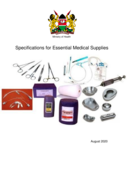
August 2020.
In December 2018, the President launched the UHC pilot covering four strategically selected counties-Isiolo, Kisumu, Machakos and Nyeri. It isplanned that by the year 2022, all persons in Kenya will be able to use the essential services they need for their health
...

The manufacturing process is one of the key steps where quality control is required to ensure quality of medicinal products, including herbal medicines. Good manufacturing practices (GMP) is one of the most important tools for this measure.
Guidelines on hepatitis B and C testing
recommended
Testing and diagnosis of hepatitis B (HBV) and C (HCV) infection is the gateway for access to both prevention and treatment services, and is a crucial component of an effective response to the hepatitis epidemic. Early identification of persons with chronic HBV or HCV infection enables them to recei
...
Version 46 22 Dec 2025. his document provides an overview of malaria rapid diagnostic tests (RDTs) for Principal Recipients (PRs) of Global Fund grants, indicating their eligibility for procurement under the Global Fund's Quality Assurance Policy. The included
...

This publication describes the first WHO public-benefit Target Product Profiles (TPPs) for snakebite antivenoms. It focuses on antivenoms for treatment of snakebite envenoming in sub-Saharan Africa. Four TPPs are described in the document:
Broad spectrum Pan-African polyvalent antivenoms:
...

A terminal cleaning and decontamination checklist for Ebola care facilities should include thorough cleaning and disinfection of all surfaces, removal and proper disposal of contaminated items, and disinfection of the entire area, including hard-to-reach places, using appropriate methods and
...
The animal health subsector within the agriculture sector is the gatekeeper of antimicrobial resistance (AMR) in livestock, aquaculture, animal products, and the immediate animal environment. In support of member countries taking responsibility for
...

The war in Gaza has resulted in many hundreds of spinal cord injuries (SCI), which will have a devastating impact on those injured and their families for the rest of their lives.
The optimal management of SCI requires effective pre-hospital care, early specialized imaging (using CT or MRI) and in
...
Pharmaceutical regulators are at the forefront of ensuring that only safe and effective medicines are authorized and available in the market. This document builds on the recommendations in the above publication and has been prepared to specifically assist national medicines regulatory authorities to
...

Despite high regional demand for vaccines valued at over US$ 1 billion annually, Africa’s vaccine industry provides only 0.1% of global supply. Vaccine inequity and hoarding at the start of the pandemic, which resulted in delays in obtaining COVID-19 doses, stimulated new resolve to address future
...
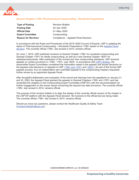
Revision Bulletin ESPNF


Replacement of Annex 2 of WHO Technical Report Series, No. 964
...
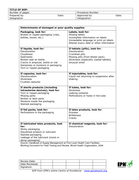
Last revised 2015.
Original Word document on: http://www.epnetwork.org/Resources/Standard%20Operating%20Procedure/Determinants%20of%20damaged%20or%20poor%20quality%20supplies_SOP.doc


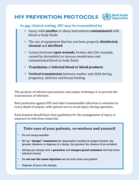
Accessed 24 June 2014
