Filter
150
Text search:
smoke-free
Featured
Recommendations
9
New Publications
53
Language
Document type
No document type
77
Studies & Reports
33
Guidelines
15
Manuals
7
Strategic & Response Plan
6
Brochures
5
Fact sheets
4
Training Material
1
Situation Updates
1
Resource Platforms
1
Countries / Regions
Global
17
Philippines
7
Ghana
4
Kenya
4
Ethiopia
3
India
3
Nepal
3
Cambodia
3
South Africa
3
Western and Central Europe
3
Africa
3
Liberia
2
Nigeria
2
Uganda
2
Zambia
2
Tanzania
2
Thailand
2
Rwanda
2
Bangladesh
2
Namibia
2
Myanmar / Burma
2
South–East Asia Region
2
Asia
2
Eastern Europe
2
Sierra Leone
1
Senegal
1
Congo, Democratic Republic of
1
USA
1
Zimbabwe
1
Haiti
1
Turkey
1
China
1
Indonesia
1
Eswatini/ Swaziland
1
Botswana
1
Madagascar
1
Lesotho
1
East and Southern Africa
1
West and Central Africa
1
Middle East and North Africa
1
Western Pacific Region
1
Latin America and the Carribbean
1
Eastern Europe and Central Asia
1
Paraguay
1
Venezuela
1
Kyrgyzstan
1
Kazakhstan
1
United Kingdom
1
Azerbaijan
1
Authors & Publishers
Publication Years
Category
Countries
66
Public Health
25
Clinical Guidelines
8
Women & Child Health
7
Capacity Building
3
Pharmacy & Technologies
1
Toolboxes
NCDs
19
Mental Health
16
Planetary Health
8
Refugee
6
TB
5
Global Health Education
5
Caregiver
5
COVID-19
3
Polio
2
Health Financing Toolbox
2
Malaria
2
Ebola & Marburg
1
HIV
1
2.0 Rapid Response
1
Childhood Respiratory Diseases & the Environment learning objectives
•To understand how the respiratory tract is affected by the environment
•To describe respiratory diseases linked to the environment
•To list one population-level intervention and one personal-level intervention for d
...
Almost 25% of deaths worldwide could be prevented if the actions in the compendium were fully implemented
This compendium provides a systematic compilation of published guidance from WHO and other UN organizations on health and environment. Guidance on policies and actions as well as awareness rais
...
This report challenges policy-makers and political leaders to tackle fossil fuel production and consumption as a health control issue, in the same way that smoking has been reduced and regulated. Fossil fuel combustion is a major source of toxic air pollution that kills 7 million people every year,
...
In this version of the compendium, each guidance is coded using the International Classification of Health Interventions (ICHI).
The compendium provides a systematic compilation of published guidance from WHO and other UN organizations on health and environment. Guidance on policies and actions a
...
Asthma is the most common chronic condition in children worldwide. It affects daytime activities, sleep and school attendance and causes anxiety to parents, families and other carers. The quality of asthma diagnosis and management globally still needs substantial improvement. From infancy to the tee
...
Noncommunicable diseases (NCDs) such as cancer, cardiovascular diseases, diabetes and chronic respiratory diseases and their risk factors are an increasing public health and development challenge in Turkey. This report provides evidence through three analyses that NCDs reduce economic output, and di
...
Interested in leading a more heart healthy lifestyle? Small steps go a long way especially when you connect with others to stay motivated. This fact sheet suggests several lifestyle changes you can make starting today and ways to get your friends, family, and colleagues involved.
In 2015, 5.9 million children under age five died (1). The major causes of child deaths globally are pneumonia, prematurity, intrapartum-related complications, neonatal sepsis, congenital anomalies, diarrhoea, injuries and malaria (2). Most of these diseases and conditions are at least partially cau
...
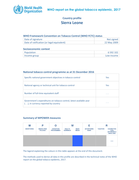
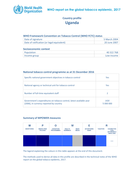
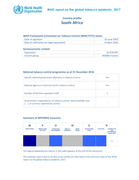
The seventh WHO Report on the global tobacco epidemic analyses national efforts to implement the most effective measures from the WHO Framework Convention on Tobacco Control (WHO FCTC) that are proven to reduce demand for tobacco.
The report showed that while only 23 countries have implemented ce
...
Joining efforts to control two trelated global epidemics.