
Filter
379
Text search:
polio
eradication
Featured
21
124
Language
Document type
218
59
46
27
15
4
4
3
2
1
Countries
23
20
20
13
12
11
11
9
9
9
8
7
6
5
5
5
5
5
4
4
4
4
4
3
3
3
3
3
3
2
2
2
2
2
2
2
2
2
2
1
1
1
1
1
1
1
1
1
1
1
1
1
1
1
1
1
1
1
1
1
1
1
Authors & Publishers
Publication Years
Category
160
28
22
19
8
5
4
Toolboxes
77
36
18
14
13
12
11
10
9
5
4
4
4
4
4
3
2
2
2
2
2
1
1
1

This interactive map shows polio cases and disease surveillance indicators worldwide within the desired timeframe and available data, as well as environmental samples in endemic countries.
Find out the latest information on
...

Find a weekly, country specific update at: http://polioeradication.org/polio-today/polio-now/this-week/
Summary of new viruses this week: Afghanistan –five wild poliovirus type 1 (WPV1) positive environmental samples. Pakistan –one WPV1 positive environmental sample. Papua New Guinea – three cases of circulating vaccine-derived poliovirus type 1 (cVDPV1). DRC- one case of circulating vaccine-der
...

Summary of new viruses this week: Pakistan—three wild poliovirus type 1 (WPV1) cases and five WPV1-positive environmental samples; Nigeria—one circulating vaccine derived poliovirus type 2 (cVDPV2)-positive environmental sample; and, Niger—one cVDPV2 isolated from a healthy community. See coun
...
The marathon to eradicate polio is on its final lap: the world is more than 99% of the way to success. After millennia of living with poliovirus and suffering the paralysis it causes, today nearly all the world’s people live in
...
Long-term polio vaccine security – the timely, sustained, and uninterrupted supply of suitable types of affordable, quality-assured polio vaccines – is essential in the global effort to achieve
...
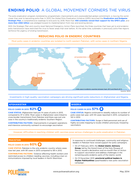

THE SYRIAN ARAB REPUBLIC, IRAQ, JORDAN, LEBANON, TURKEY, WEST BANK AND GAZA STRIP, EGYPT
This document aims to provide global guidance on poliomyelitis (polio) surveillance in the context of the COVID-19 pandemic. It comes as a technical complement to Polio
...
Responding to a poliovirus event and outbreak, Part 1: General (SOPs) describes the general principles and steps to facilitate timely and effective responses to poliovirus events and outbreaks, and incorporate lessons learned from recent previous outbreak response efforts. This document summarizes r
...
The main objectives of the SOPs are to: (i) establish standards and timelines for response activities; and (ii) guide national governments and GPEI partners in key support functions.
This new version of the SOPs presents overall response requirements for dealing with type 1, 2 and 3 poliovirus fo
...
