
Filter
3254
Text search:
World
Health
Organization
Africa
Region
Featured
279
788
Language
3163
65
47
45
26
18
16
12
3
3
2
2
2
1
1
1
1
1
1
1
1
1
1
1
1
1
1
1
1
1
1
1
1
Document type
1643
810
328
189
133
55
47
31
8
5
2
Countries / Regions
202
114
102
102
99
86
78
74
74
58
56
54
45
44
41
39
39
36
36
35
34
33
31
30
30
29
29
26
24
24
23
22
20
19
16
15
14
14
14
14
13
12
11
11
10
10
10
10
10
10
9
9
8
8
8
8
8
7
7
7
6
5
5
5
5
4
4
4
4
4
4
3
3
3
3
3
3
3
3
3
3
3
2
2
2
2
2
2
2
2
2
2
2
2
2
2
2
2
2
1
1
1
1
1
1
1
1
1
1
1
1
1
1
1
1
1
1
1
1
1
1
1
1
1
1
1
1
1
1
1
1
1
1
Authors & Publishers
505
194
140
112
97
64
57
57
48
47
26
26
20
18
17
17
17
16
15
15
15
13
13
12
12
12
12
10
10
10
10
10
10
9
9
9
9
9
9
9
9
9
9
9
8
8
8
8
8
8
8
8
8
7
7
7
7
6
6
6
6
6
6
6
6
6
6
6
6
6
6
6
6
5
5
5
5
5
5
5
5
5
5
5
5
5
5
5
5
5
4
4
4
4
4
4
4
4
4
4
4
4
4
4
4
4
4
4
4
4
4
4
4
4
4
4
4
4
4
4
4
4
4
4
4
4
4
4
4
4
4
4
4
4
3
3
3
3
3
3
3
3
3
3
3
3
3
3
3
3
3
3
3
3
3
3
3
3
3
3
3
3
3
3
3
3
3
3
3
3
3
3
3
3
3
3
3
3
3
3
3
3
3
3
3
3
3
3
3
3
3
3
2
2
2
2
2
2
2
2
2
2
2
2
2
2
2
2
2
2
2
2
2
2
2
2
2
2
2
2
2
2
2
2
2
2
2
2
2
2
2
2
2
2
2
2
2
2
2
2
2
2
2
2
2
2
2
2
2
2
2
2
2
2
2
2
2
2
2
2
2
2
2
2
2
2
2
2
2
2
2
2
2
2
2
2
2
2
2
2
2
2
2
2
2
2
2
2
2
2
2
2
2
2
2
2
2
2
2
2
2
2
2
2
2
2
2
2
2
2
2
2
2
2
2
2
2
2
2
2
2
2
2
2
2
2
2
2
2
2
2
2
2
2
2
2
2
2
2
2
2
2
2
2
2
2
2
2
2
1
1
1
1
1
1
1
1
1
1
1
1
1
1
1
1
1
1
1
1
1
1
1
1
1
1
1
1
1
1
1
1
1
1
1
1
1
1
1
1
1
1
1
1
1
1
1
1
1
1
1
1
1
1
1
1
1
1
1
1
1
1
1
1
1
1
1
1
1
1
1
1
1
1
1
1
1
1
1
1
1
1
1
1
1
1
1
1
1
1
1
1
1
1
1
1
1
1
1
1
1
1
1
1
1
1
1
1
1
1
1
1
1
1
1
1
1
1
1
1
1
1
1
1
1
1
1
1
1
1
1
1
1
1
1
1
1
1
1
1
1
1
1
1
1
1
1
1
1
1
1
1
1
1
1
1
1
1
1
1
1
1
1
1
1
1
1
1
1
1
1
1
1
1
1
1
1
1
1
1
1
1
1
1
1
1
1
1
1
1
1
1
1
1
1
1
1
1
1
1
1
1
1
1
1
1
1
1
1
1
1
1
1
1
1
1
1
1
1
1
1
1
1
1
1
1
1
1
1
1
1
1
1
1
1
1
1
1
1
1
1
1
1
1
1
1
1
1
1
1
1
1
1
1
1
1
1
1
1
1
1
1
1
1
1
1
1
1
1
1
1
1
1
1
1
1
1
1
1
1
1
1
1
1
1
1
1
1
1
1
1
1
1
1
1
1
1
1
1
1
1
1
1
1
1
1
1
1
1
1
1
1
1
1
1
1
1
1
1
1
1
1
1
1
1
1
1
1
1
1
1
1
1
1
1
1
1
1
1
1
1
1
1
1
1
1
1
1
1
1
1
1
1
1
1
1
1
1
1
1
1
1
1
1
1
1
1
1
1
1
1
1
1
1
1
1
1
1
1
1
1
1
1
1
1
1
1
1
1
1
1
1
1
1
1
1
1
1
1
1
1
1
1
1
1
1
1
1
1
1
1
1
1
1
1
1
1
1
1
1
1
1
1
1
1
1
1
1
1
1
1
1
1
1
1
1
1
1
1
1
1
1
1
1
1
1
1
1
1
1
1
1
1
1
1
1
1
1
1
1
1
1
1
1
1
1
1
1
1
1
1
1
1
1
1
1
1
1
1
1
1
1
1
1
1
1
1
1
1
1
1
1
1
1
1
1
1
1
1
1
1
1
1
1
1
1
1
1
1
1
1
1
1
1
1
1
1
1
1
1
1
1
1
1
1
1
1
1
1
1
1
1
1
1
1
1
1
1
1
1
1
1
1
1
1
1
1
1
1
1
1
1
1
1
1
1
1
1
1
1
1
1
1
1
1
1
1
1
1
1
1
1
1
1
1
1
1
1
1
1
1
1
1
1
1
1
1
1
1
1
1
1
1
1
1
1
1
1
1
1
1
1
1
1
1
1
1
1
1
1
1
1
1
1
1
1
1
1
1
1
1
1
1
1
1
1
1
1
1
1
1
1
1
1
1
1
1
1
1
1
1
1
1
1
1
1
1
1
1
1
1
1
1
1
1
1
1
1
1
1
1
1
1
1
1
1
1
1
1
1
1
1
1
1
1
1
1
1
1
1
1
1
1
1
1
1
1
1
1
1
1
1
1
1
1
1
1
1
1
1
1
1
1
1
1
1
1
1
1
1
1
1
1
1
1
1
1
1
1
1
1
1
1
1
1
1
1
1
1
1
1
1
1
1
1
1
1
1
1
1
1
1
1
1
1
1
1
1
1
1
1
1
1
1
1
1
1
1
1
1
1
1
1
1
1
1
1
1
1
1
1
1
1
1
1
1
1
1
1
1
1
1
1
1
1
1
1
1
1
1
1
1
1
1
1
1
1
1
1
1
1
1
1
1
1
1
1
1
1
1
1
1
1
1
1
1
1
1
1
1
1
1
1
1
1
1
1
1
1
1
1
1
1
1
1
1
1
1
1
1
1
1
1
1
1
1
1
1
1
1
1
1
1
1
1
1
1
1
1
1
1
1
1
1
1
1
1
1
1
1
1
1
1
1
1
1
1
1
1
1
1
1
1
1
1
1
1
1
1
1
1
1
1
1
1
1
1
1
1
1
1
1
1
1
1
1
1
1
1
1
1
1
1
1
1
1
1
1
1
1
1
1
1
1
1
1
1
1
1
1
1
1
1
1
1
1
1
1
1
1
1
1
1
1
1
1
1
1
1
1
1
1
1
1
1
1
1
1
1
1
1
1
1
1
1
1
1
1
1
1
1
1
1
1
1
1
1
1
1
1
1
1
1
1
1
1
1
1
1
1
1
1
1
1
1
1
1
1
1
1
1
1
1
1
1
1
1
1
1
1
1
1
1
1
1
1
1
1
1
1
1
1
1
1
1
1
1
1
1
1
1
1
1
1
1
1
1
1
1
1
1
1
1
1
1
1
1
1
1
1
1
1
1
1
1
1
1
1
1
1
1
1
1
1
1
1
1
1
1
1
1
1
1
1
1
1
1
1
1
1
1
1
1
1
1
1
1
1
1
1
1
1
1
1
1
1
1
1
1
1
1
1
1
1
1
1
1
1
1
1
1
1
1
1
1
1
1
1
1
1
1
1
1
1
1
1
1
1
1
1
1
1
1
1
1
1
1
1
1
1
1
1
1
1
1
1
1
1
1
1
1
1
1
1
1
1
1
1
1
1
1
1
1
1
1
1
1
1
1
1
1
1
1
1
1
1
1
1
1
1
1
1
1
1
1
1
1
1
1
1
1
1
1
1
1
1
1
1
1
1
1
1
1
1
1
1
1
1
1
1
1
1
1
1
1
1
1
1
1
1
1
1
1
1
1
1
1
1
1
1
1
1
1
1
1
1
1
1
1
1
1
1
1
1
1
1
1
1
1
1
1
1
1
1
1
1
1
1
1
1
1
1
1
1
1
1
1
1
1
1
1
1
1
1
1
1
1
1
1
1
1
1
1
1
1
1
1
1
1
1
1
1
1
1
1
1
1
1
1
1
1
1
1
1
1
1
1
1
1
1
1
1
1
1
1
1
1
1
1
1
1
1
1
1
1
1
1
1
1
1
1
1
1
1
1
1
1
1
1
1
1
1
1
1
1
1
1
1
1
1
1
1
1
1
1
1
1
1
1
1
1
1
1
1
1
1
1
1
1
1
1
1
1
1
1
1
1
1
1
1
1
1
1
1
1
1
1
1
1
1
1
1
1
1
1
1
1
1
1
1
1
1
1
1
1
1
1
1
1
1
1
1
1
1
1
1
1
1
1
1
1
1
1
1
1
1
1
1
1
1
1
1
1
1
1
1
1
1
1
1
1
1
1
1
1
1
1
1
1
1
1
1
1
1
1
1
1
1
1
1
1
1
1
1
1
1
1
1
1
1
1
1
1
1
1
1
1
1
1
1
1
1
1
1
1
1
1
1
1
1
1
1
1
1
1
1
1
1
1
1
1
1
1
1
1
1
1
1
1
1
1
1
1
1
1
1
1
1
1
1
1
1
1
1
1
1
1
1
1
1
1
1
1
1
1
1
1
1
1
1
1
1
1
1
1
1
1
1
1
1
1
1
1
1
1
1
1
1
1
1
1
1
1
1
1
1
1
1
1
1
1
1
1
1
1
1
1
1
1
1
1
1
1
1
1
1
1
1
1
1
1
1
1
1
1
1
1
1
1
1
1
1
1
1
1
1
1
1
1
1
1
1
1
1
1
1
1
1
1
1
1
1
1
1
1
1
1
1
1
1
1
1
1
1
1
1
1
1
1
1
1
1
1
1
1
1
1
1
1
1
1
1
1
1
1
1
1
1
1
1
1
1
1
1
1
1
1
1
1
1
1
1
1
1
1
1
1
1
1
1
1
1
1
1
1
1
1
1
1
1
1
1
1
1
1
1
1
1
1
1
1
1
1
1
1
1
1
1
1
1
1
1
1
1
1
1
1
1
1
1
1
1
1
1
1
1
1
1
1
1
1
1
1
1
1
1
1
1
1
1
1
1
1
1
1
1
1
1
1
1
1
1
1
1
1
1
1
1
1
1
1
1
1
1
1
1
1
1
1
1
1
1
1
1
1
1
1
1
1
1
1
1
1
1
1
1
1
1
1
1
1
1
1
1
1
1
1
1
1
1
1
1
1
1
1
1
1
1
1
1
1
1
1
1
1
1
1
1
1
1
1
1
1
1
1
1
1
1
1
1
1
1
1
1
1
1
1
1
1
1
1
1
1
1
1
1
1
1
1
1
1
1
1
1
1
1
1
1
1
1
1
1
1
1
1
1
1
1
1
1
1
1
1
1
1
1
1
1
1
1
1
1
1
1
1
1
1
1
1
1
1
1
1
1
1
1
1
1
1
1
1
1
1
1
1
1
1
1
1
1
1
1
1
1
1
1
1
1
1
1
1
1
1
1
1
1
1
1
1
1
1
1
1
1
1
1
1
1
1
1
1
1
1
1
1
1
1
1
1
1
1
1
1
1
1
1
1
1
1
1
1
1
1
1
1
1
1
1
1
1
1
1
1
1
1
1
1
1
1
1
1
1
1
1
1
1
1
1
1
1
1
1
1
1
1
1
1
1
1
1
1
1
1
1
1
1
1
1
1
1
1
1
1
1
1
1
1
1
1
1
1
1
1
1
1
1
1
1
1
1
1
1
1
1
1
1
1
1
1
1
1
1
1
1
1
1
1
1
1
1
1
1
1
1
1
1
1
1
1
1
1
1
1
1
1
1
1
1
1
1
1
1
1
1
1
1
1
1
1
1
1
1
1
1
1
1
1
1
1
1
1
1
1
1
1
1
1
1
1
1
1
1
1
1
1
1
1
1
1
1
1
1
1
1
1
1
1
1
1
1
1
1
1
1
1
1
1
1
1
1
1
1
1
1
1
1
1
1
1
1
1
1
1
1
1
1
1
1
1
1
1
1
1
1
1
1
1
1
1
1
1
1
1
1
1
1
1
1
1
1
1
1
1
1
1
1
1
1
1
1
1
1
1
1
1
1
1
1
1
1
1
1
1
1
1
1
1
1
1
1
1
1
1
1
1
1
1
1
1
1
1
1
1
1
1
1
1
1
1
1
1
1
1
1
1
1
1
1
1
1
1
1
1
1
1
1
1
1
1
1
1
1
1
1
1
1
1
1
1
1
1
1
1
1
1
1
1
1
1
1
1
1
1
1
1
1
1
1
1
1
1
1
1
1
1
1
1
1
1
1
1
1
1
1
1
1
1
1
1
1
1
1
1
1
1
1
1
1
1
1
1
1
1
1
1
1
1
1
1
1
1
1
1
1
1
1
1
1
1
1
1
1
1
1
1
1
1
1
1
1
1
1
1
1
1
1
1
1
1
1
1
1
1
1
1
1
1
1
1
1
1
1
1
1
1
1
1
1
1
1
1
1
1
1
1
1
1
1
1
1
1
1
1
1
1
1
1
1
1
1
1
1
1
1
1
1
1
1
1
1
1
1
1
1
1
1
1
1
1
1
1
1
1
1
1
1
1
1
1
1
1
1
1
1
1
1
1
1
1
1
1
1
1
1
1
1
1
1
1
1
1
1
1
1
1
1
1
1
1
1
1
1
1
1
1
1
1
1
1
1
1
1
1
1
1
1
1
1
1
1
1
1
1
1
1
1
1
1
1
1
1
1
1
1
1
1
1
1
1
1
1
1
1
1
1
1
1
1
1
1
1
1
1
1
1
1
1
1
1
1
1
1
1
1
1
1
1
1
1
1
1
1
1
1
1
1
1
1
1
1
1
1
1
1
1
1
1
1
1
1
1
1
1
1
1
1
1
Publication Years
1042
1942
250
18
1
1
Category
1063
247
215
190
179
62
33
1
Toolboxes
218
210
208
179
176
164
145
110
95
90
76
73
73
64
63
60
53
53
49
33
31
29
22
10
6
2
1
The World Health Organization’s (WHO) global report for the year 2019 indicates that sub-Saharan Afri
...
ca (SSA) has a very high maternal mortality rate (MMR) with a 2017 point estimate of 542 (UI 498 to 649) maternal deaths per 100 000 live births, accounting for approximately 66% of estimated global maternal deaths. Despite recent improvements, current analysis confirms that millions of mothers and children are still dying every year because of severe anaemia due to insufficient blood supply. The lack of blood to treat severe perinatal haemorrhage contributes to up to 72% of maternal deaths (2,3). Similarly, delayed transfusion has been associated with increased infant mortality in cases of paediatric malaria-associated anaemia (4,5). Indeed, safe and reliable blood and blood products remain unavailable to many people living in the world’s poorest countries, particularly in SSA. While the need for blood is universal, there is a significant imbalance between developing and industrialized countries accessing safe blood.
more
Technical Guidelines for Integrated Disease Surveillance and Response in the African Region
recommended
3rd edition.
The third edition of the Integrated Disease Surveillance and Response (IDSR) Technical Guidelines was prepared by the WHO Health Emergencies (WHE) Programme with the active participation and involvement of programmes dealing with disea
...
se surveillance at the WHO Regional Office for Africa (AFRO), Brazzaville, Congo and with technical reviews provided by the U.S. Centers for Disease Control and Prevention (CDC) and the U.S. Agency for International Development (USAID).
more

Every day, fake medicines and medical products are sold at street corners, in open air markets or on unregulated websites in several countries in the African Region. These poor quality, unsafe medicines and pharmaceutical products promote drug resis
...
tance and lead to loss of confidence in health professionals, manufacturers and distributors and in health systems. In an effort to protect people’s health, the WHO Regional Director for Africa, Dr Matshidiso Moeti, has proposed a strategy aimed at strengthening National Medicine Regulatory Authorities (NMRAs) in order to ensure that only safe, good quality and effective medical products are available.
more

A study conducted by the World Health Organisation Regional Office for Africa. The COVID-19 pandemic has had a significant impact on older persons
...
both globally and in the African region. Although overall the region’s population is younger relative to many other world regions, the WHO AFRO region has a population just over 62 million older people and is ageing rapidly, with the number of older people expected to triple in the next three decades (Aboderin et al., 2020).
more
The World Health Organization (WHO) has identified mental health as an integral component of the
...
COVID-19 response. Its rapid assessment of service delivery for mental, neurological and substance use (MNS) disorders during the COVID-19 pandemic, on which this report is based, is the first attempt to measure the impact of the pandemic on such services at a global level. The data were collected through a web-based survey completed by mental health focal points at ministries of health between June and August 2020. The questionnaire covered the existence and funding of mental health and psychosocial support (MHPSS) plans, the presence and composition of MHPSS coordination platforms, the degree of continuation and causes of disruption of different MNS services, the approaches used to overcome these disruptions, and surveillance mechanisms and research on MNS data.
more

Diabetes is an increasingly prevalent yet under-recognised health crisis in Africa, driven by demographic and socioeconomic transitions. In 2021, 24 million adults in the
...
region were living with diabetes, and this figure is expected to increase by 129% by 2045.
more
The African Region has been experiencing unprecedented health challenges due to the Coronavirus disease 2019 (COVID-19) pandemic, which have compounded the already difficult task the
...
Region was facing in moving towards universal health coverage (UHC) attainment.
more

The World Health Organization Regional Office for Africa (WHO AFRO), in accordance with recommen
...
dations from various WHO committees, has developed three flagship initiatives to support Member States in the African region to prepare for, detect and respond to public health emergencies. They are the result of extensive consultations with more than 30 African government ministers, technical actors, and partners across the continent as well as regional institutions such as the Africa Centres for Disease Control and Prevention (Africa CDC), whose contributions have shaped the priority activities. This report provides the fourth quarterly summary of progress in implementing the flagship initiatives.
more
Weekly Update on Ebola Virus Disease (EVD) Preparedness Activities in South Sudan No.48 , 12 August 2019
South Sudan Public Health Emergency Operations Center (PHEOC)
World Health Organization WHO, Regional Office Africa Region
(2019)
C1
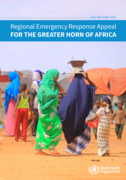
The Greater Horn of Africa is experiencing one of the worst food insecurity situations in decades. It is estimated
that more than 37 million people are in Integrated Food Security Phase Classification (IPC)1 phase 3 or above and approximately 7 mil
...
lion children under the age of five are acutely malnourished in the region. While finding food and safe water is the absolute priority, the health response is essential to avert preventable disease and death.
more
Adolescent girls and young women (AGYW) remain disproportionately affected by HIV in Eastern and Southern Africa (ESA), with 26 per cent of new infections attributed to this population. AGYW face many personal, social and structural barriers to acce
...
ss, uptake and use of traditional HIV prevention methods. Oral Pre-exposure Prophylaxis (PrEP) is proven to be highly effective as an additional prevention choice for reducing the risk of HIV acquisition, including for AGYW. Successful uptake and adherence to PrEP is critical in its effectiveness as an HIV prevention method, however, the current demand for PrEP by AGYW is low with suboptimal adherence.
Within the ESA region, there is currently great impetus to address these challenges and scale up PrEP for AGYW. A critical aspect of this is to leverage the learnings and evidence from implementation of how to improve the demand and quality of PrEP programming for this population. Improving the Quality of Pre-Exposure Prophylaxis Implementation for Adolescent Girls and Young Women in Eastern and Southern Africa examines the current efforts in the region to accelerate and scale up evidence-based PrEP delivery platforms. The implementation brief provides current knowledge and builds on WHO guidance to provide key considerations for implementation, including driving demand and improving quality, as well as focus on wider combination prevention and integration agendas.
more
For health care providers.
Sub-Saharan Africa has the highest maternal mortality in the world. According to estimates by the United Nations Matern
...
al Mortality Estimation Inter-Agency Group (UN MMEIG)1 in September 2017, while the African Region had recorded a significant decline in maternal mortality rate (MMR) of 37.8% between 2000 and 2017, 66% of the 295 000 maternal deaths reported globally occurred in sub-Saharan Africa. The African Region is also noted to have an extremely high MMR, estimated at 542 per 100000 livebirths, with an average annual rate of reduction of 2.9%.
more

The exercise was convened by the East Africa Community (EAC) and implemented by the World Health Organi
...
zation (WHO) to test both countries’ preparedness and response to disease outbreaks. It covered various real-life simulations involving the health, livestock, agriculture, tourism and environment sectors. The simulation that was presented was not unusual in the region, and highlighted the daily challenge of managing the risk of disease outbreaks.
more
During Epidemiological week (Epiweek) 5, 20 countries in the WHO African region (WHO AFR) contributed virological data for analysis - Algeria, Burkina Faso, Cameroon, Central African Republic, Côte d’Ivoire, Democratic Republic of the Congo, Ethi
...
opia, Ghana, Madagascar, Mali, Mauritania, Mozambique, Niger, Nigeria, Rwanda, South Africa, South Sudan, Togo, Uganda, and Zambia
more
Leishmaniasis is a neglected tropical disease that predominantly affects impoverished populations. It remains a significant health issue in four eco-epidemiological regions: the Americas, East Africa
...
, North Africa, and West Asia and Southeast Asia. According to WHO’s Weekly epidemiological record (WER), 99 countries and territories are endemic for leishmaniasis. The cutaneous form of the disease, which is widespread globally, is endemic in 90 countries, while the more severe visceral form is endemic in 80 countries.
more
A total of 18 laboratories from 13 countries participated in the four rounds of EQA: 10 laboratories from eight African endemic countries, four of which participated in all four rounds and three in three rounds. The overall results showed that the median performance of these laboratories improved ov
...
er the four rounds. However, the proportion of laboratories reporting false–positive cases remains high and indicates a problem of specificity probably due to contamination. The proportion of laboratories reporting both false–positive and false–negative results raises the issue of the quality of the data reported by WHO in Africa as well as the results of the studies carried out in these different laboratories in various countries.
more
The aim of the framework is to provide guidance to Member States and partners on region-specific priority actions towards the goals, targets and milestones of the GTS. The central pillar of the framework is the adoption of programme phasing and tran
...
sitioning, aimed at facilitating a tailored approach to malaria control/elimination. This is in response to the increasing heterogeneity of malaria epidemiology among and within countries of the region.
more

Containment strategies: lessons from early COVID-19 responses in five African countries
World Health Organization WHO, Regional Office of Africa; AHOP
WHO Regional Office for Africa
(2021)
C_WHO
The number of COVID-19 cases is on the rise again, with South Africa nearing half of all confirmed cases in the WHO African Region. Threats of new variants loom and low vaccination coverage raises q
...
uestions on the future of the response to COVID-19. Prevention remains the key strategy in most sub-Saharan countries. Five National Centres (NCs) from the African Health Observatory Platform on Health Systems and Policies (AHOP), based in Ethiopia, Kenya, Nigeria, Rwanda and Senegal, reflect on lessons to be learnt from their containment responses in the initial phases. They construct timelines to highlight the policies and challenges associated with introducing a range of public health containment measures and
discuss the extent to which these measures continue to be valuable given the ever-changing nature of the pandemic.
more
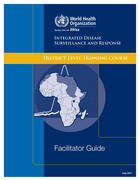
The Facilitator's Guide provides instruction and suggestions for teaching the training modules for the Technical Guidelines for Integrated Disease Surveillance and Response in the Africa Region, 2nd
...
edition. This training is intended for district level health officers who conduct IDSR activities. The course is laid out in 7 modules that walk participants through the Technical Guidelines (TGs) chapter by chapter. By the end of the course, participants will be familiar with the TGs and capable of utilizing them appropriately in their position
more
