
Filter
320
Text search:
Ernährung
Featured
35
77
Language
Document type
169
56
27
18
15
7
6
5
5
4
4
3
Countries
18
5
5
4
4
3
3
2
2
2
1
1
1
1
1
1
1
1
1
1
1
1
1
1
1
1
1
1
1
1
Authors & Publishers
Publication Years
Category
136
118
31
25
19
18
Toolboxes
40
25
22
20
10
9
8
3
2
2
2
1
1
1
1
1

Alimentar a los bebés sólo con leche materna en sus primeros seis meses de vida
contribuye a disminuir de manera significativa la desnutrición y la mortalidad infantil. Después del sexto mes y hasta los dos años, la leche materna debe ser complementada con alimentos que sean adecuados a la eda
...

En Dale un Giro a tu Alimentación te compartimos información sobre hábitos saludables, desde la alimentación, ejercicio y autocuidado, con el objetivo de sentirte bien desde todos los espacios.
Ideas para alimentar de forma sana y nutritiva a niñas y niños de 6 meses en adelante
Le Tchad reste confronté à un cycle récurrent de crises alimentaires et nutritionnelles ayant un impact négatif sur la santé et l’état nutritionnel des populations en général et celle des personnes les plus vulnérables que sont les enfants, les femmes enceintes et/ou allaitantes et les pe
...
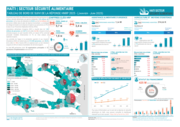
De janvier à juin 2025, les différentes interventions des partenaires du secteur sécurité alimentaire ont permis d’atteindre 1,56 millions de
personnes, soit un taux de réalisation de 45,4% sur les 3,4 millions de personnes ciblées dans le plan de réponse humanitaire. La stratégie de cibl
...

Despite gains in childhood survival, more effort is needed to improve the well-being of children with developmental delays and disabilities. All children, including children with developmental delays and disabilities, need nurturing care. Nurturing care can contribute to preventing developmental del
...
This guideline provides updated, evidence-informed guidance on the percentage of total fat in the diet to reduce the risk of unhealthy weight gain.
This guideline is intended for a wide audience involved in the development, design and implementation of policies and programmes in nutrition and pub
...
Almost all populations are consuming too much sodium. The global mean intake of adults is 4310 mg/day sodium (equivalent to 10.78 g/day salt). This is more than double the World Health Organization recommendation for adults of less than 2000 mg/day sodium (equivalent to < 5 g/day salt).
- The primary health effect ass
...
The monograph contained in this volume was prepared following the ninety-third meeting of the Joint Food and Agriculture Organization of the United Nations (FAO)/World Health Organization (WHO) Expert Committee on Food Additives (JECFA), which met virtually online from 24 March–1 April 2022. This
...

PROGRAMA DE PARTICIPACIÓN ESTUDIANTIL
The document presents a systematic analysis of dietary risks and their health impacts in 195 countries from 1990 to 2017. It highlights that suboptimal diets, such as those high in sodium and low in whole grains, fruits, and vegetables, significantly contribute to non-communicable diseases like hear
...
This guideline provides evidence-informed guidance on the use of non-sugar sweeteners to reduce the risk of unhealthy weight gain and diet-related noncommunicable diseases in adults and children. The guidance in this guideline is not based on toxicological assessments of the safety of individual no
...
The webpage from the Institute for Health Metrics and Evaluation (IHME) discusses the global impact of diet on health, highlighting poor dietary habits as a major contributor to deaths worldwide, primarily through cardiovascular diseases. It emphasizes the health risks of high sodium intake and insu
...

The article "Best (and Worst) Oatmeal for Type 2 Diabetes" from Everyday Health discusses the benefits of incorporating oatmeal into a diabetes-friendly diet. It emphasizes that oatmeal, being rich in fiber and essential minerals like magnesium, potassium, and iron, can aid in blood sugar control, s
...

This guideline covers care and management for adults (aged 18 and over) with type 2 diabetes. It focuses on patient education, dietary advice, managing cardiovascular risk, managing blood glucose levels, and identifying and managing long-term complications.

The document "Pocketbook for Management of Diabetes in Childhood and Adolescence in Under-Resourced Countries" (2nd Edition) provides practical guidelines for managing diabetes in children and adolescents, particularly in resource-limited settings. It covers key topics like diagnosing and treating d
...
The webpage discusses workforce nutrition programs and their potential to improve health, nutrition, and business outcomes. It highlights interventions such as access to healthy foods, nutrition education, health checks, and breastfeeding support, emphasizing their role in addressing malnutrition an
...
Today there is a new nutrition reality. It is a reality where undernutrition (such as micronutrient deficiencies, stunting and wasting) , overweight, obesity and diet-related noncommunicable diseases (NCDs) like diabetes and cancer now coexist in the same countries, communities, households and even
...
