
Filter
3938
Text search:
clinics
Featured
Recommendations
296
New Publications
1178
Language
Document type
No document type
2523
Studies & Reports
539
Guidelines
411
Manuals
181
Strategic & Response Plan
101
Training Material
62
Fact sheets
47
Situation Updates
41
Infographics
14
Resource Platforms
10
Brochures
6
Online Courses
3
Countries / Regions
India
183
Kenya
137
South Africa
118
Global
111
Liberia
106
Nigeria
93
Malawi
93
Sierra Leone
91
Nepal
91
Uganda
89
Bangladesh
86
Tanzania
82
Zambia
78
Ethiopia
74
Myanmar / Burma
73
Namibia
70
Syria
66
Ghana
60
Rwanda
55
Western and Central Europe
51
Africa
49
Ukraine
45
Zimbabwe
40
Philippines
40
Lesotho
38
Congo, Democratic Republic of
31
Botswana
31
Mozambique
30
Cambodia
29
Latin America and the Carribbean
29
South–East Asia Region
26
Asia
26
Guinea
24
Haiti
23
Indonesia
22
Eastern Europe
22
South Sudan
21
Senegal
20
Cameroon
17
Eswatini/ Swaziland
17
Burkina Faso
16
Venezuela
15
Russia
15
Pakistan
13
Yemen
13
Jordan
12
Eastern Europe and Central Asia
12
Afghanistan
11
Madagascar
11
West and Central Africa
11
Germany
10
Lebanon
10
Benin
10
East and Southern Africa
10
Central African Republic
9
Middle East and North Africa
9
Turkey
8
Brazil
8
Vietnam
8
Thailand
7
Peru
7
Western Pacific Region
7
Southern Africa
7
Georgia
7
Mali
6
Iraq
6
China
6
Albania
6
Laos
6
USA
5
Colombia
5
Sri Lanka
5
Tajikistan
5
Niger
4
Togo
4
Somalia
4
Sudan
4
Argentina
4
Paraguay
4
Côte d’Ivoire / Ivory Coast
3
Gambia
3
Papua New Guinea
3
North Macedonia
3
Burundi
3
Palestine
3
Moldova
3
Guinea-Bissau
2
Egypt
2
Chad
2
Ecuador
2
El Salvador
2
Bolivia
2
Angola
2
Mexico
2
Chile
2
Armenia
2
Timor Leste/ East Timor
2
Bulgaria
2
Estonia
2
Romania
2
Iran
2
Mauritius
2
United Kingdom
2
Mauritania
1
Ireland
1
Switzerland
1
Hungary
1
Libya
1
Guatemala
1
Nicaragua
1
Solomon Islands
1
Bhutan
1
Poland
1
Mongolia
1
Canada
1
Qatar
1
Lithuania
1
Slovakia
1
Uzbekistan
1
Kazakhstan
1
Gabon
1
Jamaica
1
France
1
Portugal
1
Spain
1
French Guyana
1
Israel
1
Authors & Publishers
Publication Years
Category
Countries
1740
Clinical Guidelines
228
Women & Child Health
187
Key Resources
186
Public Health
178
Capacity Building
91
Pharmacy & Technologies
27
Toolboxes
HIV
455
Mental Health
306
TB
225
COVID-19
206
Conflict
129
Disability
125
Caregiver
112
Ebola & Marburg
108
AMR
80
NTDs
78
Rapid Response
68
Pharmacy
65
Refugee
60
NCDs
55
Planetary Health
54
Natural Hazards
49
Malaria
39
Global Health Education
38
2.0 Rapid Response
28
Health Financing Toolbox
25
Cholera
12
Polio
12
Specific Hazards
10
Social Ethics
10
Zika
7
Typhoon
5
South Sudan
1
The information provided here can be used to understand the current situation, increase attention to preterm births in Rwanda and to inform dialogue and action among stakeholders. Data can be used to identify the most important risk factors to target and gaps in care in order to identify and impleme
...


This paper was commissioned by N´weti and Wemos as part
of the project “Equitable health financing for a strong health
system in Mozambique”. Its purpose is to contribute to the
debate of the Mozambican Ministry of Health’s draft Health
Sector Financing Strategy (HSFS) 2025 – 2034

We investigate whether and to what extent Chinese development finance affects infant mortality, combining 92 demographic and health surveys (DHS) for a maximum of 53 countries and almost 55,000 sub-national locations over the 2002-2014 period. We address causality by instrumenting aid with a set of
...

Insufficient funding is hindering the achievement of malaria elimination targets in Africa, despite the pressing need for increased investment in malaria control. While Western donors attribute their inaction to financial constraints, the global health community has limited knowledge of China’s ex
...

In the last three decades, health financialization has surged in
several creative ways, yet this growing phenomenon remains surprisingly
unknown, and neglected, in the global health arena. Financialization in the
health domain could be described as the uncontrolled expansion of finance along vari
...

Reflecting its commitment to achieving the Sustainable Development Goals (SDGs), Namibia volunteered to undertake a second national review of the SDGs in 2021. The focus is on three SDG dimensions, namely, Economic, Social, and Environmental. These three dimensions are comprehensively integrated in
...

Africa’s health sector is facing an unprecedented financing crisis, driven by a sharp decline of 70% in Official Development Assistance (ODA) from 2021 to 2025 and deep-rooted structural vulnerabilities. This collapse is placing immense pressure on Africa’s already fragile health systems as ODA
...

Development assistance for health (DAH)
plays a vital role in supporting health programmes in lowand middle-income countries. While DAH has historically
focused on infectious diseases and maternal and child
health, there is a lack of comprehensive analysis of DAH
trends, strategic shifts and the
...
In 2019, the Task Force on Fiscal Policy for Health concluded that taxes on tobacco, alcohol, and sugar-sweetened beverages were a highly effective but greatly underused policy tool to reduce consumption, save lives, and raise domestic resources. The Task Force estimated that if all countries increa
...

BMC Infectious Diseases volume 23, Article number: 342 (2023).
Tuberculosis (TB) is among the leading causes of death globally. The disease has a huge burden in Namibia, with a case notification rate of at least 442 per 100,000. To date, Namibia is among the countries with the highest global TB bur
...
Malaria in pregnancy is a significant health problem in malaria-endemic areas. It not only causes substantial childhood morbidity and mortality but also increases the risks of adverse events for pregnant women and their developing fetuses. Most of the burden in these areas is due to infection with P
...
Challenges and Opportunities. This report presents a comprehensive assessment of the education and labor markets for nurses in the ECSA region. It documents the main challenges to train and deploy nurses and discusses opportunities for government and private sector employers to overcome these chall
...

In 2008 the Ministry of Health and Social Services (MOHSS) commissioned a national health and social service system review which found that although some progress has been made in primary health care, provision of health services did not go beyond the health facilities, irrespective of the fast dist
...

Early Identification and Early Intervention Services for Young Children with Developmental Delays and Disabilities in Namibia Republic of Namibia Namibia
Regional Consultations Report

Tuberculosis (TB) is among the top ten most common causes of death globally and as a single infectious disease it top among infectious diseases. Furthermore, it is noted as the top causes of death among people infected with the human immunodeficiency virus (HIV). Despite recent decreases in the numb
...
Namibia is estimated to be at 94-97-93 as defined by the UNAIDS 95-95-95 treatment cascade, one of the first high burden countries to approach epidemic control. COP22 is about sustaining the impact of years of investment and partnership with the Namibian government and other stakeholders by employin
...
Strengthening health financing to accelerate progress towards universal health coverage. Total Government Health Expenditure exceeds the commitment by African Union member states to commit at least 15% of their budgets to the health sector. With a sector allocation of 16.6% of total budget in 2022/
...
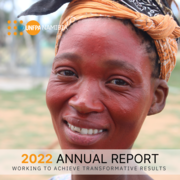
Access to safe and voluntary family planning is an inalienable human right that
cannot be denied. In 2022, UNFPA continued to work with Government and partners
to make this a reality in Namibia by providing strategic support to the national family
planning programme and ensuring universal access
...
