
Filter
850
Text search:
health
disciplines
Featured
84
201
Language
Document type
353
179
147
86
45
21
11
3
2
1
1
1
Countries
44
39
22
17
16
15
14
14
11
11
10
10
9
9
7
6
6
6
6
6
6
5
5
5
5
4
4
4
4
4
4
3
3
3
3
3
3
3
3
2
2
2
2
2
2
2
2
2
1
1
1
1
1
1
1
1
1
1
1
1
1
1
1
1
1
1
1
1
1
Authors & Publishers
Publication Years
Category
233
77
68
67
23
20
7
Toolboxes
83
66
65
54
41
39
33
31
26
21
21
20
20
17
17
16
13
12
9
7
6
4
2
2
2
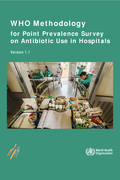
Version 1.1. The WHO protocol has been adapted to resource-limited settings and builds on existing methodologies from the European Centre for Disease Prevention and Control (ECDC), the Global PPS project from University of Antwerp, the US Centers for Disease Control and Prevention (CDC), and the Med
...

Version 1.1
Department of Mental Health and Substance Abuse

mhGAP is based on evidence-based technical guidelines (4) and provides a set of tools and
training packages to extend service provision. The mhGAP Intervention Guide (mhGAP-IG)
for MNS disorders in non-specialized health settings (8) is a clinical
...
The Infection Prevention and Control (IPC) Assessment Framework (IPCAF) is a tool to support the implementation of the World Health Organization (WHO) Guidelines on core components of IPC programmes at the acute
...
The Hand Hygiene Self-Assessment Framework is a systematic tool with which to obtain a situation analysis of hand hygiene promotion and practices within an individual health-care facility.
Свод методических рекомендаций состоит из нескольких тематически связанных и удобных для пользователя модулей для решения широкого спектра задач и приоритетных
...

The WHO Toolkit for the care and support of people affected by complications associated with Zika virus has been developed to serve as a model guide, with the goal of enhancing country preparedness for Zika virus outbreaks. The toolkit is intended to provide a systems approach involving public
...
The EYE strategy is a comprehensive and long-term strategy built on lessons learned that aims at ending yellow fever epidemics by 2026, and consists of three strategic objectives:
protect at-risk populations;
prevent international spread; and
contain outbreaks rapidly.
This guideline examines the evidence and makes recommendations and remarks on the implementation of some of the details of breastfeeding counselling, such as frequency, timing, mode and provider of breastfeeding counselling, to improve breastfeeding practices. The objective of this guideline is to p
...
The ICOPE Implementation Framework provides a score card to help assess the overall capacity of health and social care services and systems to deliver integrated care in community settings and support the development of ICOPE implementation action p
...


Antimicrobial resistance is a global crisis that threatens a century of progress in health and achievement of the Sustainable Development Goals. There is no time to wait. Unless the world acts urgently, antimicrobial resistance will have disastrous
...
Consolidated guidelines on the use of antiretroviral drugs for treating and preventing HIV infection
Accessed: 26.02.2020
Pandemic Influenza Risk Management
recommended
A WHO guide to inform & harmonize national & international pandemic preparedness and response
The main updates from the 2013 interim guidance are:
Alignment with other relevant United Nations policies for crisis and emergency management, and
Inclusion of the significant development in re
...

In concordance with the global and WHO activities on ARC, the Ministry of Health and Family Welfare (MoHFW) in Bangladesh has come forward and initiative was taken to conduct program for containment of antimicrobial resistance in Bangladesh. Directo
...
This National Action Plan addresses actions needed to be taken in order to combat antimicrobial resistance (AMR) in the country. It is obligatory to raise awareness of antimicrobial resistance and promote behavioral change through public communication
programmes that targets human, animal and plant
...
