
Filter
901
Text search:
UNFPA,
et
al.
Featured
Recommendations
66
New Publications
282
Language
Document type
No document type
582
Studies & Reports
133
Guidelines
100
Manuals
27
Strategic & Response Plan
18
Training Material
17
Fact sheets
10
Infographics
6
Situation Updates
5
Resource Platforms
1
Online Courses
1
Countries / Regions
Ethiopia
26
Nepal
26
Nigeria
25
Kenya
25
Sierra Leone
24
Global
22
Myanmar / Burma
21
Senegal
20
Liberia
19
Malawi
19
Zambia
18
Bangladesh
15
Latin America and the Carribbean
15
Uganda
13
Haiti
13
Congo, Democratic Republic of
12
Tanzania
12
Venezuela
12
Rwanda
10
Benin
10
Namibia
10
Ghana
8
Zimbabwe
8
Syria
8
Colombia
8
India
7
South–East Asia Region
7
Asia
7
Cambodia
6
South Africa
6
Brazil
6
Paraguay
5
Africa
5
Albania
5
Russia
5
Guinea
4
Cameroon
4
Philippines
4
Somalia
4
Indonesia
4
Ukraine
4
Lesotho
4
Western and Central Europe
4
Eastern Europe
4
Burkina Faso
3
Pakistan
3
South Sudan
3
Central African Republic
3
Yemen
3
West and Central Africa
3
Middle East and North Africa
3
Palestine
3
Afghanistan
2
Lebanon
2
Thailand
2
Papua New Guinea
2
Peru
2
Eswatini/ Swaziland
2
Madagascar
2
Mexico
2
East and Southern Africa
2
Western Pacific Region
2
Laos
2
Iraq
1
Jordan
1
Germany
1
Turkey
1
China
1
Malaysia
1
Mozambique
1
Argentina
1
Dominican Republic
1
Hungary
1
Botswana
1
Bolivia
1
Guatemala
1
Sri Lanka
1
Eastern Europe and Central Asia
1
Poland
1
Southern Africa
1
Timor Leste/ East Timor
1
Romania
1
Moldova
1
Slovakia
1
Uzbekistan
1
Georgia
1
Vietnam
1
Turkmenistan
1
Japan
1
Authors & Publishers
Publication Years
Category
Countries
410
Women & Child Health
164
Clinical Guidelines
54
Key Resources
42
Public Health
19
Capacity Building
16
Pharmacy & Technologies
3
Toolboxes
HIV
136
COVID-19
49
Mental Health
32
Caregiver
31
Conflict
18
Health Financing Toolbox
18
Disability
16
Global Health Education
16
Ebola & Marburg
14
Refugee
13
Planetary Health
11
Zika
10
TB
7
Pharmacy
6
Natural Hazards
4
AMR
4
Polio
3
Rapid Response
2
Malaria
2
NCDs
1

Maternal Mental Health and child health and development in low and middle income countries
recommended
The impact of maternal mental health problems on infants in high income countries has been identified mostly in terms of psychosocial and emotional development, thanks to the groundbreaking early work of Spitz (2) and of Bowlby (3), who studied the emotional needs of infants and mother-child attachm
...
A Supplement to the obstetrical fistula counseling curriculum

Plan Stratégique de Developpement des Ressources Humaines du Secteur Santé 2009-2018
More than 40% of the world population is 24 years old or younger, the vast majority of whom live in low- and lower middle–income countries. Globally, a quarter of disability-adjusted life years (DALYs) for mental disorders and substance abuse is borne by this age group and about 75% of mental diso
...
Child Friendly Spaces (CFSs) are used by humanitarian agencies as a means to promote protection and psychosocial wellbeing for children in emergency settings. World Vision International together with Columbia University is conducting a series of studies to investigate the effectiveness of CFSs in va
...
Actualización de las orientaciones provisionales 7 de junio de 2016

The Republic of the Union of Myanmar’s National Strategic Plan on HIV/AIDS 2016–2020 is the strategic guide for the country’s response to HIV at national, state/regional and local levels. The framework describes the current dynamics of the HIV epidemic and articulates a strategy to optimize in
...
Strengthening HIV prevention among most-at-risk populations (MARPs) in the Syrian Arab Republic:
Towards gender - transformative HIV and TB responses

This recommendation is an update of one of the 49 recommendations that were published in the WHO recommendations on antenatal care for a positive pregnancy experience. The recommendation was developed initially using the standardized operating procedures described in the WHO handbook for guideline d
...
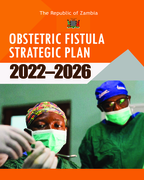
Globally, over two million women live with obstetric fistula with the majority of the cases
being from Africa. In low-resource settings such as Zambia, obstetric fistula (OF) is a visible indicator of
gaps in maternal health care resulting in failure to provide adequate, accessible and quality m
...

Through public-private partnerships, the government of Rwanda can make more efficient use of public resources by targeting and meeting the needs of specific populations and thus help ensure family planning services and products will be available to all Rwandans in the long term. This report aims to
...


Fistula Care's implementing partner in Ethiopia, IntraHealth, has developed materials to train health workers on obstetric fistula prevention, identification, and pre-repair care. The course contains a participant handbook (PDF, 604 KB), a facilitator manual (PDF, 1.3 MB), ten modules, a variety of
...
From 2000 to 2010, Rwanda implemented comprehensive health sector reforms to strengthen the public health system, with the aim of reducing maternal and newborn deaths in line with Millennium Development Goal 5, among many other improvements in national health. Based on a systematic review of the lit
...

WHO has issued a new recommendation on the length of bladder catheterization following surgical repair of a simple obstetric urinary fistula. Currently the length of catheterization is not standard and ranges from 5 to 42 days. The new guidance recommends a 7–10 day period of bladder catheterizati
...
