
Filter
3750
Text search:
investment
Featured
Recommendations
242
New Publications
1064
Language
Document type
No document type
1958
Studies & Reports
915
Guidelines
325
Strategic & Response Plan
236
Manuals
185
Fact sheets
56
Training Material
28
Situation Updates
22
Resource Platforms
13
Brochures
7
Infographics
5
Countries / Regions
Global
279
Kenya
138
Uganda
95
Myanmar / Burma
87
Nepal
84
Liberia
83
Sierra Leone
82
Ethiopia
80
Africa
72
India
71
Nigeria
67
Zambia
66
Western and Central Europe
61
Malawi
58
South Africa
56
Rwanda
55
Latin America and the Carribbean
55
Ghana
50
Bangladesh
49
Tanzania
48
Namibia
41
Syria
40
Guinea
37
Ukraine
32
Asia
32
South–East Asia Region
31
Cambodia
30
Philippines
26
Indonesia
26
Congo, Democratic Republic of
25
South Sudan
25
Mozambique
25
East and Southern Africa
22
Senegal
21
Zimbabwe
20
Eastern Europe
20
West and Central Africa
16
Haiti
15
Afghanistan
14
Cameroon
13
Pakistan
13
Brazil
13
Lesotho
12
Eastern Europe and Central Asia
12
Thailand
11
Yemen
11
China
10
Sudan
10
Western Pacific Region
10
Venezuela
10
Vietnam
10
Jordan
9
Lebanon
9
Colombia
9
Middle East and North Africa
9
Burkina Faso
8
Eswatini/ Swaziland
8
Laos
8
Russia
8
Benin
7
Central African Republic
7
Botswana
7
Iraq
6
Germany
6
Sri Lanka
6
North America
6
Peru
5
Burundi
5
Albania
5
Georgia
5
Jamaica
5
USA
4
Somalia
4
Turkey
4
Chile
4
Paraguay
4
Kyrgyzstan
4
Côte d’Ivoire / Ivory Coast
3
Niger
3
Chad
3
Papua New Guinea
3
Argentina
3
North Macedonia
3
Madagascar
3
Southern Africa
3
Timor Leste/ East Timor
3
Tajikistan
3
Moldova
3
Iran
3
Mauritius
3
Mali
2
Togo
2
Egypt
2
Gambia
2
Serbia
2
Hungary
2
Ecuador
2
Guatemala
2
Fiji
2
Bhutan
2
Armenia
2
Lithuania
2
Kazakhstan
2
Turkmenistan
2
Japan
2
Portugal
2
Guinea-Bissau
1
Morocco
1
Saudi Arabia
1
Mauritania
1
Vanuatu
1
Dominican Republic
1
Switzerland
1
Croatia
1
Honduras
1
El Salvador
1
Bolivia
1
Greece
1
Libya
1
Angola
1
Mexico
1
Nicaragua
1
Poland
1
Palestine
1
Canada
1
Qatar
1
Estonia
1
Romania
1
Maldives
1
Norway
1
Spain
1
Azerbaijan
1
Belarus
1
Bosnia and Herzegovina
1
Belize
1
Costa Rica
1
Panama
1
Authors & Publishers
Publication Years
Category
Countries
1369
Key Resources
254
Public Health
242
Clinical Guidelines
152
Women & Child Health
152
Capacity Building
37
Pharmacy & Technologies
23
Toolboxes
HIV
282
Planetary Health
257
COVID-19
236
Mental Health
221
Health Financing Toolbox
162
TB
147
Disability
137
AMR
128
Global Health Education
109
Conflict
103
Caregiver
89
Ebola & Marburg
82
NTDs
74
NCDs
68
Malaria
63
Pharmacy
55
Natural Hazards
51
Refugee
50
Rapid Response
49
2.0 Rapid Response
42
Polio
19
Cholera
18
Social Ethics
15
Zika
7
Specific Hazards
5
Typhoon
3
South Sudan
2


This document is a compilation of all questions, justifications, and sources used to determine the 2021 Global Health Security Index scores for Zambia. For a category and indicator-level summary, please see the Country Profile for Zambia.
Tax capacity—the policy, institutional, and technical capabilities to collect tax revenue—is part of a deeper process of state building that is essential for achieving the sustainable development goals. This Staff Discussion Note shows that developing countries have made some progress in revenue
...
With the COVID-19 pandemic and the ensuing energy and cost-of-living crises, many OECD countries have had to face significant economic and societal challenges over the last five years. The succession of crises has had important implications for health systems and the available resources allocated to
...

The Global Health Expenditure Report delves into the intricate landscape of global economies and health systems. This year, it focuses on health spending in 2022, the third year of the COVID-19 pandemic. It shows how countries around the world responded to the health and economic shocks of the pande
...

This paper was commissioned by N´weti and Wemos as part
of the project “Equitable health financing for a strong health
system in Mozambique”. Its purpose is to contribute to the
debate of the Mozambican Ministry of Health’s draft Health
Sector Financing Strategy (HSFS) 2025 – 2034
Overall, harmonisation and innovation should be the
focus of the future direction of DAH and the creation of
a healthy global community. The world needs all hands
on deck if it were to move towards achieving the SDGs,
addressing global health inequalities and improving the
welfare of the global
...

We investigate whether and to what extent Chinese development finance affects infant mortality, combining 92 demographic and health surveys (DHS) for a maximum of 53 countries and almost 55,000 sub-national locations over the 2002-2014 period. We address causality by instrumenting aid with a set of
...
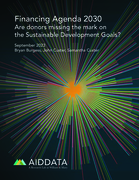
To realize Agenda 2030, aid agencies, private philanthropies, and their partners in the Global South need better data to monitor how official development finance (ODF) dollars advance the Sustainable Development Goals (SDGs) and avoid missing the mark. In this report, we summarize the results of a n
...
In contrast to bilateral aid, aid disbursed from
multilateral institutions increased significantly at the onset
of the COVID-19 pandemic. Yet, at a time when a coherent
and effective multilateral response is needed most, the
COVID-19 pandemic revealed a shifting landscape of donor
agencies that
...
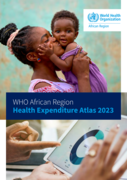
Over the past decade, countries in the African region experienced slow progress in mobilizing resources for health while facing continued challenges. In their revised estimates published in 2017, Stenberg et al., developed two costs scenarios, termed progress and ambitious, aimed at strengthening co
...
One approach to development assistance for health, or health aid, emphasizes the ex ante selection of cost-effective health interventions, an approach that began with the World Development Report (1993) on Investing in Health and has since been adopted by the Effective Altruism community. But just h
...
The key tools and governance approaches for
international cooperation for sustainable development
(hereafter, international cooperation) were set up in a
markedly different time and age. International
cooperation – with official development assistance
(ODA) as the dominant means of implementa
...
Development finance is at a turning point, as the macroeconomic environment has changed profoundly and the financing gap for low- and middle-income countries has widened. The events that led to this new situation are the multiple crises that the global economy is facing, such as the climate crisis,
...

Achieving financial risk protection for the whole population requires significant financing for health. Health systems in low- and middle-income countries (LMIC) are plagued with persistent underfunding, and recent reductions in official development assistance have been registered. To create fiscal
...

Zambia is facing a severe economic crisis marked by high inflation, increasing poverty and a heavy debt burden that is straining both its fiscal stability and progress in health outcomes. By 2020, the country's external debt reached United States dollars (USD) 12.7 billion, representing 108% of the
...
This article provides an in-depth analysis of the Global Fund's strategic initiatives in resource mobilization and recovery amid global economic fluctuations and geopolitical challenges. It highlights the Fund's successful conversion of pledges and innovative financing models that ensure sustainable
...

Conditioned domestic financing policy, referring to the domestic financing of health projects, programs, and national responses conditioned by global health funding agencies and recipient country governments, is one mechanism to promote sustainability and country ownership. We aim to understand how
...
