
Filter
784
Text search:
infectious
substances
Featured
107
177
Language
Document type
334
200
100
74
35
23
6
6
2
2
1
Countries
36
34
30
30
24
20
18
15
14
14
13
11
9
8
8
8
8
6
6
6
5
5
5
5
5
5
4
4
4
4
3
3
3
3
3
3
3
3
3
2
2
2
2
2
2
2
2
2
2
2
1
1
1
1
1
1
1
1
1
1
1
1
1
1
1
1
1
1
1
1
1
1
1
1
1
1
1
1
1
1
1
1
Authors & Publishers
Publication Years
Category
265
57
45
35
33
22
17
Toolboxes
72
71
69
47
46
42
33
30
27
25
18
16
16
15
13
10
10
9
8
4
3
3
2
2
Zika and dengue viruses remain significant public health threats. These viruses share the same Aedes (Stegomyia) mosquito vectors and geographic distributions but infections cannot be readily distinguished clinically and need to be differentiated from each other, and from other circulating arboviral
...
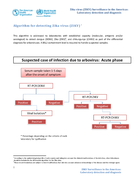
This algorithm is addressed to laboratories
with established capacity(molecular, antigenic and/orserological) to detect dengue (DENV), Zika (ZIKV), and chikungunya(CHIKV) as part of the differential diagnosis for arborviruses. A BSL2 containment level is required to handle suspected samples.


La récente augmentation du nombre de cas de microcéphalie et d’autres troubles neurologiques potentiellement associés à une infection à virus Zika a engendré une recrudescence des demandes de dépistage en laboratoire de cette infection. Les groupes prioritaires pour un test de diagnostic d
...
El reciente aumento de los casos de microcefalia y de otros trastornos neurológicos posiblemente asociados a la infección por el virus de Zika ha provocado un aumento de la demanda de pruebas de laboratorio para detectar dicha infección. Los grupos prioritarios para la realización de pruebas di
...
O recente aumento dos casos de microcefalia e outras patologias neurológicas potencialmente associadas à infecção pelo vírus Zika provocou um aumento da procura de testes laboratoriais para detectar a infecção. Os grupos prioritários para os testes de diagnóstico devem ser
indivíduos sin
...

This manual describes some of the strategic, managerial, financial, technical and scientific aspects to be considered in establishing a national EQA programme for clinical laboratories and other testing services at all health care levels

The GTFCC Laboratory Support for Public Health Surveillance document provides guidelines on using DNA-based molecular techniques for identifying and monitoring Vibrio cholerae strains in cholera outbreaks. It highlights the importance of genetic sequencing for tracking transmission, detecting new va
...

Expert opinion of the European Tuberculosis Laboratory Initiative core group members for the WHO European Region.

Mission report: June 11-20, 2017
A guidebook intended for use by first responders
during the initial phase of a transportation incident
involving dangerous goods/hazardous materials

The National Guidelines for HIV-1 Viral Load Laboratory Testing support plans to scale up viral load (VL) testing to reach the 90-90-90 targets in India. This phased scale-up includes the setup of 70 additional VL testing laboratories nationally. These guidelines include laboratory design considerat
...
These National Operational Guidelines for Viral Load Testing detail how routine viral load testing will be implemented at the facility level in India. They include frequency and interpretation of monitoring, sample collections, storage and transportation, receipt of results, adherence counseling, an
...

This guide includes information relevant for tuberculosis (TB) program and laboratory managers, as well as Ministry of Health officials across disease programs interested in establishing integrated solutions for specimen referral. Though TB-focused in name, it offers integration-oriented assessment,
...
Following the encouraging initial results of the pilot project, the Ministry of Health is committed to increasing access to MDR-TB diagnosis, treatment and care. An expansion plan for the programmatic management of drug-resistant TB has been developed and forms part of the Five Year National Strateg
...
