
Filter
464
Text search:
Indian
Council
of
Medical
Research
India
Featured
Recommendations
27
New Publications
128
Language
Document type
No document type
278
Studies & Reports
84
Guidelines
43
Manuals
31
Training Material
11
Fact sheets
8
Strategic & Response Plan
5
Resource Platforms
4
Countries / Regions
India
183
Global
20
Asia
10
Nepal
9
South–East Asia Region
8
Uganda
6
Bangladesh
6
Ukraine
6
Kenya
5
Myanmar / Burma
5
Philippines
4
South Africa
4
Africa
4
Russia
4
Eastern Europe
3
Zimbabwe
2
Pakistan
2
Syria
2
Indonesia
2
Sri Lanka
2
Latin America and the Carribbean
2
Moldova
2
Iran
2
Liberia
1
Nigeria
1
Senegal
1
Morocco
1
Ghana
1
Lebanon
1
Zambia
1
Cambodia
1
Thailand
1
China
1
Malawi
1
Mozambique
1
Argentina
1
Peru
1
Brazil
1
North Macedonia
1
Hungary
1
Colombia
1
Mexico
1
East and Southern Africa
1
Western Pacific Region
1
Western and Central Europe
1
Poland
1
Estonia
1
Romania
1
Kyrgyzstan
1
Georgia
1
Jamaica
1
Maldives
1
Mauritius
1
Norway
1
Portugal
1
Authors & Publishers
Publication Years
Category
Countries
224
Clinical Guidelines
29
Public Health
26
Key Resources
12
Women & Child Health
9
Capacity Building
3
Pharmacy & Technologies
3
Toolboxes
Mental Health
46
HIV
26
TB
25
COVID-19
24
Disability
22
NTDs
18
NCDs
18
AMR
16
Planetary Health
14
Global Health Education
12
Caregiver
12
Pharmacy
11
Natural Hazards
9
Conflict
5
Refugee
5
Specific Hazards
5
Health Financing Toolbox
5
Malaria
4
Ebola & Marburg
2
Polio
2
Rapid Response
2
Zika
1
Social Ethics
1
2.0 Rapid Response
1

This study primarily aims to understand how children living in areas of civil strife are denied their basic rights, especially the right to education and protection. For this study, eight districts affected by civil strife across the three states (C
...
Guideline ‒ Alternative mass drug administration regimens to eliminate lymphatic filariasis
recommended
Lymphatic filariasis is a vector-borne neglected tropical disease that causes damage of the lymphatic system and can lead to lymphoedema (elephantiasis) and hydrocele in infected individuals. The global baseline estimate
...

Energy use in the home is a vital and ubiquitous feature of human society. Energy
is used for a wide variety of purposes, including cooking, space heating, light-
ing, small-scale income generatio
...

As countries aim to progress towards the Sustainable Development Goals (SDGs) and achieving universal health coverage, health inequities driven by racial discrimination and intersecting factors remain pervasive. Inequities experienced by indigenous peoples as well as people
...

Every year, an estimated 15 million babies are born preterm – before 37 weeks of pregnancy. That is more than 1 in 10 live births. Approximately 1 million children die each year worldwide due to complications from their early birth. Those that sur
...

The primary audience for this guidance is persons
working directly in vector-borne disease prevention
and control, including programme managers,
researchers and field workers. A brief technical
background is provided for the benefit of persons
...

The QualityRights training and orientation modules have been developed to enhance the knowledge, skills and understanding of key stakeholders on how to promote the rights of people with psychosocial
...
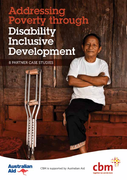
This booklet shows what disability inclusive development for poverty alleviation looks like in a range of settings and with different challenges through eight case studies of projects funded by CBM
...
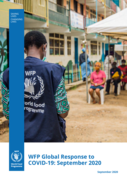
The COVID-19 pandemic is a multiplier of vulnerability, compounding threats to food insecurity, while exposing weaknesses in food and health systems. It is severely undermining the capacity of commu
...

Climate change is a growing concern for Bangladesh because 90 percent of the country is approximately 10 feet above sea level. An evaluation was completed which discovered that high tides in Bangladesh were increasing 10 times more rapidly than the
...
Joint EUAA, IOM and OECD report provides new insights on displacement from and within Ukraine
The European Union Agency for Asylum (EUAA), the International Organization for Migration (IOM) and the Organisation for Economic Co-operation and Development (OECD) have published a Joint Report on profil
...

he WHO Guidelines on Integrated Care for Older People (ICOPE) propose evidence-based recommendations for health care professionals to prevent, slow or reverse declines in the physical and mental capacities of older people. These recommendations requ
...
Recommendations, resources and references
A publication of the Southern African HIV Clinicians Society
Thematic brief. This brief highlights the link between climate change and VBDs
in Asia Pacific. Using malaria to tell the narrative, it lists key actions that policymakers and the public health community can consider in addressing the impact of a c
...

COP24 special report: health and climate change
recommended
Exposure to air pollution causes 7 million deaths worldwide every year and costs an estimated US$ 5.11 trillion in welfare losses globally. In the 15 countries that emit the most greenhouse gas emissions, the health impacts of air pollution are esti
...

In 2015, 26% of the deaths of 5.9 million children who died before reaching their fifth birthday could have been prevented
through addressing environmental risks – a shocking missed opportunity.
...
Non-Wood Forest Products 11
Traditional medicine and its use of medicinal plants is dependent on reliable supply of plant materials. The book focuses on the interface between medicinal plant use an
...
Guidance module.
The QualityRights training and orientation modules have been developed to enhance the knowledge, skills and understanding of key stakeholders on how to promote the rights of peopl
...

This guidance synthesizes current evidence on dengue laboratory testing and diagnostics and provides practical recommendations for laboratories, clinicians, public health officials, and programme managers involved in dengue diagnosis, surveillance, and control, in the context
...

ABSTRACT
More than 500 million people worldwide live with cardiovascular disease (CVD). Health systems today face fundamental challenges in delivering optimal care due to ageing populations, healthcare workforce constraints, financing, availability and affordability
...
