
Filter
482
Text search:
Council
of
Europe
Featured
Recommendations
30
New Publications
65
Language
Document type
No document type
224
Studies & Reports
150
Guidelines
47
Manuals
20
Strategic & Response Plan
14
Fact sheets
9
Situation Updates
7
Resource Platforms
5
Training Material
3
Brochures
1
App
1
Infographics
1
Countries / Regions
Western and Central Europe
48
Global
28
Ukraine
17
Eastern Europe
17
Syria
10
South Africa
9
India
8
Eastern Europe and Central Asia
8
Russia
6
Uganda
5
Africa
5
Sierra Leone
3
Cameroon
3
Nepal
3
Germany
3
Kenya
3
Tanzania
3
Moldova
3
Congo, Democratic Republic of
2
Ethiopia
2
Niger
2
Rwanda
2
Malawi
2
Sudan
2
Hungary
2
Greece
2
Libya
2
Myanmar / Burma
2
Middle East and North Africa
2
Latin America and the Carribbean
2
Asia
2
Venezuela
2
Poland
2
Albania
2
Iran
2
Burkina Faso
1
Nigeria
1
USA
1
Ghana
1
Zimbabwe
1
Iraq
1
Afghanistan
1
Lebanon
1
Chad
1
China
1
Bangladesh
1
Namibia
1
Eswatini/ Swaziland
1
Croatia
1
Botswana
1
Sri Lanka
1
West and Central Africa
1
South–East Asia Region
1
Italy
1
Canada
1
Tajikistan
1
Estonia
1
Romania
1
Kazakhstan
1
Denmark
1
Mauritius
1
Tunisia
1
Belarus
1
Authors & Publishers
Publication Years
Category
Countries
78
Women & Child Health
27
Key Resources
27
Clinical Guidelines
22
Public Health
19
Capacity Building
5
Pharmacy & Technologies
1
Toolboxes
HIV
59
COVID-19
43
Mental Health
42
Refugee
39
TB
33
Planetary Health
33
Conflict
26
Disability
25
AMR
23
Global Health Education
17
NCDs
12
Social Ethics
11
Caregiver
11
Pharmacy
10
Specific Hazards
9
Health Financing Toolbox
9
Rapid Response
8
Ebola & Marburg
7
NTDs
4
Natural Hazards
2
Cholera
1
Polio
1
Zika
1
2.0 Rapid Response
1
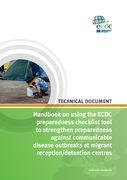
The checklist tool described in this handbook is intended for EU/EEA public health authorities who need to assess the capacity for communicable disease prevention and control at migrant reception/detention centres hosting migrants for weeks/months (medium-term) in order to identify gaps and set prio
...

Communities can play a critical role in suicide prevention. Facilitating community engagement in suicide prevention is an important task. The toolkit is a step-by-step guide for communities to engage in suicide prevention activities and have ownership of
...
The report focuses on antibacterial resistance (ABR) in common bacterial pathogens. There is a major gap in knowledge about the magnitude of this problem. Antimicrobial resistance (AMR) threatens the effective revention and treatment
...
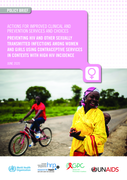
This programmatic brief explores how to expand HIV and STI prevention and contraceptive method options in contraceptive services and, thus, to reduce HIV and STI incidence among adolescent girls and women. It focuses on settings with extremely high HIV prevalence and incidence. This brief complement
...
Vitamin D deficiency is thought to be common among pregnant women, particularly during the winter months, and has been found to be associated with an increased risk of pre-eclampsia, gestational diabetes mellitus, preterm birth, and other tissue-spe
...
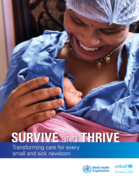
Just about everyone has experienced the joy that a healthy newborn child brings to parents, families and communities. But the arrival of a newborn who is small or sick often results in immediate worry and sadness. When the infant is at high risk
...
Cascading risks from rising prices and supply disruptions, April 2022.
Global resource markets are still reeling from the impacts of Russia’s invasion of Ukraine; the two countries are major supp
...

This tool offers practical advice on implementing HIV and STI programmes for and with sex workers. It is based on the recommendations in the guidance document on Prevention and treatment of HIV and other sexually transmitted infections for sex worke
...

Refugee Health
recommended
An approach to emergency situations. Relief workers face rapidly changing and complex environments, new disease patterns, enormous humanitarian needs and relatively limited resources. The authors of this book use their experience in the area to prod
...

The power relations around global decisions which shape population health can be changed through new alliances and information flows. The Democratising Global Health Governance Initiative, of which WHO Watch is a project, is designed to contribute t
...

Produced by Training and Research Support Centre for the Regional Network for Equity in Health in east and southern Africa (EQUINET), March 20, 2020.
This brief summarises and provides links to official, scientific and other resources to support an understanding
...
In many conflicts around the world, more children die from diseases linked to unsafe water than from direct violence. UNICEF is releasing Water Under Fire volume 3, a report that highlights the issues children face in accessing water in times of war
...

Gender-based violence is a life-threatening, global health and human rights issue that violates international human rights law and principles of gender equality. It is also a threat to lasting peace and an affront to our common humanity. United Nati
...

Every year, around 830 000 children die from unintentional or "accidental" injuries. The vast majority of these injuries occur in low-income and middle-income countries. However, dozens of preventio
...
It is often observed that educated women have lower birth rates than do the less educated, inviting a causal interpretation. However, educated women also differ from those who have never attended school in a
variety of other ways: the two factors a
...
Self-care interventions are among the most promising and exciting new approaches to improve health and well-being, both from a health systems perspective and for people who use these interventions. The World Health Organization (WHO) uses the following working definition
...

WHO’s Country Cooperation Strategy (CCS) defines the Organization’s medium-term vision for working in and with a particular country. The CCS, developed in the context of global and national health priorities, examines the overall health situatio
...
Ramped-up cancer services could save 7 million lives over the next decade—and addressing huge service gaps between rich and poor countries is key to success, according to this report.
In 2019, over 90% of high-income countries reported that com
...
The WHO/UNICEF JMP report, WASH in Health Care Facilities, is the first comprehensive global assessment of water, sanitation and hygiene (WASH) in health care facilities. It also finds that 1 in 5 health care facilities has no sanitation service*, i
...

The document "Diabetes and Ramadan: Practical Guidelines 2021," published by Elsevier, provides updated guidance for managing diabetes during Ramadan fasting. Developed by the International Diabetes Federation (IDF) and the Diabetes and Ramadan (DAR) International Alliance, the guidelines address ke
...
