
Filter
676
Text search:
Ministry
of
Health
Kenya
Featured
Recommendations
48
New Publications
150
Language
Document type
No document type
377
Studies & Reports
145
Guidelines
57
Manuals
34
Strategic & Response Plan
32
Training Material
15
Situation Updates
7
Fact sheets
4
Resource Platforms
3
Infographics
2
Countries / Regions
Kenya
116
Uganda
32
Global
31
Nigeria
16
Ethiopia
16
Africa
16
Tanzania
13
Rwanda
13
Malawi
13
Zambia
10
Liberia
8
Congo, Democratic Republic of
7
Zimbabwe
7
India
7
South Sudan
6
South Africa
6
East and Southern Africa
6
Sierra Leone
5
Ghana
5
Nepal
5
Lesotho
5
West and Central Africa
5
Western and Central Europe
5
Guinea
4
Senegal
4
Ukraine
4
Cameroon
3
Somalia
3
Sudan
3
Namibia
3
Botswana
3
Madagascar
3
Middle East and North Africa
3
Latin America and the Carribbean
3
Togo
2
Pakistan
2
Chad
2
Central African Republic
2
Eswatini/ Swaziland
2
Brazil
2
Eastern Europe
2
Russia
2
Côte d’Ivoire / Ivory Coast
1
Niger
1
Philippines
1
Jordan
1
Afghanistan
1
Syria
1
Cambodia
1
Thailand
1
Indonesia
1
Bangladesh
1
Mozambique
1
Benin
1
Peru
1
North Macedonia
1
Colombia
1
Angola
1
Sri Lanka
1
South–East Asia Region
1
Eastern Europe and Central Asia
1
Asia
1
Laos
1
Canada
1
Estonia
1
Iran
1
Gabon
1
Authors & Publishers
Publication Years
Category
Countries
254
Clinical Guidelines
50
Women & Child Health
41
Public Health
39
Key Resources
30
Capacity Building
10
Pharmacy & Technologies
7
Toolboxes
HIV
89
Disability
43
Mental Health
40
COVID-19
40
TB
39
Planetary Health
30
AMR
26
Caregiver
21
NTDs
18
Refugee
14
Ebola & Marburg
13
Rapid Response
12
Conflict
9
Global Health Education
9
Pharmacy
8
Health Financing Toolbox
8
Social Ethics
7
NCDs
7
Natural Hazards
6
2.0 Rapid Response
6
Polio
4
Malaria
4
Cholera
2
Specific Hazards
1
Fact Book on WHO Level I and Level II monitoring indicators - To monitor the progress of efforts to improve the global medicines situation, WHO has developed a system of indicators that measure impo
...
Safe drinking-water management must consider drinking-water quality, acceptability and quantity in the context of public health protection. In this manual, the term “safety” encompasses these th
...
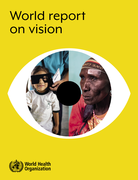
At present at least 2.2 billion people around the world have a vision impairment, of whom at least 1 billion have a vision impairment that could have been prevented or is yet to be addressed. The world faces considerable challenges in terms
...
The World Health Organization’s comprehensive antenatal care (ANC) guideline WHO recommendations on antenatal care for a positive pregnancy experience was published in 2016 with the objective of i
...

Safe sanitation is essential for health, from preventing infections to improving and maintaining mental and social
well-being. Lack of adequate sanitation contributes to diarrhoeal diseases, parasi
...

A companion to the Child Friendly Schools Manual
WASH in Schools aims to improve the health and learning performance of school-aged children – and, by extension, that ...
WASH in Schools aims to improve the health and learning performance of school-aged children – and, by extension, that ...

Medical devices are used for the prevention, diagnosis and treatment of illness and diseases and for rehabilitation. WHO developed guidance on medical device donation in 2011, which has been now reviewed, with new evidence, new references on conside
...
During the first year of the Covid-19 pandemic, the world’s economy slowed. Yet, the global annual average particulate pollution (PM2.5) was largely unchanged from 2019 levels. At the same time, growing evidence shows air pollution—even when exp
...

The seventh WHO Report on the global tobacco epidemic analyses national efforts to implement the most effective measures from the WHO Framework Convention on Tobacco Control (WHO FCTC) that are proven to reduce demand for tobacco.
The report showed that while only 23 countries have implemented ce
...
This guidance highlights tangible, evidence-based priority actions in health and WASH programs to achieve the Global Targets for nutrition. Throughout the guidance the importance of cross-sectoral c
...
The document provides guidance on the tools, activities and strategies required to achieve malaria elimination and prevent re-establishment of transmission in countries, regardless of where they lie
...

Water, sanitation and hygiene (WASH) are critical in the prevention and care for all of the 17 neglected tropical diseases (NTDs) scheduled for intensified control or elimination by 2020.
Provision of ...
Provision of ...
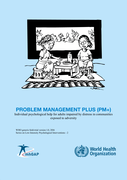
Problem Management Plus (PM+)
recommended
Individual psychological help for adults impaired by distress in communities exposed to adversity.
The manual describes a scalable psychological intervention called Problem Management Plus (PM+) for adults impaired by distress in communities who are exposed to adversity. Aspects
...

The WHO Global Antimicrobial Resistance and Use Surveillance System (GLASS) was launched in 2015 to foster AMR surveillance and inform strategies to contain AMR. The system started with surveillance of AMR in bacteria causing common human infections
...
Руководство по осуществлению mhGAP
recommended
The WHO Mental Health Gap Action Programme (mhGAP) aims at scaling up mental health services in non-specialized health settings to achieve universa
...

Health care-associated infections (HAIs) affect patients and health systems every day, causing immense suffering, driving higher health-care costs
...
Vitamin D deficiency is thought to be common among pregnant women, particularly during the winter months, and has been found to be associated with an increased risk of pre-eclampsia, gestational diabetes mellitus, preterm birth, and other tissue-spe
...

Just about everyone has experienced the joy that a healthy newborn child brings to parents, families and communities. But the arrival of a newborn who is small or sick often results in immediate worry and sadness. When the infant is at high risk
...
This publication is designed to be used by programme planners and managers as a resource when designing interventions to integrate postpartum family planning into national and subnational strategies. Postpartum family planning should not be considered a ‘vertical’ programme, but rather as an int
...
This ten year global plan for measles and rubella outlines the strategy that needs to be fully implemented to achieve the measles and rubella goals endorsed by the World Health Assembly. The plan sets out the: vision, goals and targets for the 2011-
...
