
Filter
349
Text search:
Marks,
G.
B.
Featured
36
82
Language
Document type
206
56
38
21
10
10
4
1
1
Countries / Regions
30
18
13
11
8
8
8
6
5
5
5
5
5
5
4
4
3
3
2
2
2
2
2
2
2
2
2
2
1
1
1
1
1
1
1
1
1
1
1
1
1
1
1
1
1
1
1
1
1
1
Authors & Publishers
Publication Years
Category
125
41
23
19
12
7
6
Toolboxes
41
25
19
15
14
13
12
11
9
9
8
5
5
5
4
4
3
3
2
2
1
1
1

This profile is part of a series of Climate Risk Country Profiles developed by the World Bank Group (WBG). The country profile
synthesizes most relevant data and information on climate change, disaster risk reduction, and adaptation actions and policies
at the country level. The country profile se
...

This document sets out, therefore, to explain the socioeconomic value of investing in the fight against NTDs and highlights priorities for global investment attention. Our work was guided by the need not only for
additional funding and funders but also for the need to understand the current funding
...

Ensuring mental health and well-being has become a worldwide imperative and an important target
of the Sustainable Development Goals.
But in all countries around the world, our response has been woefully insufficient, and we have made
little progress to advance mental health as a fundamental huma
...
Lymphatic filariasis is a neglected tropical disease that can cause permanent disability through disruption of the lymphatic system. This disease is caused by parasitic filarial worms that are transmitted by mosquitos. Mass drug administration (MDA) of antihelmintics is recommended by WHO to elimina
...
This document, Programme and curriculum development guide, presents a systematic approach to developing programmes and curricula for implementation of the family planning (FP) and comprehensive abortion care (CAC) competencies,and the theory behind the approach. Specifically, the aim is for effectiv
...

Trachoma is the leading infectious cause of blindness (2). It is characterized by repeated
conjunctival infection with particular strains of Chlamydia trachomatis. This scars the conjunctivae and,
in some cases, leads to trichiasis with or without entropion. The abrasive action of eyelashes can
d
...

This new guidance aims to support programme implementers, coordinators and others in humanitarian settings in their actions to counter suicide and self-harm in humanitarian contexts and to save lives.

This report provides a review and analysis of the research landscape for three diseases – Chagas disease, human African trypanosomiasis and leishmaniasis – that disproportionately afflict poor and remote populations with limited access to health services. It represents the work of the disease re
...

This handbook is intended primarily for front-line health care providers who are likely to see children (among other clients) in their day-to-day practice. These may include general practitioners, nurses, midwives, gynaecologists,
paediatricians, mental health professionals, first responders and st
...

Yaws is a disfiguring non-venereal disease caused by infection with the spirochaete. Treponema pallidum subspecies pertenue which is closely related to the causative agent of syphilis and those of the other endemic treponematoses, bejel and pinta. The disease is endemic in certain areas of the World
...
Leptospirosis, a spirochaetal zoonosis, occurs in diverse epidemiological settings and affects vulnerable populations, such as rural subsistence farmers and urban slum dwellers. Although leptospirosis is a life-threatening disease and recognized as an important cause of pulmonary haemorrhage syndrom
...

Snakebite is an acute life threatening time limiting medical emergency. It is a preventable public
health hazard often faced by rural population in tropical and subtropical countries with heavy
rainfall and humid climate.

Human rabies remains a significant public health problem in Africa with outbreaks reported in most countries. In Nigeria–the most populous country in Africa–rabies causes a significant public health burden partly due to perennial obstacles to implementing a national prevention and control progra
...

This report makes clear that there is a path to end AIDS. Taking that path will help ensure preparedness to address other pandemic challenges, and advance progress across the Sustainable Development Goals. The data and real-world examples in the report make it very clear what that path is. It is not
...

Background
Low- and middle-income countries now experience the highest prevalence and mortality rates of cardiovascular disease.
Main text
While improving the availability and delivery of proven, effective therapies will no doubt mitigate this burden, we posit that studies evaluating cardiovasc
...

Noncommunicable diseases (NCDs) – chief among them, cardiovascular diseases (heart disease and stroke), cancer, diabetes and chronic respiratory diseases – along with mental health, cause nearly three quarters of deaths in the world. Their drivers are social, environmental, commercial and geneti
...

Noncommunicable diseases (NCDs) – chief among them, cardiovascular diseases (heart disease and stroke), cancer, diabetes and chronic respiratory diseases – along with mental health, cause nearly three quarters of deaths in the world. Their drivers are social, environmental, commercial and geneti
...
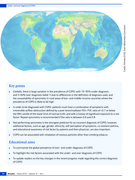
The article "Under- and over-diagnosis of COPD: a global perspective" reviews the worldwide variation in the prevalence of chronic obstructive pulmonary disease (COPD) and issues related to its misdiagnosis. It highlights that COPD is under-diagnosed due to factors such as limited access to spiromet
...


Over the past 20 years, the Global Initiative for Asthma (GINA) has regularly published and annually updated a global strategy for asthma management and prevention that has formed the basis for many national guidelines. However, uptake of existing guidelines is poor. A major revision of the GINA r
...
