
Filter
4382
Text search:
public
health
laboratory
Featured
504
1218
Language
4172
134
97
67
49
33
19
14
6
5
5
4
3
3
2
2
2
2
2
2
2
2
2
2
2
2
2
1
1
1
1
1
1
1
1
1
1
1
1
1
1
1
1
1
1
1
1
1
1
Document type
2114
810
714
257
238
96
69
48
16
7
5
3
2
1
1
Countries
235
178
137
126
120
110
107
95
95
91
85
84
72
71
65
64
61
54
52
50
42
39
39
38
37
36
35
35
34
29
28
27
25
23
23
22
22
21
21
18
17
17
15
15
15
14
14
14
12
12
11
11
11
10
10
9
8
7
6
6
6
6
6
6
6
6
6
5
5
5
5
5
5
4
4
4
4
4
4
4
4
4
4
3
3
3
3
3
3
3
3
3
3
2
2
2
2
2
2
2
2
2
2
2
2
2
2
2
2
2
2
1
1
1
1
1
1
1
1
1
1
1
1
1
1
1
1
1
1
1
1
1
1
1
1
1
1
1
1
1
1
1
1
Authors & Publishers
776
235
124
120
104
70
69
62
37
34
33
32
31
29
29
23
23
22
22
20
20
20
20
19
18
18
17
17
16
16
15
14
14
14
13
13
13
13
13
13
13
12
12
12
12
12
11
11
11
11
11
11
11
11
10
10
10
10
10
10
10
10
10
10
9
9
9
9
9
9
9
9
9
9
9
8
8
8
8
8
8
7
7
7
7
7
7
7
7
7
7
7
7
7
6
6
6
6
6
6
6
6
6
6
5
5
5
5
5
5
5
5
5
5
5
5
5
5
5
5
5
5
5
5
5
5
5
5
5
5
5
5
5
5
5
5
5
5
4
4
4
4
4
4
4
4
4
4
4
4
4
4
4
4
4
4
4
4
4
4
4
4
4
4
4
4
4
4
4
4
4
4
4
4
4
4
4
3
3
3
3
3
3
3
3
3
3
3
3
3
3
3
3
3
3
3
3
3
3
3
3
3
3
3
3
3
3
3
3
3
3
3
3
3
3
3
3
3
3
3
3
3
3
3
3
3
3
3
3
3
3
3
3
3
3
3
3
3
3
3
3
3
3
3
3
3
3
3
3
3
3
2
2
2
2
2
2
2
2
2
2
2
2
2
2
2
2
2
2
2
2
2
2
2
2
2
2
2
2
2
2
2
2
2
2
2
2
2
2
2
2
2
2
2
2
2
2
2
2
2
2
2
2
2
2
2
2
2
2
2
2
2
2
2
2
2
2
2
2
2
2
2
2
2
2
2
2
2
2
2
2
2
2
2
2
2
2
2
2
2
2
2
2
2
2
2
2
2
2
2
2
2
2
2
2
2
2
2
2
2
2
2
2
2
2
2
2
2
2
2
2
2
2
2
2
2
2
2
2
2
2
2
2
2
2
2
2
2
2
2
2
2
2
2
2
2
2
2
2
2
2
2
2
2
2
2
2
2
2
2
2
2
2
2
2
2
2
2
2
2
2
2
2
2
2
2
2
2
2
2
2
2
2
2
2
2
2
2
2
2
2
2
2
2
2
2
2
2
2
2
2
2
2
2
2
2
2
2
2
2
2
2
2
2
2
2
1
1
1
1
1
1
1
1
1
1
1
1
1
1
1
1
1
1
1
1
1
1
1
1
1
1
1
1
1
1
1
1
1
1
1
1
1
1
1
1
1
1
1
1
1
1
1
1
1
1
1
1
1
1
1
1
1
1
1
1
1
1
1
1
1
1
1
1
1
1
1
1
1
1
1
1
1
1
1
1
1
1
1
1
1
1
1
1
1
1
1
1
1
1
1
1
1
1
1
1
1
1
1
1
1
1
1
1
1
1
1
1
1
1
1
1
1
1
1
1
1
1
1
1
1
1
1
1
1
1
1
1
1
1
1
1
1
1
1
1
1
1
1
1
1
1
1
1
1
1
1
1
1
1
1
1
1
1
1
1
1
1
1
1
1
1
1
1
1
1
1
1
1
1
1
1
1
1
1
1
1
1
1
1
1
1
1
1
1
1
1
1
1
1
1
1
1
1
1
1
1
1
1
1
1
1
1
1
1
1
1
1
1
1
1
1
1
1
1
1
1
1
1
1
1
1
1
1
1
1
1
1
1
1
1
1
1
1
1
1
1
1
1
1
1
1
1
1
1
1
1
1
1
1
1
1
1
1
1
1
1
1
1
1
1
1
1
1
1
1
1
1
1
1
1
1
1
1
1
1
1
1
1
1
1
1
1
1
1
1
1
1
1
1
1
1
1
1
1
1
1
1
1
1
1
1
1
1
1
1
1
1
1
1
1
1
1
1
1
1
1
1
1
1
1
1
1
1
1
1
1
1
1
1
1
1
1
1
1
1
1
1
1
1
1
1
1
1
1
1
1
1
1
1
1
1
1
1
1
1
1
1
1
1
1
1
1
1
1
1
1
1
1
1
1
1
1
1
1
1
1
1
1
1
1
1
1
1
1
1
1
1
1
1
1
1
1
1
1
1
1
1
1
1
1
1
1
1
1
1
1
1
1
1
1
1
1
1
1
1
1
1
1
1
1
1
1
1
1
1
1
1
1
1
1
1
1
1
1
1
1
1
1
1
1
1
1
1
1
1
1
1
1
1
1
1
1
1
1
1
1
1
1
1
1
1
1
1
1
1
1
1
1
1
1
1
1
1
1
1
1
1
1
1
1
1
1
1
1
1
1
1
1
1
1
1
1
1
1
1
1
1
1
1
1
1
1
1
1
1
1
1
1
1
1
1
1
1
1
1
1
1
1
1
1
1
1
1
1
1
1
1
1
1
1
1
1
1
1
1
1
1
1
1
1
1
1
1
1
1
1
1
1
1
1
1
1
1
1
1
1
1
1
1
1
1
1
1
1
1
1
1
1
1
1
1
1
1
1
1
1
1
1
1
1
1
1
1
1
1
1
1
1
1
1
1
1
1
1
1
1
1
1
1
1
1
1
1
1
1
1
1
1
1
1
1
1
1
1
1
1
1
1
1
1
1
1
1
1
1
1
1
1
1
1
1
1
1
1
1
1
1
1
1
1
1
1
1
1
1
1
1
1
1
1
1
1
1
1
1
1
1
1
1
1
1
1
1
1
1
1
1
1
1
1
1
1
1
1
1
1
1
1
1
1
1
1
1
1
1
1
1
1
1
1
1
1
1
1
1
1
1
1
1
1
1
1
1
1
1
1
1
1
1
1
1
1
1
1
1
1
1
1
1
1
1
1
1
1
1
1
1
1
1
1
1
1
1
1
1
1
1
1
1
1
1
1
1
1
1
1
1
1
1
1
1
1
1
1
1
1
1
1
1
1
1
1
1
1
1
1
1
1
1
1
1
1
1
1
1
1
1
1
1
1
1
1
1
1
1
1
1
1
1
1
1
1
1
1
1
1
1
1
1
1
1
1
1
1
1
1
1
1
1
1
1
1
1
1
1
1
1
1
1
1
1
1
1
1
1
1
1
1
1
1
1
1
1
1
1
1
1
1
1
1
1
1
1
1
1
1
1
1
1
1
1
1
1
1
1
1
1
1
1
1
1
1
1
1
1
1
1
1
1
1
1
1
1
1
1
1
1
1
1
1
1
1
1
1
1
1
1
1
1
1
1
1
1
1
1
1
1
1
1
1
1
1
1
1
1
1
1
1
1
1
1
1
1
1
1
1
1
1
1
1
1
1
1
1
1
1
1
1
1
1
1
1
1
1
1
1
1
1
1
1
1
1
1
1
1
1
1
1
1
1
1
1
1
1
1
1
1
1
1
1
1
1
1
1
1
1
1
1
1
1
1
1
1
1
1
1
1
1
1
1
1
1
1
1
1
1
1
1
1
1
1
1
1
1
1
1
1
1
1
1
1
1
1
1
1
1
1
1
1
1
1
1
1
1
1
1
1
1
1
1
1
1
1
1
1
1
1
1
1
1
1
1
1
1
1
1
1
1
1
1
1
1
1
1
1
1
1
1
1
1
1
1
1
1
1
1
1
1
1
1
1
1
1
1
1
1
1
1
1
1
1
1
1
1
1
1
1
1
1
1
1
1
1
1
1
1
1
1
1
1
1
1
1
1
1
1
1
1
1
1
1
1
1
1
1
1
1
1
1
1
1
1
1
1
1
1
1
1
1
1
1
1
1
1
1
1
1
1
1
1
1
1
1
1
1
1
1
1
1
1
1
1
1
1
1
1
1
1
1
1
1
1
1
1
1
1
1
1
1
1
1
1
1
1
1
1
1
1
1
1
1
1
1
1
1
1
1
1
1
1
1
1
1
1
1
1
1
1
1
1
1
1
1
1
1
1
1
1
1
1
1
1
1
1
1
1
1
1
1
1
1
1
1
1
1
1
1
1
1
1
1
1
1
1
1
1
1
1
1
1
1
1
1
1
1
1
1
1
1
1
1
1
1
1
1
1
1
1
1
1
1
1
1
1
1
1
1
1
1
1
1
1
1
1
1
1
1
1
1
1
1
1
1
1
1
1
1
1
1
1
1
1
1
1
1
1
1
1
1
1
1
1
1
1
1
1
1
1
1
1
1
1
1
1
1
1
1
1
1
1
1
1
1
1
1
1
1
1
1
1
1
1
1
1
1
1
1
1
1
1
1
1
1
1
1
1
1
1
1
1
1
1
1
1
1
1
1
1
1
1
1
1
1
1
1
1
1
1
1
1
1
1
1
1
1
1
1
1
1
1
1
1
1
1
1
1
1
1
1
1
1
1
1
1
1
1
1
1
1
1
1
1
1
1
1
1
1
1
1
1
1
1
1
1
1
1
1
1
1
1
1
1
1
1
1
1
1
1
1
1
1
1
1
1
1
1
1
1
1
1
1
1
1
1
1
1
1
1
1
1
1
1
1
1
1
1
1
1
1
1
1
1
1
1
1
1
1
1
1
1
1
1
1
1
1
1
1
1
1
1
1
1
1
1
1
1
1
1
1
1
1
1
1
1
1
1
1
1
1
1
1
1
1
1
1
1
1
1
1
1
1
1
1
1
1
1
1
1
1
1
1
1
1
1
1
1
1
1
1
1
1
1
1
1
1
1
1
1
1
1
1
1
1
1
1
1
1
1
1
1
1
1
1
1
1
1
1
1
1
1
1
1
1
1
1
1
1
1
1
1
1
1
1
1
1
1
1
1
1
1
1
1
1
1
1
1
1
1
1
1
1
1
1
1
1
1
1
1
1
1
1
1
1
1
1
1
1
1
1
1
1
1
1
1
1
1
1
1
1
1
1
1
1
1
1
1
1
1
1
1
1
1
1
1
1
1
1
1
1
1
1
1
1
1
1
1
1
1
1
1
1
1
1
1
1
1
1
1
1
1
1
1
1
1
1
1
1
1
1
1
1
1
1
1
1
1
1
1
1
1
1
1
1
1
1
1
1
1
1
1
1
1
1
1
1
1
1
1
1
1
1
1
1
1
1
1
1
1
1
1
1
1
1
1
1
1
1
1
1
1
1
1
1
1
1
1
1
1
1
1
1
1
1
1
1
1
1
1
1
1
1
1
1
1
1
1
1
1
1
1
1
1
1
1
1
1
1
1
1
1
1
1
1
1
1
1
1
1
1
1
1
1
1
1
1
1
1
1
1
1
1
1
1
1
1
1
1
1
1
1
1
1
1
1
1
1
1
1
1
1
1
1
1
1
1
1
1
1
1
1
1
1
1
1
1
1
1
1
1
1
1
1
1
1
1
1
1
1
1
1
1
1
1
1
1
1
1
1
1
1
1
1
1
1
1
1
1
1
1
1
1
1
1
1
1
1
1
1
1
1
1
1
1
1
1
1
1
1
1
1
1
1
1
1
1
1
1
1
1
1
1
1
1
1
1
1
1
1
1
1
1
1
1
1
1
1
1
1
1
1
1
1
1
1
1
1
1
1
1
1
1
1
1
1
1
1
1
1
1
1
1
1
1
1
1
1
1
1
1
1
1
1
1
1
1
1
1
1
1
1
1
1
1
1
1
1
1
1
1
1
1
1
1
1
1
1
1
1
1
1
1
1
1
1
1
1
1
1
1
1
1
1
1
1
1
1
1
1
1
1
1
1
1
1
1
1
1
1
1
1
1
1
1
1
1
1
1
1
1
1
1
1
1
1
1
1
1
1
1
1
1
1
1
1
1
1
1
1
1
1
1
1
1
1
1
1
1
1
1
1
1
1
1
1
1
1
1
1
1
1
1
1
1
1
1
1
1
1
1
1
1
1
1
1
1
1
1
1
1
1
1
1
1
1
1
1
1
1
1
1
1
1
1
1
1
1
1
1
1
1
1
1
1
1
1
1
1
1
1
1
1
1
1
1
1
1
1
1
1
1
1
1
1
1
1
1
1
1
1
1
1
1
1
1
1
1
1
1
1
1
1
1
1
1
1
1
1
1
1
1
1
1
1
1
1
1
1
1
1
1
1
1
1
1
1
1
1
1
1
1
1
1
1
1
1
1
1
1
1
1
1
1
1
1
1
1
1
1
1
1
1
1
1
1
1
1
1
1
1
1
1
1
1
1
1
1
1
1
1
1
1
1
1
1
1
1
1
1
1
1
1
1
1
1
1
1
1
1
1
1
1
1
1
1
1
1
1
1
1
1
1
1
1
1
1
1
1
1
1
1
1
1
1
1
1
1
1
1
1
1
1
1
1
1
1
1
1
1
1
1
1
1
1
1
1
1
1
1
1
1
1
1
1
1
1
1
1
1
1
1
1
1
1
1
1
1
1
1
1
1
1
1
1
1
1
1
1
1
1
1
1
1
1
1
1
1
1
1
1
1
1
1
1
1
1
1
1
1
1
1
1
1
1
1
1
1
1
1
1
1
1
1
1
1
1
1
1
1
1
1
1
1
1
1
1
1
1
1
1
1
1
1
1
1
1
1
1
1
1
1
1
1
1
1
1
1
1
1
1
1
1
1
1
1
1
1
1
1
1
1
1
1
1
1
1
1
1
1
1
1
1
1
1
1
1
1
1
1
1
1
1
1
1
1
1
1
1
1
1
1
1
1
1
1
1
1
1
1
1
1
1
1
1
1
1
1
1
1
1
1
1
1
1
1
1
1
1
1
1
1
1
1
1
1
1
1
1
1
1
1
1
1
1
1
1
1
1
1
1
1
1
1
1
1
1
1
1
1
1
1
1
1
1
1
1
1
1
1
1
1
1
1
1
1
1
1
1
1
1
1
1
1
1
1
1
1
1
1
1
1
1
1
1
1
1
1
1
1
1
1
1
1
1
1
1
1
1
1
1
1
1
1
1
1
1
1
1
1
1
1
1
1
1
1
1
1
1
1
1
1
1
1
1
1
1
1
1
1
1
1
1
1
1
1
1
1
1
1
1
1
1
1
1
1
1
1
1
1
1
1
1
1
1
1
1
1
1
1
1
1
1
1
1
1
1
Publication Years
1456
2521
365
38
2
Category
1822
403
227
221
126
111
65
1
Toolboxes
462
370
246
246
224
158
148
117
115
108
88
79
75
72
62
54
51
40
39
36
32
31
28
21
2
1

his revision to the Disaster Management Team’s (DMT) multi-sector response plan for COVID-19 is meant to align the multi-sector plan with the Department of Health’s COVID-19 Emergency Response Plan issued on 24 April 2020. Additionally, at the t
...
ime of this version, the Department of Education and Department for Community Development and Religion have also issued their own national COVID-19 response and recovery plans.
The Government’s plan maintains a health sector focus and plans for a ‘worst case’ scenario, articulating the process of progressing into containment and subsequently mitigation of community transmission and on to recovery. It presents an opportunity to improve the core capacities of the whole of government, to see where both health and non-health sectors fit in and respond in the immediate and medium terms, and to adapt to the ‘new normal’ that this coronavirus has inevitably presented
more
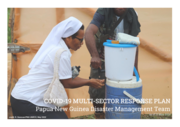
This revision to the Disaster Management Team’s (DMT) multi-sector response plan for COVID-19 is meant to align the multi-sector plan with the Department of Health’s COVID-19 Emergency Response Plan issued on 24 April 2020.
Abstract-The paper precisely and briefly explains the socio-economic challenges of persons with disabilities with focus on Ethiopia. The findings of the paper also indicates that, across the countries persons with disabilities have poorer he
...
alth accesses, lower education achievements, less social and economic participation and less rate of income than Persons disabilities experience barriers in accessing services that many of us have long taken for granted, including health, education, employment, transport and information as well as rehabilitation. These difficulties are exacerbated with high level of disability disadvantaged individuals. Based on the findings of this study, major socio-economic remedy directions are recommended which will be included in future policy enactment and implementations.
more
Buruli ulcer caused by Mycobacterium ulcerans is a neglected tropical disease characterized by extensive ulceration involving predominantly the upper and lower limbs of patients. The disease is common in rural tropical communities in West and Central Africa, where access to proper
...
health care is limited. Pathogenesis of the characteristic painless ulcers is linked to the elaboration by M. ulcerans of a lipid toxin called mycolactone that has potent cytopathic, immunosuppressive, and analgesic effects on a host of cells in cutaneous tissues. Mycolactone is known to profoundly inhibit secretion of a plethora of proteins that are essential for wound healing. Even though a combination antibacterial therapy of streptomycin and rifampicin for 8 weeks is effective for treatment, it relies on good and appropriate wound management to prevent secondary bacterial infections and improve healing. Evidence-based interventions for wound care in Buruli ulcer disease are often lacking and have relied on expert advice and recommendations. Surgical interventions are limited to debridement of necrotic tissue and grafting of extensive ulcers, usually after antibiotic therapy. Patients’ rehabilitation is an important component of care to reduce disabilities associated with the disease and proper integration into the community after treatment.
more

How should humanitarian organisations prepare and respond to COVID-19 in humanitarian settings in low- and middle-income countries?
This Rapid Learning Review outlines 14 actions, insights and ideas for humanitarian actors to consider in their COVID-19 responses. It summarises and synthesises the
...
best available knowledge and guidance for developing a health response to COVID-19 in low- and middle-income settings as at April 2020
The paper, supported by the UN Under-Secretary-General for Humanitarian Affairs and Emergency Relief Coordinator Mark Lowcock, will be updated throughout 2020 to reflect emerging knowledge and evidence on the most effective approaches to respond to the COVID-19 Pandemic.
more
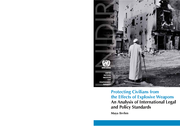
The use of explosive weapons, such as bombs, rockets, and mortar and
artillery shells, in cities, towns and villages and in other populated areas
has devastating humanitarian consequences. Explosive weapons act mainly
through the projection of blast and fragmentation wi
...
thin an area. Their use,
in populated areas, causes severe suffering to civilians, both in terms of
death and serious injury resulting directly from the explosion, and in terms
of damage to property and public infrastructure, which can indirectly affect
civilian well-being and survival, sometimes for many years after a conflict
has ended. Explosive weapons also leave behind explosive remnants that
pose a threat to populations until those remnants are removed. [...] The study finds that the regulation of explosive weapons under international
law and policy is fragmentary and incoherent.
more
Journal of the International AIDS Society 2017, 20(Suppl 4):21644
National AIDS Programme in Myanmar has made significant progress in scaling up antiretroviral treatment (ART) services and recognizes the importance of differentiated care for people living with HIV. Indeed, long centred around t ... he hospital and reliant on physicians, the country's HIV response is undergoing a process of successful decentralization with HIV care increasingly being integrated into other health services as part of a systematic effort to expand access to HIV treatment. This study describes implementation of differentiated care in Médecins Sans Frontières (MSF)‐supported programmes and reports its outcomes.
https://doi.org/10.7448/IAS.20.5.21644 more
National AIDS Programme in Myanmar has made significant progress in scaling up antiretroviral treatment (ART) services and recognizes the importance of differentiated care for people living with HIV. Indeed, long centred around t ... he hospital and reliant on physicians, the country's HIV response is undergoing a process of successful decentralization with HIV care increasingly being integrated into other health services as part of a systematic effort to expand access to HIV treatment. This study describes implementation of differentiated care in Médecins Sans Frontières (MSF)‐supported programmes and reports its outcomes.
https://doi.org/10.7448/IAS.20.5.21644 more

Cholera is a diarrhoeal disease that is usually contracted when drinking water contaminated with Vibrio cholerae bacteria. The fight against this disease requires a multidisciplinary approach that combines a water, hygiene and sanitation (WaSH) response with a monitoring system, improved water suppl
...
y and quality, sanitation and hygiene, and a health response with the treatment of the disease itself.
more
Patients with retreatment tuberculosis (TB) represent those
who have been treated previously for onemonth ormorewith
anti-TB drugs and who have been diagnosed once again with
the disease.These patientsmainly include relapses, treatment
after failure, or loss to follow-up on a first-line treatmen
...
t
regimen [1]. The number of these patients is not negligible.
In 2014, of the 6.3 million TB cases that were notified
by National TB Programmes (NTPs) to the World Health
Organization (WHO), approximately 700,000 patients were
already previously treated
more
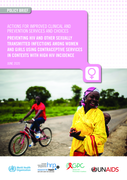
This programmatic brief explores how to expand HIV and STI prevention and contraceptive method options in contraceptive services and, thus, to reduce HIV and STI incidence among adolescent girls and women. It focuses on settings with extremely high HIV prevalence and incidence. This brief complement
...
s existing guidance on HIV prevention and sexual and reproductive health and rights (SRHR), amplifies calls for action and outlines more comprehensive approaches to integration of SRHR and HIV services. It also emphasizes the importance of SRHR for women living with HIV. It aligns with updated WHO recommendations for contraceptive eligibility for women at high risk of HIV and other HIV guidance for adolescent girls and young women.
more

The Lancet Volume 390, Issue 10110p2397-2409November 25, 2017.
Human African trypanosomiasis (HAT), also called sleeping sickness, is a parasitic infection that almost invariably progresses to death, unless treatment is provided. HAT caused devastating epidemics during the 20th century. Thanks to
...
sustained and coordinated efforts during the past 15 years the number of reported cases has fallen to a historic low. Fewer than 3,000 cases were reported in 2015, and the disease is targeted for elimination by the World Health Organization. Despite recent success, HAT still poses a heavy burden on the rural communities where this highly focal disease occurs, most notably in Central Africa. Since patients are also reported from non-endemic countries outside Africa, HAT should be considered in differential diagnosis for all travellers, tourists, migrants and expatriates who have visited or lived in endemic areas. In the absence of a vaccine, disease control relies on case detection and treatment, and vector control. Available drugs are sub-optimal, but ongoing clinical trials give hope for safer and simpler treatments.
more

In this document, the Inter-American Committee of Cardiovascular Prevention and Rehabilitation, together with the South
American Society of Cardiology, aimed to formulate strategies, measures, and actions for cardiovascular disease prevention
and rehabilitation (CVDPR). In the context of the imple
...
mentation of a regional and national health policy in Latin American
countries, the goal is to promote cardiovascular health and thereby decrease morbidity and mortality. The study group on
Cardiopulmonary and Metabolic Rehabilitation from the Department of Exercise, Ergometry, and Cardiovascular Rehabilitation
of the Brazilian Society of Cardiology has created a committee of experts to review the Portuguese version of the guideline
and adapt it to the national reality.
The mission of this document is to help health professionals to adopt effective measures of CVDPR in the routine
clinical practice. The publication of this document and its broad implementation will contribute to the goal of the World
Health Organization (WHO), which is the reduction of worldwide cardiovascular mortality by 25% until 2025.
more
Type 2 diabetes in adults
National Institute for Communicable Disease (NICE)
National Institute for Communicable Disease (NICE)
(2023)
CC2
The document provides the NICE Quality Standard for managing Type 2 diabetes in adults (QS209). It outlines evidence-based recommendations for preventing Type 2 diabetes, structured education, continuous glucose monitoring (CGM), medication such as SGLT2 inhibitors, and regular care processes to mon
...
itor complications. The guidelines emphasize individualized care, addressing health inequalities, and improving patient outcomes. They are intended to support healthcare professionals and services in delivering high-quality, equitable diabetes care.
more

Introduction Pharmacovigilance (PV) systems to monitor drug and vaccine safety are often inadequate in sub-Saharan
Africa. In Malawi, a PV enhancement initiative was introduced to address major barriers to PV.
Objective The objective of this initiative was to improve reporting of adverse events (A
...
Es) by strengthening passive safety
surveillance via PV training and mentoring of local PV stakeholders and healthcare providers (HCPs) at their own healthcare
facilities (HCFs).
Methods An 18-month PV training and mentoring programme was implemented in collaboration with national stakeholders,
and in partnership with the Ministry of Health, GSK and PATH. Two-day training was provided to Expanded Programme on
Immunisation coordinators, identified as responsible for AE reporting, and four National Regulatory Authority representa-
tives. Abridged PV training and mentoring were provided regularly to HCPs. Support was given in upgrading the national
PV system. Key performance indicators included the number of AEs reported, transmission of AE forms, completeness of
reports, serious AEs reported and timeliness of recording into VigiFlow.
Results In 18 months, 443 HCPs at 61 HCFs were trained. The number of reported AEs increased from 22 (January 2000 to
October 2016) to 228 (November 2016 to May 2018), enabling Malawi to become a member of the World Health Organization
Programme for International Drug Monitoring. Most (98%) AE report forms contained mandatory information on reporter,
event, patient and product, but under 1% were transmitted to the national PV office within 48 h.
Conclusion Regular PV training and mentoring of HCPs were effective in enhancing passive safety surveillance in Malawi,
but the transmission of reports to the national PV centre requires further improvement.
more
Incorporating epidemics risk in the INFORM Global Risk Index
Poljanšek K., Marin-Ferrer M., Vernaccini L., Messina L.
European Commission – Joint Research Centre (JRC)
(2018)
C2
The document focuses on integrating epidemic risk into the INFORM Global Risk Index, a tool used to assess and compare crisis and disaster risks across countries. It explains how epidemics can significantly impact vulnerability and hazard exposure, and therefore should be systematically included in
...
risk assessments. The report outlines methods, indicators, and data sources for incorporating epidemic risk into the index, improving its ability to capture health-related threats. Overall, the document aims to enhance risk analysis and support better preparedness, planning, and decision-making by providing a more comprehensive understanding of global risks.
more

Medicines and Allied Substances [No. 3 of 2013 47 | An Act to continue the existence of the Pharmaceutical Regulatory Authority and re-name it as the Zambia Medicines Regulatory Authority; provide for the functions and powers of the Authority; provide for the registration and regulation of pharmacie
...
s, health shops and agro-veterinary shops; provide for the registration and regulation of medicines and allied substances; provide for the regulation of the manufacture, importation, exportation, possession, storage, distribution, supply, promotion, advertising, sale and use of medicines and allied substances; provide for the regulation and control of clinical trials; repeal and replace the Pharmaceutical Act, 2004; and provide for matters connected with, or incidental to, the foregoing.
more
Disaster Preparedness Training Programme

Despite the increasing uptake of information and communication technologies (ICT) within healthcare services across developing countries, community healthcare workers (CHWs) have limited knowledge to fully utilise computerised clinical systems and mobile apps. The ‘Introduction to Information and
...
Communication Technology and eHealth’ course was developed with the aim to provide CHWs in Malawi, Africa, with basic knowledge and computer skills to use digital solutions in healthcare delivery. The course was delivered using a traditional and a blended learning approach.
more

To deliver on the Global Fund Strategy milestones
for 2028 and ensure we keep the SDG 3 target
within reach, we need to raise US$18 billion to
fund the Global Fund’s next three-year grant cycle.
