
Filter
1247
Text search:
roadmap
Featured
122
281
Language
Document type
452
328
176
149
62
41
15
7
6
3
3
3
1
Countries
82
39
33
32
32
29
25
25
25
22
20
18
18
17
15
14
14
14
14
13
13
13
13
11
11
10
10
10
10
8
7
7
7
7
7
7
6
6
6
6
5
4
4
4
4
4
4
4
4
4
3
3
3
3
3
3
3
3
3
3
3
3
2
2
2
2
2
2
2
2
2
2
2
2
1
1
1
1
1
1
1
1
1
1
1
1
1
1
1
1
1
1
1
1
1
1
1
Authors & Publishers
Publication Years
Category
425
86
77
68
62
15
8
Toolboxes
160
105
82
69
55
49
45
38
33
26
26
25
24
22
21
18
18
17
17
9
9
7
4
2
2
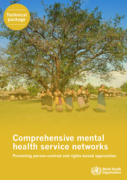
The WHO Guidance on community mental health services: Promoting person-centred and rights-based approaches document is part of the WHO Guidance and technical packages on community mental health services set of publications. It provides a detailed description of person-centred and human rights-based
...
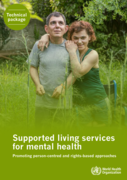
The WHO Guidance on community mental health services: Promoting person-centred and rights-based approaches document is part of the WHO Guidance and technical packages on community mental health services set of publications. It provides a detailed description of person-centred and human rights-based
...
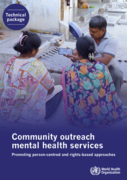
The WHO Guidance on community mental health services: Promoting person-centred and rights-based approaches document is part of the WHO Guidance and technical packages on community mental health services set of publications. It provides a detailed description of person-centred and human rights-based
...

The WHO Guidance on community mental health services: Promoting person-centred and rights-based approaches document is part of the WHO Guidance and technical packages on community mental health services set of publications. It provides a detailed description of person-centred and human rights-based
...
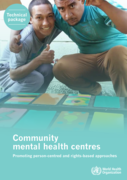
The WHO Guidance on community mental health services: Promoting person-centred and rights-based approaches document is part of the WHO Guidance and technical packages on community mental health services set of publications. It provides a detailed description of person-centred and human rights-based
...
временные рекомендации от 8 января 2021 г.
Available in Arabic, Chinese, English, French, Russian and Spanish here: https://apps.who.int/iris/handle/10665/338484

A Technical Brief for Breakthrough ACTION Field Teams


Frontline health workers (FHWs) provide services directly to communities where they are most needed, especially in remote and rural areas. Many are community health workers and midwives, though they can also include local emergency responders/paramedics, pharmacists, nurses, and doctors who serve in
...
Это временное руководство было разработано на основе рекомендаций Стратегической консультативной группы экспер-тов (СКГЭ) по иммунизации на ее внеочередном засеÐ
...

Consolidating Earthquake Safety Assessment Efforts in India. This document provides succinct instructions on how to perform rapid visual screening (RVS), a quick method of earthquake assessment of buildings. It covers a brief description of RVS and its role as a simplified qualitative assessment in
...
временное руководство. Первый выпуск: 10 февраля 2021 г. Обновлено: 21 апреля 2021 г. Последнее обновление 30 июля 2021г.

Временное руководство (Первый выпуск 24 мая 2021 г., Обновлено 21 октября 2021 г., Обновлено 15 марта 2022 г.
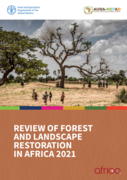
English Analysis on World about Agriculture, Climate Change and Environment and more; published on 29 Sep 2021 by FAO and NEPAD

This publication is a companion document to the NDVP National Deployment and Vaccination Plans guidance, which provides a framework for countries to develop their national strategies. As countries face challenges with erratic vaccine supplies, use of multiple vaccine products with different charact
...

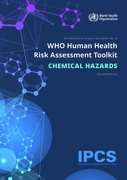
2nd edition. The purpose of the WHO human health risk assessment toolkit: chemical hazards is to provide its users with guidance to identify, acquire and use the information needed to assess chemical hazards, exposures and the corresponding health risks in their given health risk assessment contexts
...
27 September 2022
These WHO interim recommendations for use of the Novavax NVX-CoV2373 vaccine were developed on the basis of advice issued by the Strategic Advisory Group of Experts on Immunization (SAGE) and the evidence summary included in the background document and annexes referenced below.
Временное руководство, Первый выпуск 8 января 2021 г., Обновлено 15 июня 2021 г., Обновлено 19 ноября 2021 г.
