
Filter
543
Text search:
planetary
health
Featured
18
13
Language
Document type
328
51
26
25
20
20
16
14
14
11
8
6
2
Countries
58
9
7
5
4
4
3
3
3
2
2
2
2
2
2
2
1
1
1
1
1
1
1
1
1
1
1
1
1
1
1
1
1
1
1
1
1
Authors & Publishers
Publication Years
Category
43
32
17
4
2
2
Toolboxes
451
35
22
10
9
5
5
5
3
2
2
2
2
1
1
1
1

In this edition, the Antimicrobial Resistance chapter discusses the growing, dangerous trend of antimicrobial resistance and the potential catastrophic consequences on global health.
Chapter 1 of Frontier 2017: Emerging Issues of Environmental Conc
...

The main message emerging from this new comprehensive global assessment is that premature death and disease can be prevented through healthier environments – and to a significant degree. Analysing the latest data on the environment-disease nexus and the devastating impact of environmental hazards
...

En 2015, 26 % des décès de 5,9 millions d'enfants de moins de cinq ans auraient pu être évités si les facteurs de risque
environnementaux avaient été pris en compte – cette possibilité manquée de sauver des vies est révoltante. La période prénatale
et de la petite enfance constitue u
...
In this edition, the Antimicrobial Resistance chapter discusses the growing, dangerous trend of antimicrobial resistance and the potential catastrophic consequences on global health.
The Nanomaterials chapter talks about this relatively new techno
...


En 2015, el 26% de los decesos de 5,9 millones de niños que murieron antes de cumplir los cinco años podría haberse prevenido
abordando los riesgos medioambientales; una impactante oportunidad perdida. El período prenatal y de la primera infancia
representa un escenario de particular vulnerabi
...
Establecimientos de salud resilientes al clima y ambientalmente sostenibles: orientaciones de la OMS
La finalidad de estas orientaciones es aumentar la capacidad de los establecimientos de salud para proteger y mejorar la salud de las comunidades destinatarias ante un clima inestable y cambiante;
y habilitarlos para que sean ambientalmente sostenibles, optimizando el uso de los recursos y reducien
...
Verstädterung, Flächennutzung, globaler Handel und Industrialisierung haben auf der ganzen Welt tiefgreifende negative Folgen für Natur, Biodiversität und Ökosysteme. Der fortwährende Abbau natürlicher Ressourcen wirkt sich nicht nur auf den Zustand der Umwelt aus, sondern hat auch enorme Aus
...
El cambio climático se ha convertido en una preocupación apremiante para la salud pública en Argentina. Con el aumento de las temperaturas, variaciones en las precipitaciones y una mayor frecuencia de fenómenos climáticos extremos, los efectos sobre la salud son cada vez más evidentes en todo
...

A summary of health effects, resources, and adaptation examples from health departments funded by CDC’s Climate and Health Program
The emergence and transmission of zoonotic diseases are driven by complex interactions
between health, environmental, and socio-political systems. Human movement is considered
a significant and increasing factor in these processes, yet forced migr
...
English Analysis on Brazil about Health, Protection and Human Rights and Epidemic; published on 26 May 2021 by SSHAP
Young people living in the Central African Republic, Chad, Nigeria, Guinea, and Guinea-Bissau are the most at risk of the impacts of climate change, threatening their health, education, and protection, and exposing them to deadly diseases. The repor
...
Biodiversity and Health in the Face of Climate Change pp 47–66
This chapter reviews the emerging importance of pollen allergies in relation to ongoing climate change. Allergic diseases have been increasing in prevalence over the last decades, par
...
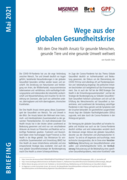
Mit dem One Health Ansatz für gesunde Menschen, gesunde Tiere und eine gesunde Umwelt weltweit. Briefing paper.
Der One Health Ansatz nimmt das Zusammenspiel der Gesundheit von Mensch, Tier und Um
...
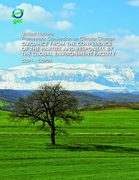
The United Nations Framework Convention on Climate Change (UNFCCC) established its Financial Mechanism to facilitate the provision and transfer of resources from developed to developing countries. The Global Environment Facility became the first operating entity of the Financial Mechanism after the
...
¿Por qué es tan importante incluir la dimensión ambiental en el enfoque Una sola salud?
l cambio climático se refiere a los cambios a largo plazo de las temperaturas y los patrones climáticos. Estos cambios pueden ser naturales, debido a variaciones en la actividad solar o erupciones volcánicas grandes. Pero desde el siglo XIX, las actividades humanas han sido el principal motor del
...

Tuberculosis (TB) remains a significant global health challenge, with an estimated annual death rate of approximately one per 100,000 people in countries with low TB prevalence. Rapid reductions in TB cases and deaths worldwide depend on research
...

Technical Note on Antimicrobial Resistance
This document reflects UNICEF’s response to the growing global threat of AMR to child survival, growth and development. It identifies UNICEF’s AMR-specific and AMR-sensitive actions in reducing infections, promoting access to and optimal use of antimic
...
