
Filter
3157
Text search:
UN
Environment
Featured
251
906
Language
2973
143
102
50
49
23
21
19
6
5
5
4
3
3
3
3
3
2
2
2
2
2
2
2
2
2
2
2
2
2
2
1
1
1
1
1
1
1
1
1
1
1
1
1
Document type
1744
621
292
190
181
44
40
23
7
5
5
3
Countries / Regions
156
93
79
74
73
70
67
66
66
62
61
52
50
50
42
41
41
37
36
33
33
33
31
31
29
26
25
24
23
22
22
20
20
17
16
16
15
15
15
14
14
14
14
13
12
12
12
12
12
11
11
11
10
10
9
9
8
8
7
7
7
6
5
5
5
5
5
5
5
5
5
5
4
4
4
4
4
3
3
3
3
3
3
3
3
3
3
3
3
2
2
2
2
2
2
2
2
2
2
2
2
2
2
2
2
2
2
1
1
1
1
1
1
1
1
1
1
1
1
1
1
1
1
1
1
1
1
1
1
1
1
Authors & Publishers
296
121
90
85
84
73
70
52
32
28
28
26
22
20
19
19
18
17
17
16
16
16
15
15
13
13
13
12
12
12
11
11
11
11
11
11
11
10
10
10
10
10
9
9
9
9
9
8
8
8
8
8
8
8
7
7
7
7
7
6
6
6
6
6
6
6
6
6
6
6
6
6
6
6
6
6
6
5
5
5
5
5
5
5
5
5
5
5
5
5
5
5
5
5
5
5
5
5
5
5
5
4
4
4
4
4
4
4
4
4
4
4
4
4
4
4
4
4
4
4
4
4
4
4
4
4
4
4
4
4
4
4
4
4
4
4
4
4
4
4
4
4
3
3
3
3
3
3
3
3
3
3
3
3
3
3
3
3
3
3
3
3
3
3
3
3
3
3
3
3
3
3
3
3
3
3
3
3
3
3
3
3
3
3
3
3
3
3
3
3
3
3
3
3
3
3
3
3
3
3
3
3
3
3
3
3
3
3
3
3
3
2
2
2
2
2
2
2
2
2
2
2
2
2
2
2
2
2
2
2
2
2
2
2
2
2
2
2
2
2
2
2
2
2
2
2
2
2
2
2
2
2
2
2
2
2
2
2
2
2
2
2
2
2
2
2
2
2
2
2
2
2
2
2
2
2
2
2
2
2
2
2
2
2
2
2
2
2
2
2
2
2
2
2
2
2
2
2
2
2
2
2
2
2
2
2
2
2
2
2
2
2
2
2
2
2
2
2
2
2
2
2
2
2
2
2
2
2
2
2
2
2
2
2
2
2
2
2
2
2
2
2
2
2
2
2
2
2
2
2
2
2
2
2
2
2
2
2
2
2
2
2
2
2
2
2
2
2
2
2
2
2
2
2
2
2
2
2
2
2
2
2
2
2
2
2
2
2
2
2
2
2
2
2
2
2
2
2
2
2
2
2
2
2
2
2
2
2
2
2
2
2
2
2
2
2
2
1
1
1
1
1
1
1
1
1
1
1
1
1
1
1
1
1
1
1
1
1
1
1
1
1
1
1
1
1
1
1
1
1
1
1
1
1
1
1
1
1
1
1
1
1
1
1
1
1
1
1
1
1
1
1
1
1
1
1
1
1
1
1
1
1
1
1
1
1
1
1
1
1
1
1
1
1
1
1
1
1
1
1
1
1
1
1
1
1
1
1
1
1
1
1
1
1
1
1
1
1
1
1
1
1
1
1
1
1
1
1
1
1
1
1
1
1
1
1
1
1
1
1
1
1
1
1
1
1
1
1
1
1
1
1
1
1
1
1
1
1
1
1
1
1
1
1
1
1
1
1
1
1
1
1
1
1
1
1
1
1
1
1
1
1
1
1
1
1
1
1
1
1
1
1
1
1
1
1
1
1
1
1
1
1
1
1
1
1
1
1
1
1
1
1
1
1
1
1
1
1
1
1
1
1
1
1
1
1
1
1
1
1
1
1
1
1
1
1
1
1
1
1
1
1
1
1
1
1
1
1
1
1
1
1
1
1
1
1
1
1
1
1
1
1
1
1
1
1
1
1
1
1
1
1
1
1
1
1
1
1
1
1
1
1
1
1
1
1
1
1
1
1
1
1
1
1
1
1
1
1
1
1
1
1
1
1
1
1
1
1
1
1
1
1
1
1
1
1
1
1
1
1
1
1
1
1
1
1
1
1
1
1
1
1
1
1
1
1
1
1
1
1
1
1
1
1
1
1
1
1
1
1
1
1
1
1
1
1
1
1
1
1
1
1
1
1
1
1
1
1
1
1
1
1
1
1
1
1
1
1
1
1
1
1
1
1
1
1
1
1
1
1
1
1
1
1
1
1
1
1
1
1
1
1
1
1
1
1
1
1
1
1
1
1
1
1
1
1
1
1
1
1
1
1
1
1
1
1
1
1
1
1
1
1
1
1
1
1
1
1
1
1
1
1
1
1
1
1
1
1
1
1
1
1
1
1
1
1
1
1
1
1
1
1
1
1
1
1
1
1
1
1
1
1
1
1
1
1
1
1
1
1
1
1
1
1
1
1
1
1
1
1
1
1
1
1
1
1
1
1
1
1
1
1
1
1
1
1
1
1
1
1
1
1
1
1
1
1
1
1
1
1
1
1
1
1
1
1
1
1
1
1
1
1
1
1
1
1
1
1
1
1
1
1
1
1
1
1
1
1
1
1
1
1
1
1
1
1
1
1
1
1
1
1
1
1
1
1
1
1
1
1
1
1
1
1
1
1
1
1
1
1
1
1
1
1
1
1
1
1
1
1
1
1
1
1
1
1
1
1
1
1
1
1
1
1
1
1
1
1
1
1
1
1
1
1
1
1
1
1
1
1
1
1
1
1
1
1
1
1
1
1
1
1
1
1
1
1
1
1
1
1
1
1
1
1
1
1
1
1
1
1
1
1
1
1
1
1
1
1
1
1
1
1
1
1
1
1
1
1
1
1
1
1
1
1
1
1
1
1
1
1
1
1
1
1
1
1
1
1
1
1
1
1
1
1
1
1
1
1
1
1
1
1
1
1
1
1
1
1
1
1
1
1
1
1
1
1
1
1
1
1
1
1
1
1
1
1
1
1
1
1
1
1
1
1
1
1
1
1
1
1
1
1
1
1
1
1
1
1
1
1
1
1
1
1
1
1
1
1
1
1
1
1
1
1
1
1
1
1
1
1
1
1
1
1
1
1
1
1
1
1
1
1
1
1
1
1
1
1
1
1
1
1
1
1
1
1
1
1
1
1
1
1
1
1
1
1
1
1
1
1
1
1
1
1
1
1
1
1
1
1
1
1
1
1
1
1
1
1
1
1
1
1
1
1
1
1
1
1
1
1
1
1
1
1
1
1
1
1
1
1
1
1
1
1
1
1
1
1
1
1
1
1
1
1
1
1
1
1
1
1
1
1
1
1
1
1
1
1
1
1
1
1
1
1
1
1
1
1
1
1
1
1
1
1
1
1
1
1
1
1
1
1
1
1
1
1
1
1
1
1
1
1
1
1
1
1
1
1
1
1
1
1
1
1
1
1
1
1
1
1
1
1
1
1
1
1
1
1
1
1
1
1
1
1
1
1
1
1
1
1
1
1
1
1
1
1
1
1
1
1
1
1
1
1
1
1
1
1
1
1
1
1
1
1
1
1
1
1
1
1
1
1
1
1
1
1
1
1
1
1
1
1
1
1
1
1
1
1
1
1
1
1
1
1
1
1
1
1
1
1
1
1
1
1
1
1
1
1
1
1
1
1
1
1
1
1
1
1
1
1
1
1
1
1
1
1
1
1
1
1
1
1
1
1
1
1
1
1
1
1
1
1
1
1
1
1
1
1
1
1
1
1
1
1
1
1
1
1
1
1
1
1
1
1
1
1
1
1
1
1
1
1
1
1
1
1
1
1
1
1
1
1
1
1
1
1
1
1
1
1
1
1
1
1
1
1
1
1
1
1
1
1
1
1
1
1
1
1
1
1
1
1
1
1
1
1
1
1
1
1
1
1
1
1
1
1
1
1
1
1
1
1
1
1
1
1
1
1
1
1
1
1
1
1
1
1
1
1
1
1
1
1
1
1
1
1
1
1
1
1
1
1
1
1
1
1
1
1
1
1
1
1
1
1
1
1
1
1
1
1
1
1
1
1
1
1
1
1
1
1
1
1
1
1
1
1
1
1
1
1
1
1
1
1
1
1
1
1
1
1
1
1
1
1
1
1
1
1
1
1
1
1
1
1
1
1
1
1
1
1
1
1
1
1
1
1
1
1
1
1
1
1
1
1
1
1
1
1
1
1
1
1
1
1
1
1
1
1
1
1
1
1
1
1
1
1
1
1
1
1
1
1
1
1
1
1
1
1
1
1
1
1
1
1
1
1
1
1
1
1
1
1
1
1
1
1
1
1
1
1
1
1
1
1
1
1
1
1
1
1
1
1
1
1
1
1
1
1
1
1
1
1
1
1
1
1
1
1
1
1
1
1
1
1
1
1
1
1
1
1
1
1
1
1
1
1
1
1
1
1
1
1
1
1
1
1
1
1
1
1
1
1
1
1
1
1
1
1
1
1
1
1
1
1
1
1
1
1
1
1
1
1
1
1
1
1
1
1
1
1
1
1
1
1
1
1
1
1
1
1
1
1
1
1
1
1
1
1
1
1
1
1
1
1
1
1
1
1
1
1
1
1
1
1
1
1
1
1
1
1
1
1
1
1
1
1
1
1
1
1
1
1
1
1
1
1
1
1
1
1
1
1
1
1
1
1
1
1
1
1
1
1
1
1
1
1
1
1
1
1
1
1
1
1
1
1
1
1
1
1
1
1
1
1
1
1
1
1
1
1
1
1
1
1
1
1
1
1
1
1
1
1
1
1
1
1
1
1
1
1
1
1
1
1
1
1
1
1
1
1
1
1
1
1
1
1
1
1
1
1
1
1
1
1
1
1
1
1
1
1
1
1
1
1
1
1
1
1
1
1
1
1
1
1
1
1
1
1
1
1
1
1
1
1
1
1
1
1
1
1
1
1
1
1
1
1
1
1
1
1
1
1
1
1
1
1
1
1
1
1
1
1
1
1
1
1
1
1
1
1
1
1
1
1
1
1
1
1
1
1
1
1
1
1
1
1
1
1
1
1
1
1
1
1
1
1
1
1
1
1
1
1
1
1
1
1
1
1
1
1
1
1
1
1
1
1
1
1
1
1
1
1
1
1
1
1
1
1
1
1
1
1
1
1
1
1
1
1
1
1
1
1
1
1
1
1
1
1
1
1
1
1
1
1
1
1
1
1
1
1
1
1
1
1
1
1
1
1
1
1
1
1
1
1
1
1
1
1
1
1
1
1
1
1
1
1
1
1
1
1
1
1
1
1
1
1
1
1
1
1
1
1
1
1
1
1
1
1
1
1
1
1
1
1
1
1
1
1
1
1
1
1
1
1
1
1
1
1
1
1
1
1
1
1
1
1
1
1
1
1
1
1
1
1
1
1
1
1
1
1
1
1
1
1
1
1
1
1
1
1
1
1
1
1
1
1
1
1
1
1
1
1
1
1
1
1
1
1
1
1
1
1
1
1
1
1
1
1
1
1
1
1
1
1
1
1
1
1
1
1
1
1
1
1
1
1
1
1
1
1
1
1
1
1
1
1
1
1
1
1
1
1
1
1
1
1
1
1
1
1
1
1
1
1
1
1
1
1
1
1
1
1
1
1
1
1
1
1
1
1
1
1
1
1
1
1
1
1
1
1
1
1
1
1
1
1
1
1
1
1
1
1
1
1
1
1
1
1
1
1
1
1
1
1
1
1
1
1
1
1
1
1
1
1
1
1
1
1
1
1
1
1
1
1
1
1
1
1
1
1
1
1
1
1
1
1
1
1
1
1
1
1
1
1
1
1
1
1
1
1
1
1
1
1
1
1
1
1
1
1
1
1
1
1
1
1
1
1
1
1
1
1
1
1
1
1
1
1
1
1
1
1
1
1
1
1
1
1
1
1
1
1
1
1
1
1
1
1
1
1
1
1
1
1
1
1
1
1
1
1
1
1
1
1
1
1
1
1
1
1
1
1
1
1
1
1
1
1
1
1
1
1
1
1
1
1
1
1
1
1
1
1
1
1
1
1
1
1
1
1
1
1
1
1
1
1
1
1
1
1
1
1
1
1
1
1
1
1
1
1
1
1
1
1
1
1
1
1
1
1
1
1
1
1
1
1
1
1
1
1
1
1
1
1
1
1
1
1
1
1
1
1
1
1
1
1
1
1
1
1
1
1
1
1
1
1
1
1
1
1
1
1
1
1
1
1
1
1
1
1
1
1
1
1
1
1
1
1
1
1
1
1
1
1
1
1
1
1
1
1
1
1
1
1
1
1
1
1
1
1
1
1
1
1
1
1
1
1
1
1
1
1
1
1
1
1
1
1
1
1
1
1
1
1
1
1
1
1
1
1
1
1
1
1
1
1
1
1
1
1
1
1
1
1
1
1
1
1
1
1
1
1
1
1
1
1
1
1
1
1
1
1
1
1
1
1
1
1
1
1
1
1
1
1
1
1
1
1
1
1
1
1
1
1
1
1
1
1
1
1
1
1
1
1
1
1
1
1
1
1
1
1
1
1
1
1
1
1
1
1
1
1
1
1
1
1
1
1
1
1
1
1
1
1
1
1
1
1
1
1
1
1
1
1
1
1
1
1
1
1
1
1
1
1
1
1
1
1
1
1
1
1
1
1
1
1
1
1
1
1
1
1
1
1
1
1
1
1
1
1
1
1
1
1
1
1
1
1
1
1
1
1
1
1
1
1
1
1
1
1
1
1
1
1
1
1
1
1
1
1
1
1
1
1
1
1
1
1
1
1
1
1
1
1
1
1
1
1
1
1
1
1
1
1
1
Publication Years
1
916
1992
230
16
1
1
Category
1132
340
170
149
100
45
21
2
Toolboxes
260
253
225
211
170
158
111
89
87
75
75
64
50
50
41
37
35
34
28
26
25
19
13
11
9
3
2

This report includes analysis from informal regional consultations in the African Region, the Caribbean and North America, Latin America, South-East Asia Region, European Region, Eastern Mediterranean Region, alongside three forums in the Western Pacific Region. It analyses the overarching similarit
...
ies, regional nuances and priorities raised across the six WHO regions for the meaningful engagement of individuals with lived experience.
It is the second publication in the WHO Intention to action series, which aims to enhance the limited evidence base on the impact of meaningful engagement and address the lack of standardized approaches on how to operationalise meaningful engagement. The Intention to action series aims to do this by providing a platform from which individuals with lived experience, and organizational and institutional champions, can share solutions, challenges and promising practices related to this cross-cutting agenda. The Intention to action series also aims to provide powerful narratives, inspiration and evidence towards the Fourth United Nations High Level Meeting on NCDs in 2025 and achieving the 2030 United Nations Sustainable Development Goals (SDGs).
more

This global status report on prevention and control of NCDs (2014), is framed around the nine voluntary global targets. The report provides data on the current situation, identifying bottlenecks as well as opportunities and priority actions for attaining the targets. The 2010 baseline estimates on N
...
CD mortality and risk factors are provided so that countries can report on progress, starting in 2015. In addition, the report also provides the latest available estimates on NCD mortality (2012) and risk factors, 2010-2012.All ministries of health need to set national NCD targets and lead the development and implementation of policies and interventions to attain them. There is no single pathway to attain NCD targets that fits all countries, as they are at different points in their progress in the prevention and control of NCDs and at different levels of socioeconomic development. However all countries can benefit from the comprehensive response to attaining the voluntary global targets presented in this report.
more

Noncommunicable diseases (NCDs) – chief among them, cardiovascular diseases (heart disease and stroke), cancer, diabetes and chronic respiratory diseases – along with mental health, cause nearly three quarters of deaths in the world. Their drivers are social, environmental, commercial and geneti
...
c, and their presence is global. Every year 17 million people under the age of 70 die of NCDs, and 86% of them live in low- and middle-income countries (LMICs).
more

Mpox continues to affect people around the world. A new framework released today by WHO will guide health authorities, communities and other stakeholders in preventing and controlling mpox outbreaks, eliminating human-to-human transmission of the disease, and reducing spillover of the virus from ani
...
mals to humans.
Mpox is a viral illness caused by the monkeypox virus (MPXV). It can cause a painful rash, enlarged lymph nodes and fever. Most people fully recover, but some get very sick. The virus transmits from person to person through close, including sexual, contact. It also has animal reservoirs in east, central and west Africa, where spillovers from animals to humans can occasionally occur, sparking further outbreaks.
There are two different clades of the virus: clade I and clade II. Clade I outbreaks are deadlier than clade II outbreaks.
A major emergence of mpox linked to clade II began in 2017, and since 2022, has spread to all regions of the world. Between July 2022 and May 2023, the outbreak was declared a Public Health Emergency of International Concern. While that outbreak has largely subsided, cases and deaths continue to be reported today, illustrating that low-level transmission continues around the world.
Currently, there is also a major outbreak of clade I virus in the Democratic Republic of the Congo (DRC), where cases have been on the rise for decades. Since the beginning of the year, over 6500 cases and 345 deaths have been reported in the DRC. Almost half of these are among children under the age of 15 years.
The Strategic framework for enhancing prevention and control of mpox (2024–2027) provides a roadmap for health authorities, communities, and stakeholders worldwide to control mpox outbreaks in every context, advance mpox research and access to countermeasures, and to minimize zoonotic transmission.
more

Noncommunicable diseases (NCDs) – chief among them, cardiovascular diseases (heart disease and stroke), cancer, diabetes and chronic respiratory diseases – along with mental health, cause nearly three quarters of deaths in the world. Their drivers are social, environmental, commercial and geneti
...
c, and their presence is global. Every year 17 million people under the age of 70 die of NCDs, and 86% of them live in low- and middle-income countries (LMICs).
more

One of the first steps in developing a multisectoral action plan (MSAP) is to use a situation analysis to provide a comprehensive assessment of the health needs, prevailing risks and the context of the area to which the plan will apply. This will help countries, regions, provinces or cities intendi
...
ng to create a multisectoral action plan to align with the global commitments on targeting the four major NCDs: cardiovascular disease, diabetes, cancer and chronic respiratory diseases.
more

The document, "Progress on the Prevention and Control of Non-Communicable Diseases," reports on global efforts to reduce the impact of NCDs, such as heart disease, cancer, diabetes, and chronic respiratory diseases, following the commitments made at high-level United Nations meetings. It highlights
...
the inadequate progress in meeting the targets set under the Sustainable Development Goal 3.4 to reduce premature NCD mortality by one-third by 2030. Key challenges include insufficient funding, limited implementation of effective interventions, and political and economic barriers, especially in low-income countries. The report calls for strengthened international cooperation, policy reform, and innovative approaches to meet global health targets.
more

This review examines high-quality research evidence that synthesises the efects of extreme heat on human health in tropical
Africa. Web of Science (WoS) was used to identify research articles on the efects extreme heat, humidity, Wet-bulb Globe
Temperature (WBGT), apparent temperature, wind, Heat
...
Index, Humidex, Universal Thermal Climate Index (UTCI), heatwave, high temperature and hot climate on human health, human comfort, heat stress, heat rashes, and heat-related morbidity
and mortality
more

The coronavirus disease (COVID-19) pandemic exacerbated pre-existing inequalities in the treatment and care of noncommunicable diseases (NCDs). This report examines the effect of the COVID-19 pandemic on access to NCD medicines, and the policies and strategies implemented by countries and health sys
...
tems to anticipate and mitigate stresses across NCD medicine supply chains. The full range of upstream and downstream impacts are investigated, including: manufacturing; procurement, importation and last mile delivery; patient-level effects through affordability and availability; and the effects on NCD medicine availability by category of disease. The report culminates in recommended actions and interventions for key stakeholders in the NCD pharmaceutical supply chain, including governments, regulatory authorities, manufacturers and the private sector; as well as directions for future research for improving access and supply chain access resilience.
more
Risk factors for asthma among schoolchildren who participated in a casecontrol study in urban Uganda
Data on asthma aetiology in Africa are scarce. We investigated the risk factors for asthma among schoolchildren (5–17 years) in urban Uganda. We conducted a case-control study, among 555 cases and 1115 controls. Asthma was diagnosed by study clinicians. The main risk factors for asthma were tertia
...
ry education for fathers (adjusted OR (95% CI); 2.32 (1.71–3.16)) and mothers (1.85 (1.38–2.48)); area of residence at birth, with children born in a small town or in the city having an increased asthma risk compared to schoolchildren born in rural areas (2.16 (1.60–2.92)) and (2.79 (1.79–4.35)), respectively; father’s and mother’s history of asthma; children’s own allergic conditions; atopy; and cooking on gas/electricity. In conclusion, asthma was associated with a strong rural-town-city risk gradient, higher parental socio-economic status and urbanicity. This work provides the basis for future studies to identify specific environmental/lifestyle factors responsible for increasing asthma risk among children in urban areas in LMICs.
more

The Global Asthma Report (GAR) 2022, prepared by the Global Asthma Network (GAN), is the fourth such report (others 2011, 2014, 2018). GAN builds upon the work of the International Study of Asthma and Allergies in Childhood (ISAAC) and The International Union Against Tuberculosis and Lung Disease (T
...
he Union) to monitor asthma and improve asthma care, particularly in low- and middle-income countries (LMICs).
more

The 2023 meeting of the WHO Clinical Consortium on Healthy Ageing (CCHA) was the group’s ninth gathering and took place in Geneva 5–7 December 2023. The meeting was structured around seven panels, with a series of technical presentations, plenary discussions and group work, and a final session o
...
utlining the work programme for 2024.
more

Asbestos-related cancers: the‘Hidden Killer’remains a global threat
van Zandwijk, N.; Reid, G.; Frank, A.
EXPERT REVIEW OF ANTICANCER THERAPY2020, VOL. 20, NO. 4, 271–278
(2020)
CC2
Asbestos, the most frequent cause of occupational cancer, continues to be consumed ona massive scale, with millions of people exposed on a daily basis. This review explains why we havefailed in curtailing the silent epidemic of asbestos-related disease and why the numbers of asbestosvictims are like
...
ly to remain high. Emerging and developed countries have to be reminded that asbestosexposure has yet to become a problem of the past. The worldwide spread of asbestos, followed by thesurge of asbestos-related cancers, resembles the lung cancer epidemic caused by smoking andstimulated by manufacturers.
more

As Uganda builds back from the COVID-19 shock, the Ugandan government is strengthening its commitment to a more gender-inclusive and sustainable economy. This report supports these efforts by describing the gendered impacts of COVID-19 and provides recommendations for Ugandan policy makers and World
...
Bank Group operations to ensure women’s participation in an inclusive and sustainable recovery. It presents gender-disaggregated data from three main sources: high-frequency phone surveys that track the impacts of the COVID-19 shock: one of Ugandan nationals conducted in June and one of refugees conducted in November 2020; interviews with 28 representatives of government institutions, development partners, and women’s organizations in Kampala and in rural areas; and a review of relevant policy and gray literature on climate change, the green economy, and women’s economic empowerment.
more

The guidance document provides a set of indicators for assessing the status of development, implementation and monitoring of key policy interventions for prevention and control of NCDs and injuries. It promotes city-level evidence based decision-making processes to identify gaps and take appropriate
...
s actions to strengthen responses. Additionally, using the standardized indicators can facilitate cross-city learning, sharing best practices and lessons learnt in implementing various policy interventions.
more

The WHO Global tuberculosis report 2024 provides a comprehensive and up-to-date assessment of the TB epidemic, and of progress in prevention, diagnosis and treatment of the disease, at global, regional and country levels. This is done in the context of global TB commitments, strategies and targets.
This guide aims to inform about these illnesses - so-called ‘trauma-induced disorders’ - in general and ‘post-traumatic stress disorder’ (PTSD) in particular. It is also designed to offer support in finding treatment and counselling options.

Malawi is a landlocked country with a surface area of 118,484 km2. Administratively, the country is divided into three regions, namely the Northern, Central and Southern regions. The country has 28 districts, which are further divided into traditional authorities (TA) ruled by chiefs. The TAs are su
...
b-divided into villages, which form the smallest administrative units. The Village Development Committees (VDCs) under the TAs are responsible for development activities. Politically, each district is divided into constituencies that are represented by Members of Parliament (MPs) in the National Assembly for purposes of legislations. Constituencies are further divided into wards which are represented by a ward councillor at district assembly.
more
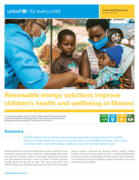
UNICEF Malawi and its partners are prioritizing renewable energy solutions for children and communities across the country to access clean and affordable electricity, with a focus on hard-to-reach, rural communities unable to access the national electricity grid.

Women and children, especially pregnant girls and women, infants and young children and postpartum women, are populations that are extremely vulnerable in emergencies. Breastfeeding provides children with hydration, comfort, connection, high quality nutrition and protection against disease, shieldin
...
g them from the worst of emergency conditions. This ability has been described as empowering and healing by some breastfeeding women.
more
