
Filter
621
Text search:
workplace
violence
Featured
60
172
Language
Document type
360
98
75
29
25
13
11
3
3
1
1
1
Countries
30
19
18
18
17
16
14
12
12
11
11
10
9
9
8
8
8
8
8
8
8
5
5
5
5
5
4
4
4
4
3
3
3
3
3
3
3
3
3
3
2
2
2
2
2
2
2
2
2
2
2
2
2
1
1
1
1
1
1
1
1
1
1
1
1
1
1
1
1
1
1
1
1
1
1
1
1
1
1
1
1
Authors & Publishers
Publication Years
Category
248
41
32
30
16
11
Toolboxes
101
57
55
48
26
23
15
13
12
9
5
5
3
3
2
2
2
2
2
1
1
1
1
Education is UNESCO’s top priority because
it is a basic human right and the foundation
on which to build peace and drive sustainable
development. UNESCO is the United Nations’
specialized agency for education and the
Education Sector provides global and
regional leadership in education, s
...
Including a Tool to Assess the Adolescent Health and Development Component in Pre-Service Education of Health-Care Providers

Biennial Report. SUBMITTED TO THE UNITED NATIONS GENERAL ASSEMBLY SPECIAL SESSION ON HIV AND AIDS
Reporting period: January 2012 – December 2013


An international field study by African and German Theologicans and health workers
The ‘Toolkit’ is targeted at practitioners responsible for implementing recovery programmes, their objective to provide a ‘how to’ guide on development, implementing and managing complex post-disaster recovery programmes.
Disaster Recovery Toolkit
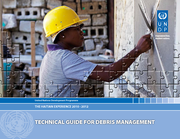
The building damage assessment, conducted between March 2010 and February 2011 by the Government of Haiti and the United Nations system, showed that more than 400,000 buildings were damaged or destroyed, of which approximately 218,000 could be occupied without repairs (green category), 105,000 were
...
GFDRR Knowledge Notes
The primary audience for the guideline is health programme managers, including governmental and non-governmental organizations, and policy makers who are responsible for designing maternal, newborn and child health programmes, primarily in low-income settings. The guideline is also aimed at health p
...
The study analyses the intersection of gender with disability issues by combining economic and social analysis across four states in India by using both quantitative and qualitative methods including gender analysis of disability budgets.
