
Filter
454
Text search:
European
Medicine
Agency
Featured
Recommendations
47
New Publications
88
Language
Document type
No document type
207
Studies & Reports
118
Guidelines
68
Manuals
22
Strategic & Response Plan
15
Fact sheets
10
Training Material
7
Situation Updates
4
Resource Platforms
2
App
1
Countries / Regions
Western and Central Europe
29
Global
26
Ukraine
19
Kenya
13
Eastern Europe
8
Syria
7
Senegal
6
Ethiopia
6
Ghana
6
India
6
Nepal
6
South–East Asia Region
6
Africa
6
Sierra Leone
5
Nigeria
4
Congo, Democratic Republic of
4
South Sudan
4
Zambia
4
Indonesia
4
West and Central Africa
4
Middle East and North Africa
4
Russia
4
Liberia
3
Cameroon
3
Uganda
3
Zimbabwe
3
Philippines
3
Tanzania
3
Thailand
3
South Africa
3
Bangladesh
3
Mozambique
3
Hungary
3
Myanmar / Burma
3
East and Southern Africa
3
Latin America and the Carribbean
3
Eastern Europe and Central Asia
3
Tajikistan
3
Guinea
2
Somalia
2
Pakistan
2
Afghanistan
2
Germany
2
Rwanda
2
Malawi
2
Brazil
2
North Macedonia
2
Colombia
2
Yemen
2
Venezuela
2
Poland
2
Moldova
2
Kazakhstan
2
Georgia
2
Côte d’Ivoire / Ivory Coast
1
Morocco
1
Jordan
1
Lebanon
1
Turkey
1
Egypt
1
China
1
Benin
1
Central African Republic
1
Argentina
1
Namibia
1
Eswatini/ Swaziland
1
Serbia
1
Lesotho
1
Mexico
1
Sri Lanka
1
Asia
1
Bhutan
1
Estonia
1
Romania
1
Iran
1
Uzbekistan
1
Kyrgyzstan
1
Gabon
1
Jamaica
1
Denmark
1
Mauritius
1
Norway
1
Portugal
1
Belarus
1
Authors & Publishers
Publication Years
Category
Countries
112
Clinical Guidelines
50
Key Resources
34
Public Health
20
Women & Child Health
18
Pharmacy & Technologies
8
Capacity Building
2
Toolboxes
HIV
41
AMR
39
COVID-19
37
TB
34
Mental Health
32
Planetary Health
21
Conflict
19
Refugee
17
Pharmacy
15
Rapid Response
12
Ebola & Marburg
11
Disability
10
Global Health Education
10
NCDs
10
Caregiver
7
Health Financing Toolbox
7
2.0 Rapid Response
4
Natural Hazards
3
Specific Hazards
3
Polio
1
Zika
1
Social Ethics
1
NTDs
1
Malaria
1

The Committee discussed the implications for preparedness for smallpox-like events reflected by the ongoing COVID-19 pandemic. The Committee noted how quickly diagnostics and vaccines could be developed and deployed when resources and political will were abundant. This rapidity was also due to the f
...

WHO would like to express its gratitude and appreciation to all Member States that provided information to the WHO survey on policies and activities at the national level in the area of antimicrobial resistance. The contribution of staff in WHO Regional and Country Offices has been invaluable: in ga
...
In 2007, WHO warned that infectious diseases are emerging and re-emerging at a rate that has not been seen before. The potential for infectious diseases to spread rapidly results in high morbidity and mortality, causing a potential global public health treat of major concern.
Several factors are
...
Road safety is an issue that does not receive anywhere near the attention it deserves – and it really is one
of our great opportunities to save lives around the world

The standards define 10 key competencies for health and care workers to support self-care in their clinical practice as well as the specific, measurable behaviours that demonstrate those competencies, focusing on people-centredness; decision-making; effective communication; collaboration; evidence-i
...

As the Americas undergo profound demographic change and there are more persons aged 65 years or older than children younger than 5 years, it is crucial to recognize that national immunization programs must be redesigned to ensure comprehensive protection for individuals across the lifespan. By adopt
...

Consultancy Report May 2022
UN, international agencies and experts released a groundbreaking report demanding immediate, coordinated and ambitious action to avert a potentially disastrous drug-resistance crisis.
If no action is taken - warns the UN Ad hoc Interagency Coordinating Group on Antimicrobial Resistance who release
...
This revision covers the main non-communicable diseases in Mozambique as well as the National Strategic Plan's aim to create a positive environment to minimize or eliminate the exposure to risk factors and guarantee access to care.
AIDSTAR-One | CASE STUDY SERIES November 2012
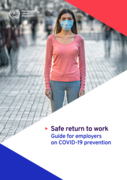
This guide contains recommendations for health and safety practices and approaches to COVID-19 prevention, based on materials developed by many organisations.


- Module 1: Understanding modelling approaches for sexual, reproductive, maternal, newborn, child and adolescent health, and nutrition
Coronavirus disease 2019 (COVID-19) has a wide range of documented effects. It directly causes death and disability for some people infected. However, disruption to
...

Nurses play a key role in the provision of primary health care (PHC) and the coordination and organization of medical care overall. Nurses are often the first point of contact with the health system and have an important role to play in leaving no one behind.
Large-scale reform of PHC in Uk
...

There is growing international consensus that food systems transformation is important to address the challenges of malnutrition in all its forms, the burden of noncommunicable diseases (NCDs), environmental sustainability, increasing inequality and ensuring the welfare of workers and animals. In li
...
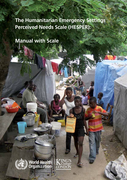
Manual with Scale

This update of the Guidelines for poison control, entitled Guidelines for establishing a poison centre, reflects the development of the role of poison centres in public health and the sound management of chemicals, described in section 1, and the opportunities provided by new technology. Assessments
...
