Filter
3070
Text search:
vaccination
services
Featured
329
786
Language
2451
649
82
67
59
30
28
17
12
9
7
6
4
4
3
3
3
3
3
3
2
2
2
2
2
2
2
2
2
2
1
1
1
1
1
1
1
1
1
1
1
1
1
1
1
1
1
1
1
Document type
1412
582
465
230
166
76
55
43
14
13
10
2
Countries / Regions
142
123
97
79
75
59
57
52
51
50
49
48
48
46
44
43
42
41
39
38
35
35
32
31
29
29
29
28
27
24
23
22
22
21
21
20
20
20
19
18
18
17
16
16
16
15
15
14
14
14
13
12
12
11
11
10
10
9
9
8
8
7
7
6
6
5
5
5
5
5
5
4
4
4
4
3
3
3
3
3
3
3
3
3
3
3
3
2
2
2
2
2
2
2
2
2
2
2
2
2
2
2
2
1
1
1
1
1
1
1
1
1
1
1
1
1
1
1
1
1
1
1
1
1
1
1
1
1
1
1
1
Authors & Publishers
509
120
95
70
70
68
42
42
38
35
31
27
25
24
23
23
22
22
16
16
15
14
14
13
13
13
12
12
12
12
12
11
11
11
11
10
9
9
9
9
9
9
8
8
8
8
8
8
8
7
7
7
7
7
7
7
7
7
7
7
7
7
6
6
6
6
6
6
6
6
6
6
6
6
6
6
6
5
5
5
5
5
5
5
5
5
5
5
5
5
5
5
5
5
4
4
4
4
4
4
4
4
4
4
4
4
4
4
4
4
4
4
4
4
4
4
4
4
4
4
4
3
3
3
3
3
3
3
3
3
3
3
3
3
3
3
3
3
3
3
3
3
3
3
3
3
3
3
3
3
3
3
3
3
3
3
3
3
3
3
3
3
3
3
3
3
3
3
3
3
3
3
3
3
3
3
3
3
3
3
3
3
3
3
3
3
3
2
2
2
2
2
2
2
2
2
2
2
2
2
2
2
2
2
2
2
2
2
2
2
2
2
2
2
2
2
2
2
2
2
2
2
2
2
2
2
2
2
2
2
2
2
2
2
2
2
2
2
2
2
2
2
2
2
2
2
2
2
2
2
2
2
2
2
2
2
2
2
2
2
2
2
2
2
2
2
2
2
2
2
2
2
2
2
2
2
2
2
2
2
2
2
2
2
2
2
2
2
2
2
2
2
2
2
2
2
2
2
2
2
2
2
2
2
2
2
2
2
2
2
2
2
2
2
2
2
2
2
2
2
2
2
2
2
2
2
2
2
2
2
2
2
2
2
2
2
2
2
2
2
2
2
2
2
2
2
2
2
2
2
2
2
2
2
2
1
1
1
1
1
1
1
1
1
1
1
1
1
1
1
1
1
1
1
1
1
1
1
1
1
1
1
1
1
1
1
1
1
1
1
1
1
1
1
1
1
1
1
1
1
1
1
1
1
1
1
1
1
1
1
1
1
1
1
1
1
1
1
1
1
1
1
1
1
1
1
1
1
1
1
1
1
1
1
1
1
1
1
1
1
1
1
1
1
1
1
1
1
1
1
1
1
1
1
1
1
1
1
1
1
1
1
1
1
1
1
1
1
1
1
1
1
1
1
1
1
1
1
1
1
1
1
1
1
1
1
1
1
1
1
1
1
1
1
1
1
1
1
1
1
1
1
1
1
1
1
1
1
1
1
1
1
1
1
1
1
1
1
1
1
1
1
1
1
1
1
1
1
1
1
1
1
1
1
1
1
1
1
1
1
1
1
1
1
1
1
1
1
1
1
1
1
1
1
1
1
1
1
1
1
1
1
1
1
1
1
1
1
1
1
1
1
1
1
1
1
1
1
1
1
1
1
1
1
1
1
1
1
1
1
1
1
1
1
1
1
1
1
1
1
1
1
1
1
1
1
1
1
1
1
1
1
1
1
1
1
1
1
1
1
1
1
1
1
1
1
1
1
1
1
1
1
1
1
1
1
1
1
1
1
1
1
1
1
1
1
1
1
1
1
1
1
1
1
1
1
1
1
1
1
1
1
1
1
1
1
1
1
1
1
1
1
1
1
1
1
1
1
1
1
1
1
1
1
1
1
1
1
1
1
1
1
1
1
1
1
1
1
1
1
1
1
1
1
1
1
1
1
1
1
1
1
1
1
1
1
1
1
1
1
1
1
1
1
1
1
1
1
1
1
1
1
1
1
1
1
1
1
1
1
1
1
1
1
1
1
1
1
1
1
1
1
1
1
1
1
1
1
1
1
1
1
1
1
1
1
1
1
1
1
1
1
1
1
1
1
1
1
1
1
1
1
1
1
1
1
1
1
1
1
1
1
1
1
1
1
1
1
1
1
1
1
1
1
1
1
1
1
1
1
1
1
1
1
1
1
1
1
1
1
1
1
1
1
1
1
1
1
1
1
1
1
1
1
1
1
1
1
1
1
1
1
1
1
1
1
1
1
1
1
1
1
1
1
1
1
1
1
1
1
1
1
1
1
1
1
1
1
1
1
1
1
1
1
1
1
1
1
1
1
1
1
1
1
1
1
1
1
1
1
1
1
1
1
1
1
1
1
1
1
1
1
1
1
1
1
1
1
1
1
1
1
1
1
1
1
1
1
1
1
1
1
1
1
1
1
1
1
1
1
1
1
1
1
1
1
1
1
1
1
1
1
1
1
1
1
1
1
1
1
1
1
1
1
1
1
1
1
1
1
1
1
1
1
1
1
1
1
1
1
1
1
1
1
1
1
1
1
1
1
1
1
1
1
1
1
1
1
1
1
1
1
1
1
1
1
1
1
1
1
1
1
1
1
1
1
1
1
1
1
1
1
1
1
1
1
1
1
1
1
1
1
1
1
1
1
1
1
1
1
1
1
1
1
1
1
1
1
1
1
1
1
1
1
1
1
1
1
1
1
1
1
1
1
1
1
1
1
1
1
1
1
1
1
1
1
1
1
1
1
1
1
1
1
1
1
1
1
1
1
1
1
1
1
1
1
1
1
1
1
1
1
1
1
1
1
1
1
1
1
1
1
1
1
1
1
1
1
1
1
1
1
1
1
1
1
1
1
1
1
1
1
1
1
1
1
1
1
1
1
1
1
1
1
1
1
1
1
1
1
1
1
1
1
1
1
1
1
1
1
1
1
1
1
1
1
1
1
1
1
1
1
1
1
1
1
1
1
1
1
1
1
1
1
1
1
1
1
1
1
1
1
1
1
1
1
1
1
1
1
1
1
1
1
1
1
1
1
1
1
1
1
1
1
1
1
1
1
1
1
1
1
1
1
1
1
1
1
1
1
1
1
1
1
1
1
1
1
1
1
1
1
1
1
1
1
1
1
1
1
1
1
1
1
1
1
1
1
1
1
1
1
1
1
1
1
1
1
1
1
1
1
1
1
1
1
1
1
1
1
1
1
1
1
1
1
1
1
1
1
1
1
1
1
1
1
1
1
1
1
1
1
1
1
1
1
1
1
1
1
1
1
1
1
1
1
1
1
1
1
1
1
1
1
1
1
1
1
1
1
1
1
1
1
1
1
1
1
1
1
1
1
1
1
1
1
1
1
1
1
1
1
1
1
1
1
1
1
1
1
1
1
1
1
1
1
1
1
1
1
1
1
1
1
1
1
1
1
1
1
1
1
1
1
1
1
1
1
1
1
1
1
1
1
1
1
1
1
1
1
1
1
1
1
1
1
1
1
1
1
1
1
1
1
1
1
1
1
1
1
1
1
1
1
1
1
1
1
1
1
1
1
1
1
1
1
1
1
1
1
1
1
1
1
1
1
1
1
1
1
1
1
1
1
1
1
1
1
1
1
1
1
1
1
1
1
1
1
1
1
1
1
1
1
1
1
1
1
1
1
1
1
1
1
1
1
1
1
1
1
1
1
1
1
1
1
1
1
1
1
1
1
1
1
1
1
1
1
1
1
1
1
1
1
1
1
1
1
1
1
1
1
1
1
1
1
1
1
1
1
1
1
1
1
1
1
1
1
1
1
1
1
1
1
1
1
1
1
1
1
1
1
1
1
1
1
1
1
1
1
1
1
1
1
1
1
1
1
1
1
1
1
1
1
1
1
1
1
1
1
1
1
1
1
1
1
1
1
1
1
1
1
1
1
1
1
1
1
1
1
1
1
1
1
1
1
1
1
1
1
1
1
1
1
1
1
1
1
1
1
1
1
1
1
1
1
1
1
1
1
1
1
1
1
1
1
1
1
1
1
1
1
1
1
1
1
1
1
1
1
1
1
1
1
1
1
1
1
1
1
1
1
1
1
1
1
1
1
1
1
1
1
1
1
1
1
1
1
1
1
1
1
1
1
1
1
1
1
1
1
1
1
1
1
1
1
1
1
1
1
1
1
1
1
1
1
1
1
1
1
1
1
1
1
1
1
1
1
1
1
1
1
1
1
1
1
1
1
1
1
1
1
1
1
1
1
1
1
1
1
1
1
1
1
1
1
1
1
1
1
1
1
1
1
1
1
1
1
1
1
1
1
1
1
1
1
1
1
1
1
1
1
1
1
1
1
1
1
1
1
1
1
1
1
1
1
1
1
1
1
1
1
1
1
1
1
1
1
1
1
1
1
1
1
1
1
1
1
1
1
1
1
1
1
1
1
1
1
1
1
1
1
1
1
1
1
1
1
1
1
1
1
1
1
1
1
1
1
1
1
1
1
1
1
1
1
1
1
1
1
1
1
1
1
1
1
1
1
1
1
1
1
1
1
1
1
1
1
1
1
1
1
1
1
1
1
1
1
1
1
1
1
1
1
1
1
1
1
1
1
1
1
1
1
1
1
1
1
1
1
1
1
1
1
1
1
1
1
1
1
1
1
1
1
1
1
1
1
1
1
1
1
1
1
1
1
1
1
1
1
1
1
1
1
1
1
1
1
1
1
1
1
1
1
1
1
1
1
1
1
1
1
1
1
1
1
1
1
1
1
1
1
1
1
1
1
1
1
1
1
1
1
1
1
1
1
1
1
1
1
1
1
1
1
1
1
1
1
1
1
1
1
1
1
1
1
1
1
1
1
1
1
1
1
1
1
1
1
1
1
1
1
1
1
1
1
1
1
1
1
1
1
1
1
1
1
1
1
1
1
1
1
1
1
1
1
1
1
1
1
1
1
1
1
1
1
1
1
1
1
1
1
1
1
1
1
1
1
1
1
1
1
1
1
1
1
1
1
1
1
1
1
1
1
1
1
1
1
1
1
1
1
1
1
1
1
1
1
1
1
1
1
1
1
1
1
1
1
1
1
1
1
1
1
1
1
Publication Years
1172
1646
234
18
Category
1324
257
180
173
147
32
24
2
Toolboxes
418
157
117
114
114
106
94
82
77
76
66
58
55
53
50
44
43
42
41
38
28
19
16
4
3
1
Par ses propriétés thérapeutiques, le médicament permet aux professionnels de santé
ainsi quaux pouvoirs publics dassurer la santé des populations. De ce fait, sa disponibilité et
son efficacité sont essentielles et sont le résultat dun circuit complexe (de sa fabrication
...
à sa
destruction en passant par sa distribution).
Laccessibilité au médicament est un élément déterminant de toute politique de santé.
Elle est garantie par la politique pharmaceutique de chaque pays qui vise à rendre le
médicament disponible pour tous, sur lensemble du territoire (accessibilité géographique), à
tout moment (accessibilité physique), à un prix abordable (accessibilité financière) et en
garantissant son efficacité et sa qualité (accessibilité qualitative
more

Manuel de Géstion à l'usage des gestionnaires de médicaments et des membres des Comités de Gestion
Pharmacient sans Frontières
Ministère de la Santé; Direction des Pharmacies et du Médicament; République du Bénin
(2016)
C2
Gestion de la Pharmacie dans les Centres de Santé au niveau périphérique
Stratégie mondiale du secteur de la santé contre le VIH 2016–2021
Organisation mondiale de la Santé
(2016)
C_WHO
Vers l'élimination du sida
Juin 2016

Internally displaced children are twice invisible in global and national data. First, because internally displaced people (IDPs) of all ages are often unaccounted for. Second, because age-disaggregation of any kind of data is limited, and even more so for IDPs.
Planning adequate responses to meet
...
the needs of internally displaced children, however, requires having at least a sense of how many there are and where they are. This report presents the first estimates of the number of children living in internal displacement triggered by conflict and violence at the global, regional and national levels.
more
Plan d’actions de la Politique du Secteur Santé pour la Nutrition 2016-2020 - Plan Exhaustif
La mortalité maternelle et néonatale demeure un problème de santé publique au Bénin. Tous les efforts déployés par l’Etat béninois et les Partenaires Techniques et Financiers ont abouti à peu d’amélioration de la santé des mères et des nouveau-nés. Les Objectifs du Millénaire pour
...
le Développement (OMD) n°4 et 5 en rapport avec la santé maternelle et infantile n’ont pas été atteints en 2015 comme programmé.
more

Le renforcement des actions de promotion de l’allaitement maternel notamment la mise au sein précoce et l’allaitement maternel exclusif pendant les six premiers mois de vie, constitue est une priorité absolue dans la stratégie de réduction de la mortalité infantile au Bénin. En effet, le l
...
ait maternel est l’aliment idéal pour les nouveau-nés et les nourrissons. L’allaitement maternel est un puissant rempart contre la diarrhée, les infections respiratoires aiguës et la malnutrition.
more
Au regard de l’importance de la recherche dans la promotion de la santé des
populations, le Ministère de la Santé a créé en son sein, depuis avril 2005, la
Direction de la Recherche en Santé (DRS) dont le rôle est d’orienter, de coordonner
et d’évaluer les activités de recherche da
...
ns le domaine de la santé. Pour permettre à
la DRS de jouer efficacement ce rôle, le Ministère de la Santé a adopté une politique
de recherche en santé axée sur les problèmes prioritaires de santé des populations
béninoises.
La mise en oeuvre de cette politique nécessite un plan stratégique. Le présent
document répond à ce besoin. Il présente les composantes du plan stratégique
de recherche en santé au Bénin pour la période de 2010 à 2014.
more
Politique du Secteur Santé pour la Nutrition 2016-2025
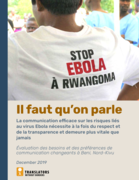
La communication efficace sur les risques liés au virus Ebola nécessite à la fois du respect et
de la transparence et demeure plus vitale que jamais.

Effective Ebola risk communication requires respect and transparency and remains as vital
as ever. An assessment of changing communication needs and preferences in Beni, North Kivu.
In the second year of the current Ebola outbreak response in the Democratic Republic of Congo (DRC), people at ris
...
k still don’t have clear answers to their questions about the disease in a language they understand. Many local health communicators are themselves confused about the disease prevention and treatment measures they promote. The language, content, and form of communication about Ebola affect how far people understand, trust and act upon it.
more
Prise en charge communautaire du paludisme, de la diarrhée et des IRA.
Aide mémoire du DSDOM.
Prévention et prise en charge.
Ce rapport présente les résultats de la cinquième année de l’Enquête Démographique et de Santé Continue au Sénégal (EDS-Continue 2017), exécutée par l’Agence Nationale de la Statistique et de la Démographie (ANSD) en collaboration avec le ministère de la Santé et l’Action sociale
...
(MSAS).
more

Vaincre le Sida par Tous, une Riposte pour Tous
Le Plan Stratégique National de Lutte contre le Sida (PSN) 2018-2022 sera le cadre unique pour tous les acteurs de la lutte contre le sida au Sénégal. Il constitue la référence pour la programmation des activités aux niveaux national et régio
...
nal, et sera l’outil indispensable pour l’harmonisation et l’alignement des partenaires. Ce plan traduit la vision et les engagements du Gouvernement du Sénégal à maintenir les acquis et à orienter la riposte vers l’élimination du sida en utilisant toutes les opportunités et ressources, aussi bien domestiques qu’internationales.
more
Plan stratégique de lutte contre la tuberculose au Sénégal
Sambou, B.; M.Sarr Diouf, A.H. Diop et. al.
Ministère de la santé et de l'action sociale, Programme National de Lutte contre la Tuberculose
(2012)
C2
Ce plan stratégique 2013- 2017 s’inscrit dans la continuité du précédent et a pour but de contribuer à la réduction de la charge de la tuberculose au Sénégal d’ici 2015 conformément aux Objectifs du Millénaire (OMD 6 Cible 8) et aux cibles du partenariat Halte à la tuberculose.
Les i
...
nterventions porteront, principalement, sur les orientations stratégiques déclinées lors de la revue externe. Elles seront axées sur la poursuite d’une stratégie DOTS de qualité, le renforcement des interventions communautaires et la prise en charge des grands défi s (TB/VIH, TBMR, TB de l’enfant et le contrôle de l’infection). Durant cette période, l’implication des prestataires du privé sera accentuée et des stratégies de communication porteuses d’impact seront menées.
L’atteinte des objectifs de ce plan stratégique nécessitera une importante mobilisation de ressources et un plaidoyer fort sera mené auprès de tous les partenaires du secteur santé et en dehors.
more

Prise en charge communautaire du paludisme, de la diarrhée et des IRA
Ministère de la Santé et de l’Action Sociale - République du Sénégal
Ministère de la Santé et de l’Action Sociale - République du Sénégal
(2014)
C2
Aide mémoire du DSDOM
Guide du formateur de l’Acteur Communautaire de Soins sur les maladies prioritaires de l’enfant ( MSAS- Sénégal-Octobre 2014)
La troisième génération de la Stratégie de Coopération de l’OMS avec les Pays (SCP) concrétise le programme majeur de réforme adopté par l’Assemblée mondiale de la Santé pour renforcer la capacité de l’OMS et faire en sorte que ses prestations répondent mieux aux besoins du pays. E
...
lle reflète le douzième programme général de travail de l’OMS au niveau du pays, vise à assurer une pertinence accrue de la coopération technique de l’OMS avec les États Membres. Elle met l’accent sur l’identification des priorités et des mesures d’efficience pour la mise en œuvre des réformes de l’OMS et de l’agenda de transformation régional. L’agenda de transformation vise à faire de l’organisation sanitaire régionale une institution clairvoyante, proactive, capable de répondre aux attentes, axée sur les résultats, transparente et responsable. Cette génération de SCP tient compte du rôle des différents partenaires, y compris les acteurs non étatiques, dans la fourniture d’un appui aux gouvernements et aux communautés.
more
Plan stratégique 2016-2018
Centre des Opérations d'Urgence Sanitaire (COUS), Ministère de la santé et de l'action sociale - République du Sénégal
Centre des Opérations d'Urgence Sanitaire (COUS), Ministère de la santé et de l'action sociale - République du Sénégal
(2016)
C2
Le plan stratégique du Centre des Opérations d'Urgence Sanitaire du Sénégal 2016-2018 s'inscrit dans la vision des authorités politiques, et en premier lieu dans le deuxième pilier du Plan Sénégal Émergent, visent à renforcer le capital humain, la protection sociale et le développement du
...
rable.
Les crises sanitaires étant susceptibles d'ébranler les efforts du Sénégal vers l'émergence, leur maîtrise est du la toute première importance.
Ce plan stratégique est par ailleurs aligné au Plan national de Dévloppement Sanitaire et contribue à fournir un cadre pécis d'action dans son rôle de renforcement du système de gestion des urgences et catastrophes sanitaires d'ampleur nationale.
more