
Filter
867
Text search:
WHO
Western
Pacific
Regional
Office
Featured
Recommendations
115
New Publications
202
Language
Document type
No document type
363
Studies & Reports
203
Guidelines
170
Manuals
62
Strategic & Response Plan
35
Training Material
11
Situation Updates
8
Fact sheets
8
Resource Platforms
4
Infographics
2
Online Courses
1
Countries / Regions
Global
74
Philippines
32
Western Pacific Region
24
South–East Asia Region
20
Asia
19
Nepal
16
Myanmar / Burma
16
India
14
Western and Central Europe
14
Africa
11
Cambodia
10
Bangladesh
9
Liberia
7
Kenya
7
China
7
Russia
7
Sierra Leone
6
Syria
6
Latin America and the Carribbean
6
Nigeria
5
Thailand
5
Indonesia
5
Ethiopia
4
Pakistan
4
Afghanistan
4
Papua New Guinea
4
Ukraine
4
Eastern Europe and Central Asia
4
Eastern Europe
4
Vietnam
4
Ghana
3
South Sudan
3
Rwanda
3
South Africa
3
Sri Lanka
3
Yemen
3
Laos
3
Congo, Democratic Republic of
2
USA
2
Somalia
2
Mozambique
2
Middle East and North Africa
2
Venezuela
2
Mongolia
2
Guinea
1
Burkina Faso
1
Zimbabwe
1
Haiti
1
Jordan
1
Zambia
1
Tanzania
1
Malawi
1
Sudan
1
Central African Republic
1
Peru
1
Eswatini/ Swaziland
1
Ecuador
1
Madagascar
1
Mexico
1
Chile
1
East and Southern Africa
1
West and Central Africa
1
Fiji
1
Bhutan
1
Palestine
1
Timor Leste/ East Timor
1
Moldova
1
Iran
1
Japan
1
Authors & Publishers
Publication Years
Category
Countries
155
Clinical Guidelines
108
Key Resources
65
Public Health
63
Women & Child Health
54
Pharmacy & Technologies
19
Capacity Building
13
Toolboxes
HIV
93
Mental Health
80
COVID-19
73
Planetary Health
53
TB
45
Rapid Response
39
Global Health Education
36
NTDs
31
Disability
30
AMR
29
Caregiver
26
Malaria
24
Pharmacy
23
NCDs
21
2.0 Rapid Response
21
Natural Hazards
17
Conflict
16
Refugee
14
Zika
14
Health Financing Toolbox
12
Polio
6
Ebola & Marburg
5
Typhoon
4
Specific Hazards
4
Cholera
3

COP24 special report: health and climate change
recommended
Exposure to air pollution causes 7 million deaths worldwide every year and costs an estimated US$ 5.11 trillion in welfare losses globally. In the 15 countries that emit the most greenhouse gas emissions, the health impacts of air pollution are estimated to cost more than 4% of their GDP. Actions to
...

A multidisciplinary and multisectoral collaboration, through a One Health approach is required to effectively prepare for, detect, assess, and respond to emerging and endemic zoonotic diseases. However, external and internal health system evaluations continue to identify major gaps in capacity
...

This revised trainer's guide contains a prototype training schedule for four days. Teaching and learning strategies are highly interactive, using participatory and experiential approach. Training outcomes include developing skills in assessment of clients for risk factors; conduct basic screening pr
...
Bangladesh Health Systems in Transition
Bulletin of the World Health Organization 2016. doi: http://dx.doi.org/10.2471/BLT.16.171082
Objective: To describe the temporal and geographical distribution of Zika virus infection, and associated neurological disorders, from 1947 to February 2016.
Volume 20, September
Global smart update
Budgetary mechanisms in highly affected countries
Results of rapid assessment
The COVID-19 pandemic has disrupted or halted critical mental health services in 93% of countries worldwide while the demand for mental health is increasing, according to a new WHO survey. The survey of 130 countries pro
...
Временное руководство23 декабря 2020 г.
The "Assessing National Capacity for the Prevention and Control of Noncommunicable Diseases: Report of the 2021 Global Survey" by WHO examines the global state of readiness and infrastructure for managing noncommunicable diseases (NCDs) across count
...
The checklist is aligned with, and builds upon, existing COVID-19-related WHO guidelines and is structured around protective measures related to: 1) hand hygiene and respiratory etiquette; 2) physical distancing; 3) use of masks in schools; 4) envir
...

Toolkit regarding Zika Virus

COVID-19 has heavily emphasized how contact tracing is crucial for managing outbreaks, and as part of the strategy for adjusting, and eventually lifting, lockdowns and other stringent public health and social measures. As the pandemic develops further, it will be a core measure to manage further wav
...

Interim rapid response guidance, 10 June 2022.
It includes considerations for certain populations such as patients with mild disease with considerations for community care, patients with moderate to severe disease, sexually active persons, pregnant or breastfeeding women, children and young persons
...
Including a Tool to Assess the Adolescent Health and Development Component in Pre-Service Education of Health-Care Providers
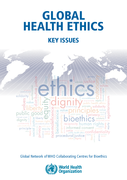
This document aims to assist policy‑makers, health care providers and researchers to understand key concepts in health ethics and to identify basic ethical questions surrounding health and health care. It illustrates the challenges of applying ethical principles to global public health and outline
...

Updated recommendations on simplified service delivery and diagnostics for hepatitis C infection
recommended
Policy Brief. 24 June 2022. This policy brief, one of two on the updated hepatitis C (HCV) guidelines, focuses on the new recommendations on simplified service delivery for a public health approach to HCV testing, care and treatment. These recommendations include decentralization, integration and ta
...
