Filter
465
Text search:
Penicillin
Featured
75
129
Language
Document type
192
134
78
23
15
11
6
5
1
Countries
32
25
19
16
11
11
10
10
10
9
7
7
7
6
6
6
5
4
4
4
4
3
3
3
3
3
3
2
2
2
2
2
2
2
2
1
1
1
1
1
1
1
1
1
1
1
1
1
1
1
1
1
1
1
1
1
1
1
1
Authors & Publishers
Publication Years
Category
197
74
38
16
10
3
3
Toolboxes
122
31
19
13
11
11
6
6
6
5
4
4
4
3
3
2
2
2
1
1
1
1
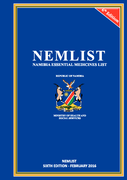
NEMLIST | Sixth Edition | February 2016

This summary brief highlights key messages from the updated World Health Organization’s recommendation on tranexamic acid (TXA) for the treatment of postpartum haemorrhage (PPH), including policy and program implications for translating the TXA recommendation into action at the country level. In 2
...
Manual for Early Implementation
5th revised edition.
This document provides a ranking of medically important antimicrobials for risk management of antimicrobial resistance due to non-human use. The current revision took place at the seventh meeting of the AGISAR held in Raleigh, United States of America in 2016.
Application of a One Health approach .
The present guidance was developed with the support of the WHO Advisory Group on Integrated Surveillance of Antimicrobial Resistance (AGISAR) to assist countries and other stakeholders in the establishment and development of programmes of integrated surveillan
...

CHAPTER 206 | An Act to establish a national drug policy and a national drug authority to ensure the availability, at all times, of essential, efficacious and cost-effective drugs to the entire population of Uganda, as a means of providing satisfactory health care and safeguarding the appropriate us
...
Made under Section 5 (c) of the Tanzania Food, Drugs and Cosmetics Act, 2003 | Second Edition
Weekly epidemiological record/ Relevé épidémiologique hebdomadaire 4 AUGUST 2017, 92th YEAR / 4 AOÛT 2017, 417-436


SITUATION ANALYSIS AND RECOMMENDATIONS