
Filter
2872
Text search:
school
personnel
Featured
247
842
Language
2663
216
46
39
34
19
14
5
4
3
3
3
3
2
2
2
2
2
2
2
2
2
1
1
1
1
1
1
1
1
1
1
1
1
1
1
1
Document type
1674
422
365
174
124
52
28
20
7
2
2
2
Countries
114
103
93
91
76
75
63
62
61
60
57
55
53
52
49
47
46
38
36
33
29
27
27
25
24
23
23
22
22
21
20
20
19
18
17
17
17
15
15
15
14
14
12
12
11
10
10
10
10
9
9
9
9
9
8
7
6
6
6
6
5
5
5
5
4
4
4
4
4
4
4
4
4
4
4
3
3
3
3
3
3
3
3
3
2
2
2
2
2
2
2
2
2
2
2
2
2
2
2
1
1
1
1
1
1
1
1
1
1
1
1
1
1
1
1
1
1
1
1
1
1
1
1
1
1
1
Authors & Publishers
280
100
81
72
68
55
47
44
40
32
29
22
22
22
21
20
19
18
17
15
13
12
12
12
12
12
12
11
11
11
11
10
10
10
9
9
9
9
9
9
8
8
8
8
8
8
7
7
7
7
7
7
7
6
6
6
6
6
6
6
6
6
6
5
5
5
5
5
5
5
5
5
5
5
5
5
5
5
5
5
5
5
5
5
5
5
5
5
5
4
4
4
4
4
4
4
4
4
4
4
4
4
4
4
4
4
4
4
4
4
4
4
4
4
4
4
4
4
4
3
3
3
3
3
3
3
3
3
3
3
3
3
3
3
3
3
3
3
3
3
3
3
3
3
3
3
3
3
3
3
3
3
3
3
3
3
3
3
3
3
3
3
3
3
3
3
3
3
3
3
3
3
3
3
3
3
3
3
3
3
3
3
3
3
3
3
3
3
2
2
2
2
2
2
2
2
2
2
2
2
2
2
2
2
2
2
2
2
2
2
2
2
2
2
2
2
2
2
2
2
2
2
2
2
2
2
2
2
2
2
2
2
2
2
2
2
2
2
2
2
2
2
2
2
2
2
2
2
2
2
2
2
2
2
2
2
2
2
2
2
2
2
2
2
2
2
2
2
2
2
2
2
2
2
2
2
2
2
2
2
2
2
2
2
2
2
2
2
2
2
2
2
2
2
2
2
2
2
2
2
2
2
2
2
2
2
2
2
2
2
2
2
2
2
2
2
2
2
2
2
2
2
2
2
2
2
2
2
2
2
2
2
2
2
2
2
2
2
2
2
2
2
2
2
2
2
2
2
2
2
2
2
2
2
2
2
2
2
2
2
2
2
2
1
1
1
1
1
1
1
1
1
1
1
1
1
1
1
1
1
1
1
1
1
1
1
1
1
1
1
1
1
1
1
1
1
1
1
1
1
1
1
1
1
1
1
1
1
1
1
1
1
1
1
1
1
1
1
1
1
1
1
1
1
1
1
1
1
1
1
1
1
1
1
1
1
1
1
1
1
1
1
1
1
1
1
1
1
1
1
1
1
1
1
1
1
1
1
1
1
1
1
1
1
1
1
1
1
1
1
1
1
1
1
1
1
1
1
1
1
1
1
1
1
1
1
1
1
1
1
1
1
1
1
1
1
1
1
1
1
1
1
1
1
1
1
1
1
1
1
1
1
1
1
1
1
1
1
1
1
1
1
1
1
1
1
1
1
1
1
1
1
1
1
1
1
1
1
1
1
1
1
1
1
1
1
1
1
1
1
1
1
1
1
1
1
1
1
1
1
1
1
1
1
1
1
1
1
1
1
1
1
1
1
1
1
1
1
1
1
1
1
1
1
1
1
1
1
1
1
1
1
1
1
1
1
1
1
1
1
1
1
1
1
1
1
1
1
1
1
1
1
1
1
1
1
1
1
1
1
1
1
1
1
1
1
1
1
1
1
1
1
1
1
1
1
1
1
1
1
1
1
1
1
1
1
1
1
1
1
1
1
1
1
1
1
1
1
1
1
1
1
1
1
1
1
1
1
1
1
1
1
1
1
1
1
1
1
1
1
1
1
1
1
1
1
1
1
1
1
1
1
1
1
1
1
1
1
1
1
1
1
1
1
1
1
1
1
1
1
1
1
1
1
1
1
1
1
1
1
1
1
1
1
1
1
1
1
1
1
1
1
1
1
1
1
1
1
1
1
1
1
1
1
1
1
1
1
1
1
1
1
1
1
1
1
1
1
1
1
1
1
1
1
1
1
1
1
1
1
1
1
1
1
1
1
1
1
1
1
1
1
1
1
1
1
1
1
1
1
1
1
1
1
1
1
1
1
1
1
1
1
1
1
1
1
1
1
1
1
1
1
1
1
1
1
1
1
1
1
1
1
1
1
1
1
1
1
1
1
1
1
1
1
1
1
1
1
1
1
1
1
1
1
1
1
1
1
1
1
1
1
1
1
1
1
1
1
1
1
1
1
1
1
1
1
1
1
1
1
1
1
1
1
1
1
1
1
1
1
1
1
1
1
1
1
1
1
1
1
1
1
1
1
1
1
1
1
1
1
1
1
1
1
1
1
1
1
1
1
1
1
1
1
1
1
1
1
1
1
1
1
1
1
1
1
1
1
1
1
1
1
1
1
1
1
1
1
1
1
1
1
1
1
1
1
1
1
1
1
1
1
1
1
1
1
1
1
1
1
1
1
1
1
1
1
1
1
1
1
1
1
1
1
1
1
1
1
1
1
1
1
1
1
1
1
1
1
1
1
1
1
1
1
1
1
1
1
1
1
1
1
1
1
1
1
1
1
1
1
1
1
1
1
1
1
1
1
1
1
1
1
1
1
1
1
1
1
1
1
1
1
1
1
1
1
1
1
1
1
1
1
1
1
1
1
1
1
1
1
1
1
1
1
1
1
1
1
1
1
1
1
1
1
1
1
1
1
1
1
1
1
1
1
1
1
1
1
1
1
1
1
1
1
1
1
1
1
1
1
1
1
1
1
1
1
1
1
1
1
1
1
1
1
1
1
1
1
1
1
1
1
1
1
1
1
1
1
1
1
1
1
1
1
1
1
1
1
1
1
1
1
1
1
1
1
1
1
1
1
1
1
1
1
1
1
1
1
1
1
1
1
1
1
1
1
1
1
1
1
1
1
1
1
1
1
1
1
1
1
1
1
1
1
1
1
1
1
1
1
1
1
1
1
1
1
1
1
1
1
1
1
1
1
1
1
1
1
1
1
1
1
1
1
1
1
1
1
1
1
1
1
1
1
1
1
1
1
1
1
1
1
1
1
1
1
1
1
1
1
1
1
1
1
1
1
1
1
1
1
1
1
1
1
1
1
1
1
1
1
1
1
1
1
1
1
1
1
1
1
1
1
1
1
1
1
1
1
1
1
1
1
1
1
1
1
1
1
1
1
1
1
1
1
1
1
1
1
1
1
1
1
1
1
1
1
1
1
1
1
1
1
1
1
1
1
1
1
1
1
1
1
1
1
1
1
1
1
1
1
1
1
1
1
1
1
1
1
1
1
1
1
1
1
1
1
1
1
1
1
1
1
1
1
1
1
1
1
1
1
1
1
1
1
1
1
1
1
1
1
1
1
1
1
1
1
1
1
1
1
1
1
1
1
1
1
1
1
1
1
1
1
1
1
1
1
1
1
1
1
1
1
1
1
1
1
1
1
1
1
1
1
1
1
1
1
1
1
1
1
1
1
1
1
1
1
1
1
1
1
1
1
1
1
1
1
1
1
1
1
1
1
1
1
1
1
1
1
1
1
1
1
1
1
1
1
1
1
1
1
1
1
1
1
1
1
1
1
1
1
1
1
1
1
1
1
1
1
1
1
1
1
1
1
1
1
1
1
1
1
1
1
1
1
1
1
1
1
1
1
1
1
1
1
1
1
1
1
1
1
1
1
1
1
1
1
1
1
1
1
1
1
1
1
1
1
1
1
1
1
1
1
1
1
1
1
1
1
1
1
1
1
1
1
1
1
1
1
1
1
1
1
1
1
1
1
1
1
1
1
1
1
1
1
1
1
1
1
1
1
1
1
1
1
1
1
1
1
1
1
1
1
1
1
1
1
1
1
1
1
1
1
1
1
1
1
1
1
1
1
1
1
1
1
1
1
1
1
1
1
1
1
1
1
1
1
1
1
1
1
1
1
1
1
1
1
1
1
1
1
1
1
1
1
1
1
1
1
1
1
1
1
1
1
1
1
1
1
1
1
1
1
1
1
1
1
1
1
1
1
1
1
1
1
1
1
1
1
1
1
1
1
1
1
1
1
1
1
1
1
1
1
1
1
1
1
1
1
1
1
1
1
1
1
1
1
1
1
1
1
1
1
1
1
1
1
1
1
1
1
1
1
1
1
1
1
1
1
1
1
1
1
1
1
1
1
1
1
1
1
1
1
1
1
1
1
1
1
1
1
1
1
1
1
1
1
1
1
1
1
1
1
1
1
1
1
1
1
1
1
1
1
1
1
1
1
1
1
1
1
1
1
1
1
1
1
1
1
1
1
1
1
1
1
1
1
1
1
1
1
1
1
1
1
1
1
1
1
1
1
1
1
1
1
1
1
1
1
1
1
1
1
1
1
1
1
1
1
1
1
1
1
1
1
1
1
1
1
1
1
1
1
1
1
1
1
1
1
1
1
1
1
1
1
1
1
1
1
1
1
1
1
1
1
1
1
1
1
1
1
1
1
1
1
1
1
1
1
1
1
1
1
1
1
1
1
1
1
1
1
1
1
1
1
1
1
1
1
1
1
1
1
1
1
1
1
1
1
1
1
1
1
1
1
1
1
1
1
1
1
1
1
1
1
1
1
1
1
1
1
1
1
1
1
1
1
1
1
1
1
1
1
1
1
1
1
1
1
1
1
1
1
1
1
1
1
1
1
1
1
1
1
1
1
1
1
1
1
1
1
1
1
1
1
1
1
1
1
1
1
1
1
1
1
1
1
1
1
1
1
1
1
1
1
1
1
1
1
1
1
1
1
1
1
1
1
1
1
1
1
1
1
1
1
1
1
1
1
1
1
1
1
1
1
1
1
1
1
1
1
1
1
1
1
1
1
1
1
1
1
1
1
1
1
1
1
1
1
1
1
1
1
1
1
1
1
1
1
1
1
1
1
1
1
1
1
1
1
1
1
1
1
1
1
1
1
1
1
1
1
1
1
1
1
1
1
1
1
1
1
1
1
1
1
1
1
1
1
1
1
1
1
1
1
1
1
1
1
1
1
1
1
1
1
1
1
1
1
1
1
1
1
1
1
1
1
1
1
1
1
1
1
1
1
1
1
1
1
1
1
1
1
1
1
1
1
1
1
1
1
1
1
1
1
1
1
1
1
1
1
1
1
1
1
1
1
1
1
1
1
1
1
1
1
1
1
1
1
1
1
1
1
1
1
1
1
1
1
1
1
1
1
1
1
1
1
1
1
1
1
1
1
1
1
1
1
1
1
1
1
1
1
1
1
1
1
1
1
1
1
1
1
1
1
1
1
1
1
1
1
1
1
1
1
1
1
1
1
1
1
1
1
1
1
1
1
1
1
1
1
1
1
1
1
1
1
1
1
1
1
1
1
1
1
1
1
1
1
1
1
1
1
1
1
1
1
1
1
1
1
1
1
1
1
1
1
1
1
1
1
1
1
1
1
1
1
1
1
1
1
1
1
1
1
1
1
1
1
1
1
1
1
1
1
1
1
1
1
1
1
1
1
1
1
1
1
1
1
1
1
1
1
1
1
1
1
1
1
1
1
1
1
1
1
1
1
1
1
1
1
1
1
1
1
1
1
1
1
1
1
1
1
1
1
1
1
1
1
1
1
1
1
1
1
1
1
1
1
1
1
1
1
1
1
1
1
1
1
1
1
1
1
1
1
1
1
1
1
1
1
1
1
1
1
1
1
1
1
1
1
1
1
1
1
1
1
1
1
1
1
1
1
1
1
1
1
1
1
1
1
1
1
1
1
1
1
1
1
1
1
1
1
1
1
1
1
1
1
1
1
1
1
1
1
1
1
1
1
1
1
1
1
1
1
1
1
1
1
1
1
Publication Years
731
1782
334
22
3
Category
1284
201
169
153
146
50
11
Toolboxes
256
231
198
111
103
91
88
83
65
59
50
50
48
44
44
41
38
30
28
23
18
16
13
11
6
3
1

Non-communicable diseases (NCDs) are of increasing concern for society and national governments, as well as globally due to their high mortality rate. The main risk factors of NCDs can be classified into the categories of self-management, genetic factors, environmental factors, factors of medical co
...
nditions, and socio-demographic factors.
more

Around the world, more than 2 billion people lack access to safely managed water, sanitation and hygiene services, with conflicts and climate change exacerbating the issue.
Unsafe and insufficient WASH facilities, especially in rural and remote areas, can lead to increased health complications fo
...
r older people, persons with disabilities and children. They also reinforce cycles of poverty, inequality and deprivation – particularly for women, children and marginalized groups, who are disproportionately impacted by a lack of equitable access to water and sanitation.
Launched on World Water Day, the guidelines address the knowledge gap on ways to practically implement inclusive approaches to WASH infrastructure development, particularly in developing countries and fragile contexts.
more

UNFPA supports the Youth Health Line (YHL), launched in 2012, as a nationwide, youth friendly health service to provide information and counseling for adolescents and youth on issues related to their health and reproductive health. The YHL is providing a vital service to young people around the coun
...
try who are dialing the toll-free number ‘120’ from any phone to speak to a professionally trained youth health counselor. These conversations are confidential, free of judgment, and do not require parental consent. The average reach of the YHL per year is 120,000 adolescents and youth served by full-time male and female counselors.
This Standard Operating Procedure for YHL provides a critical resource for the administration and day-to-day management. The SOP is designed to provide direction to all staff responsible for carrying out the administrative and managerial functions of the YHL. The SOP is intended to guide UNFPA Implementing Partners in running the YHL with a consistent approach to ensure improved access and quality of services provided to adolescents and youth in Afghanistan.
more
The Resolution Population and Individual Approaches to the Prevention and Management of Diabetes and Obesity was approved by the 48th Directing Council of the Pan American Health Organization, September 29- October 3, 2008, in response to the epidemic of obesity and diabetes currently affecting the
...
countries of the Americas. Its main goal is to call on Member States to prioritize the prevention of obesity and diabetes and their common risk factors by establishing and/or strengthening policies and programs, integrating them into public and private health systems and working to ensure adequate allocation of resources to carry out such policies and programs.
more
The article focuses on "The State of the World’s Children 2023" report published by UNICEF. It highlights the critical role of vaccines in saving lives and the challenges in global immunization efforts, especially for marginalized and underserved children. The report emphasizes the impact of COVID
...
-19 on routine immunization, leaving millions of children unprotected from preventable diseases. It calls for urgent measures to restore and improve vaccination coverage, ensure equity in vaccine access, strengthen primary healthcare systems, and build trust in vaccines. The report also advocates for innovations and sustainable funding to achieve immunization for every child.
more

Obesity and diabetes are affecting the peoples of the Americas at high and increasing rates. National surveys demonstrate that obesity is increasing in prevalence among all age groups; 7% to 12% of children under 5 years old and
one-fi fth of adolescents are obese, while rates of overweight and obe
...
sity among adults approach 60%. Obesity is the major modifi able risk factor for diabetes.
more
Background: The impacts of air pollutants on health range from short-term health impairments to hospital admissions
and deaths. Climate change is leading to an increase in air pollution.
The document is a summary report by the World Health Organization (WHO) Regional Office for the Eastern Mediterranean, focusing on a capacity-building workshop held in Abu Dhabi in 2019. The workshop addressed the management and care of substance use disorders, aiming to improve technical and manage
...
rial capacities in areas such as policy development, treatment services, prevention, monitoring, and international collaboration. Participants included representatives from 12 countries, WHO collaborating centers, and other UN agencies.
more
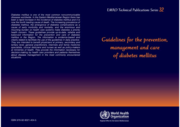
Diabetes mellitus is one of the most common noncommunicable diseases worldwide. In the Eastern Mediterranean Region there has been a rapid increase in the incidence of diabetes mellitus and it is now the fourth leading cause of death. The increasing prevalence of diabetes mellitus, the emergence of
...
diabetes complications as a cause of early morbidity and mortality, and the enormous and mounting burden on health care systems make diabetes a priority health concern. These guidelines provide up-to-date, reliable and balanced information for the prevention and care of diabetes mellitus in the Region. The information is evidence-based and clearly stated to facilitate the use of the guidelines in daily practice. They are intended to benefit physicians at primary, secondary and tertiary level, general practitioners, internists and family medicine specialists, clinical dieticians and nurses as well as policy-makers at ministries of health. They provide the information necessary for decision-making by health care providers and patients themselves about disease management in the most commonly encountered situations.
more

The workshop aimed to support countries in the prioritization and acceleration of NCD prevention and management with a specific focus on accelerating the prevention and control of hypertension and diabetes, identifying the most impactful NCD interventions within their context, closing the gaps in ca
...
ncer care services through regional collaboration and integrating NCD services in when responding to emergencies.
more

The Global Action Plan for the Prevention and Control of Noncommunicable Diseases 2013-2020 by the World Health Organization (WHO) outlines a comprehensive strategy to address the global rise in noncommunicable diseases (NCDs), including cardiovascular diseases, cancer, chronic respiratory diseases,
...
and diabetes.
more

Sharing successful strategies from the Eastern Mediterranean Region in mitigating noncommunicable diseases and mentalhealth disorders during the COVID-19pandemic and beyond
World Health Organization (WHO) Regional Office for the Eastern Mediterranean
World Health Organization (WHO) Regional Office for the Eastern Mediterranean
(2023)
C_WHO
The "Stories from the field" document by the WHO Regional Office for the Eastern Mediterranean shares effective strategies from the Eastern Mediterranean Region for addressing noncommunicable diseases (NCDs) and mental health challenges, particularly during the COVID-19 pandemic. It highlights regio
...
nal success stories in mitigating NCDs and mental health conditions through innovative, country-specific interventions. The report emphasizes multisectoral collaboration, community engagement, and resilience in public health responses. It aims to inspire further action and knowledge-sharing to enhance health outcomes in challenging settings across the region.
more

Non-Communicable Diseases (NCDs), including mental disorders, currently pose one of the biggest threats to health and development globally, particularly in low and middle income countries2. It is predicted that unless proven interventions are rapidly implemented in countries, in the short to medium
...
term, health care costs will increase exponentially and severe negative consequences will ensue not only to individuals and families but to whole societies and economies. NCDs are already a major burden in South Africa, but without added rigorous and timely action the health and development consequences may well become catastrophic. Immediate and additional, high quality, evidence based and focussed interventions are needed to promote health, prevent disease and provide more effective and equitable care and treatment for people living with NCDs at all levels of the health system. The problem is further compounded by the rising global prevalence of multi-morbidity (defined as the coexistence of two or more chronic diseases in one individual).
more

The coronavirus disease (COVID-19) pandemic exacerbated pre-existing inequalities in the treatment and care of noncommunicable diseases (NCDs). This report examines the effect of the COVID-19 pandemic on access to NCD medicines, and the policies and strategies implemented by countries and health sys
...
tems to anticipate and mitigate stresses across NCD medicine supply chains. The full range of upstream and downstream impacts are investigated, including: manufacturing; procurement, importation and last mile delivery; patient-level effects through affordability and availability; and the effects on NCD medicine availability by category of disease. The report culminates in recommended actions and interventions for key stakeholders in the NCD pharmaceutical supply chain, including governments, regulatory authorities, manufacturers and the private sector; as well as directions for future research for improving access and supply chain access resilience.
more

Public health emergencies, including pandemics, highlight the need for health systems and services that are prepared, resilient and ready to respond to health security threats. Endorsed by Member States in 2023, the Asia Pacific Health Security Action Framework (APHSAF) is designed to engage m
...
ultisectoral actors in health security, and to reflect the complex nature of current and future public health emergencies. The Framework presents six interconnected, multisectoral domains of work that together form a comprehensive, multi-hazard health security system — emphasizing the One Health approach. The Framework also supports progress towards the Sustainable Development Goals and universal health coverage while meeting the responsibilities and obligations of the International Health Regulations (2005).
more

Medical devices are used for the prevention, diagnosis and treatment of illness and diseases and for rehabilitation. WHO developed guidance on medical device donation in 2011, which has been now reviewed, with new evidence, new references on considerations for medical device solicitation and provisi
...
on, risks associated with inappropriate donations, the responsibilities of donors and recipient, and the steps they should follow before, during and after a donation. It includes three sections: description of major problems that may be faced during the donation process, listing of best practices for donors and recipients and addressing situations requiring special attention. It also has three annexes for further reading: the criteria for the acceptability of a donation, literature review on donations of medical devices between 2010 and 2023 and a flyer. This document is intended to improve the quality of medical devices donations, including medical equipment, single-use medical devices and in-vitro diagnostics, to provide maximum benefit to all stakeholders. The considerations can be used to develop institutional or national policies and regulations for medical devices donations. This document is intended for use by any organization, expert or practitioner involved in the donation, procurement, management of medical devices, including health workers, biomedical engineers, health managers, policymakers, donors, nongovernmental organizations and academic institutions.
more
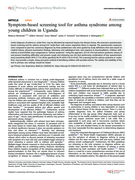
Under-diagnosis of asthma in ‘under-fives’ may be alleviated by improved inquiry into disease history. We assessed a questionnaire-based screening tool for asthma among 614 ‘under-fives’ with severe respiratory illness in Uganda. The questionnaire responses were compared to post hoc consensu
...
s diagnoses by three pediatricians who were guided by study definitions that were based on medical history, physical examination findings, laboratory and radiological tests, and response to bronchodilators. Children with asthma or bronchiolitis were categorized as “asthma syndrome”. Using this approach, 253 (41.2%) had asthma syndrome. History of and present breathing difficulties and present cough and wheezing was the best performing combination of four questionnaire items [sensitivity 80.8% (95% CI 77.6–84.0); specificity 84.7% (95% CI 81.8–87.6)]. The screening tool for asthma syndrome in ‘under-fives’ may provide a simple, cheap and quick method of identifying children with possible asthma. The validity and reliability of this tool in primary care settings should be tested.
more

Antimicrobial resistance (AMR) has emerged as a leading cause of death in the African region, surpassing fatalities from malaria, HIV, and TB. In response to this critical threat, the region has adopted the AMR Global Action Plan and the African Union Framework for Antimicrobial Resistance Control 2
...
020 – 2025, which is tailored to meet the specific needs of African nations through a coordinated approach. While most countries in the region have developed and prioritized National Action Plans (NAPs) to tackle AMR, the overall response remains inadequate given the magnitude of the threat, which endangers human, animal, environmental, aquatic, and plant health.
more

This status report shows how far we have come—and how much further we must go—if we hope to meet the global commitments to end AIDS in children. It offers a snapshot of global progress and permits an early assessment of the impact of the Global Alliance’s work.

This report explores the extent to which evidence, policy, normative guidance and commitments on HIV and gender-based violence, and their interlinkages, is being translated into action on the ground in fragile settings. These issues are explored through the lens of training of peace support operatio
...
ns deploying African troops across Africa and beyond.
more
