
Filter
4056
Text search:
UN
Women
Featured
282
1224
Language
3591
294
225
68
61
32
32
23
10
6
5
4
4
4
4
3
3
3
3
3
3
2
2
2
2
2
2
2
2
2
2
2
2
2
2
2
2
1
1
1
1
1
1
1
1
1
1
1
1
1
1
Document type
2321
795
320
208
177
77
74
45
14
10
10
1
Countries / Regions
194
121
120
102
99
92
86
85
83
83
82
74
71
66
64
62
58
58
55
53
52
50
44
42
40
39
39
39
38
37
36
35
34
33
32
31
28
27
27
26
24
24
22
21
20
20
19
19
19
18
18
17
16
16
16
15
15
14
14
13
12
10
10
10
10
10
9
9
9
8
8
8
7
7
6
6
6
6
6
6
5
5
5
5
5
5
5
4
4
4
4
4
4
4
4
3
3
3
3
3
3
3
2
2
2
2
2
2
2
2
2
2
2
2
2
2
2
2
2
1
1
1
1
1
1
1
1
1
1
1
1
1
1
1
1
1
1
1
1
Authors & Publishers
313
142
133
129
107
101
80
79
42
38
35
34
34
31
31
30
27
25
25
25
24
22
21
20
20
20
20
19
18
18
18
18
18
18
17
16
16
14
14
13
13
12
12
12
12
12
11
11
11
10
10
10
9
9
9
9
9
9
9
9
9
9
8
8
8
8
8
8
8
8
8
8
8
7
7
7
7
7
7
7
7
7
7
6
6
6
6
6
6
6
6
6
6
6
6
6
6
6
6
6
6
6
6
5
5
5
5
5
5
5
5
5
5
5
5
5
5
5
5
5
5
5
5
5
5
5
4
4
4
4
4
4
4
4
4
4
4
4
4
4
4
4
4
4
4
4
4
4
4
4
4
4
4
4
4
4
4
4
4
4
4
4
4
4
4
4
4
4
4
4
4
4
4
4
4
3
3
3
3
3
3
3
3
3
3
3
3
3
3
3
3
3
3
3
3
3
3
3
3
3
3
3
3
3
3
3
3
3
3
3
3
3
3
3
3
3
3
3
3
3
3
3
3
3
3
3
3
3
3
3
3
3
3
3
3
3
3
3
3
3
3
3
3
3
3
3
3
3
3
3
3
3
3
3
3
3
3
3
3
3
3
3
3
3
3
3
3
2
2
2
2
2
2
2
2
2
2
2
2
2
2
2
2
2
2
2
2
2
2
2
2
2
2
2
2
2
2
2
2
2
2
2
2
2
2
2
2
2
2
2
2
2
2
2
2
2
2
2
2
2
2
2
2
2
2
2
2
2
2
2
2
2
2
2
2
2
2
2
2
2
2
2
2
2
2
2
2
2
2
2
2
2
2
2
2
2
2
2
2
2
2
2
2
2
2
2
2
2
2
2
2
2
2
2
2
2
2
2
2
2
2
2
2
2
2
2
2
2
2
2
2
2
2
2
2
2
2
2
2
2
2
2
2
2
2
2
2
2
2
2
2
2
2
2
2
2
2
2
2
2
2
2
2
2
2
2
2
2
2
2
2
2
2
2
2
2
2
2
2
2
2
2
2
2
2
2
2
2
2
2
2
2
2
2
2
2
2
2
2
2
2
2
2
2
2
2
2
2
2
2
2
2
2
2
2
2
2
2
2
2
2
2
2
2
2
2
2
2
2
2
2
2
2
2
2
2
2
2
2
2
2
2
2
2
2
2
2
1
1
1
1
1
1
1
1
1
1
1
1
1
1
1
1
1
1
1
1
1
1
1
1
1
1
1
1
1
1
1
1
1
1
1
1
1
1
1
1
1
1
1
1
1
1
1
1
1
1
1
1
1
1
1
1
1
1
1
1
1
1
1
1
1
1
1
1
1
1
1
1
1
1
1
1
1
1
1
1
1
1
1
1
1
1
1
1
1
1
1
1
1
1
1
1
1
1
1
1
1
1
1
1
1
1
1
1
1
1
1
1
1
1
1
1
1
1
1
1
1
1
1
1
1
1
1
1
1
1
1
1
1
1
1
1
1
1
1
1
1
1
1
1
1
1
1
1
1
1
1
1
1
1
1
1
1
1
1
1
1
1
1
1
1
1
1
1
1
1
1
1
1
1
1
1
1
1
1
1
1
1
1
1
1
1
1
1
1
1
1
1
1
1
1
1
1
1
1
1
1
1
1
1
1
1
1
1
1
1
1
1
1
1
1
1
1
1
1
1
1
1
1
1
1
1
1
1
1
1
1
1
1
1
1
1
1
1
1
1
1
1
1
1
1
1
1
1
1
1
1
1
1
1
1
1
1
1
1
1
1
1
1
1
1
1
1
1
1
1
1
1
1
1
1
1
1
1
1
1
1
1
1
1
1
1
1
1
1
1
1
1
1
1
1
1
1
1
1
1
1
1
1
1
1
1
1
1
1
1
1
1
1
1
1
1
1
1
1
1
1
1
1
1
1
1
1
1
1
1
1
1
1
1
1
1
1
1
1
1
1
1
1
1
1
1
1
1
1
1
1
1
1
1
1
1
1
1
1
1
1
1
1
1
1
1
1
1
1
1
1
1
1
1
1
1
1
1
1
1
1
1
1
1
1
1
1
1
1
1
1
1
1
1
1
1
1
1
1
1
1
1
1
1
1
1
1
1
1
1
1
1
1
1
1
1
1
1
1
1
1
1
1
1
1
1
1
1
1
1
1
1
1
1
1
1
1
1
1
1
1
1
1
1
1
1
1
1
1
1
1
1
1
1
1
1
1
1
1
1
1
1
1
1
1
1
1
1
1
1
1
1
1
1
1
1
1
1
1
1
1
1
1
1
1
1
1
1
1
1
1
1
1
1
1
1
1
1
1
1
1
1
1
1
1
1
1
1
1
1
1
1
1
1
1
1
1
1
1
1
1
1
1
1
1
1
1
1
1
1
1
1
1
1
1
1
1
1
1
1
1
1
1
1
1
1
1
1
1
1
1
1
1
1
1
1
1
1
1
1
1
1
1
1
1
1
1
1
1
1
1
1
1
1
1
1
1
1
1
1
1
1
1
1
1
1
1
1
1
1
1
1
1
1
1
1
1
1
1
1
1
1
1
1
1
1
1
1
1
1
1
1
1
1
1
1
1
1
1
1
1
1
1
1
1
1
1
1
1
1
1
1
1
1
1
1
1
1
1
1
1
1
1
1
1
1
1
1
1
1
1
1
1
1
1
1
1
1
1
1
1
1
1
1
1
1
1
1
1
1
1
1
1
1
1
1
1
1
1
1
1
1
1
1
1
1
1
1
1
1
1
1
1
1
1
1
1
1
1
1
1
1
1
1
1
1
1
1
1
1
1
1
1
1
1
1
1
1
1
1
1
1
1
1
1
1
1
1
1
1
1
1
1
1
1
1
1
1
1
1
1
1
1
1
1
1
1
1
1
1
1
1
1
1
1
1
1
1
1
1
1
1
1
1
1
1
1
1
1
1
1
1
1
1
1
1
1
1
1
1
1
1
1
1
1
1
1
1
1
1
1
1
1
1
1
1
1
1
1
1
1
1
1
1
1
1
1
1
1
1
1
1
1
1
1
1
1
1
1
1
1
1
1
1
1
1
1
1
1
1
1
1
1
1
1
1
1
1
1
1
1
1
1
1
1
1
1
1
1
1
1
1
1
1
1
1
1
1
1
1
1
1
1
1
1
1
1
1
1
1
1
1
1
1
1
1
1
1
1
1
1
1
1
1
1
1
1
1
1
1
1
1
1
1
1
1
1
1
1
1
1
1
1
1
1
1
1
1
1
1
1
1
1
1
1
1
1
1
1
1
1
1
1
1
1
1
1
1
1
1
1
1
1
1
1
1
1
1
1
1
1
1
1
1
1
1
1
1
1
1
1
1
1
1
1
1
1
1
1
1
1
1
1
1
1
1
1
1
1
1
1
1
1
1
1
1
1
1
1
1
1
1
1
1
1
1
1
1
1
1
1
1
1
1
1
1
1
1
1
1
1
1
1
1
1
1
1
1
1
1
1
1
1
1
1
1
1
1
1
1
1
1
1
1
1
1
1
1
1
1
1
1
1
1
1
1
1
1
1
1
1
1
1
1
1
1
1
1
1
1
1
1
1
1
1
1
1
1
1
1
1
1
1
1
1
1
1
1
1
1
1
1
1
1
1
1
1
1
1
1
1
1
1
1
1
1
1
1
1
1
1
1
1
1
1
1
1
1
1
1
1
1
1
1
1
1
1
1
1
1
1
1
1
1
1
1
1
1
1
1
1
1
1
1
1
1
1
1
1
1
1
1
1
1
1
1
1
1
1
1
1
1
1
1
1
1
1
1
1
1
1
1
1
1
1
1
1
1
1
1
1
1
1
1
1
1
1
1
1
1
1
1
1
1
1
1
1
1
1
1
1
1
1
1
1
1
1
1
1
1
1
1
1
1
1
1
1
1
1
1
1
1
1
1
1
1
1
1
1
1
1
1
1
1
1
1
1
1
1
1
1
1
1
1
1
1
1
1
1
1
1
1
1
1
1
1
1
1
1
1
1
1
1
1
1
1
1
1
1
1
1
1
1
1
1
1
1
1
1
1
1
1
1
1
1
1
1
1
1
1
1
1
1
1
1
1
1
1
1
1
1
1
1
1
1
1
1
1
1
1
1
1
1
1
1
1
1
1
1
1
1
1
1
1
1
1
1
1
1
1
1
1
1
1
1
1
1
1
1
1
1
1
1
1
1
1
1
1
1
1
1
1
1
1
1
1
1
1
1
1
1
1
1
1
1
1
1
1
1
1
1
1
1
1
1
1
1
1
1
1
1
1
1
1
1
1
1
1
1
1
1
1
1
1
1
1
1
1
1
1
1
1
1
1
1
1
1
1
1
1
1
1
1
1
1
1
1
1
1
1
1
1
1
1
1
1
1
1
1
1
1
1
1
1
1
1
1
1
1
1
1
1
1
1
1
1
1
1
1
1
1
1
1
1
1
1
1
1
1
1
1
1
1
1
1
1
1
1
1
1
1
1
1
1
1
1
1
1
1
1
1
1
1
1
1
1
1
1
1
1
1
1
1
1
1
1
1
1
1
1
1
1
1
1
1
1
1
1
1
1
1
1
1
1
1
1
1
1
1
1
1
1
1
1
1
1
1
1
1
1
1
1
1
1
1
1
1
1
1
1
1
1
1
1
1
1
1
1
1
1
1
1
1
1
1
1
1
1
1
1
1
1
1
1
1
1
1
1
1
1
1
1
1
1
1
1
1
1
1
1
1
1
1
1
1
1
1
1
1
1
1
1
1
1
1
1
1
1
1
1
1
1
1
1
1
1
1
1
1
1
1
1
1
1
1
1
1
1
1
1
1
1
1
1
1
1
1
1
1
1
1
1
1
1
1
1
1
1
1
1
1
1
1
1
1
1
1
1
1
1
1
1
1
1
1
1
1
1
1
1
1
1
1
1
1
1
1
1
1
1
1
1
1
1
1
1
1
1
1
1
1
1
1
1
1
1
1
1
1
1
1
1
1
1
1
1
1
1
1
1
1
1
1
1
1
1
1
1
1
1
1
1
1
1
1
1
1
1
1
1
1
1
1
1
1
1
1
1
1
1
1
1
1
1
1
1
1
1
1
1
1
1
1
1
1
1
1
1
1
1
1
1
1
1
1
1
1
1
1
1
1
1
1
1
1
1
1
1
1
1
1
1
1
1
1
1
1
1
1
1
1
1
1
1
1
1
1
1
1
1
1
1
1
1
1
1
1
1
1
1
1
1
1
1
1
1
1
1
1
1
1
1
1
1
1
1
1
1
1
1
1
1
1
1
1
1
1
1
1
1
1
1
1
1
1
1
1
1
1
1
1
1
1
1
1
1
1
1
1
1
1
1
1
1
1
1
1
1
1
1
1
1
1
1
1
1
1
1
1
1
1
1
1
1
1
1
1
1
1
1
1
1
1
1
1
1
1
1
1
1
1
1
1
1
1
1
1
1
1
1
1
1
1
1
1
1
1
1
1
1
1
1
1
1
1
1
1
1
1
1
1
1
1
1
1
1
1
1
1
1
1
1
1
1
1
1
1
1
1
1
1
1
1
1
1
1
1
1
1
1
1
1
1
1
1
1
1
1
1
1
1
1
1
1
1
1
1
1
1
1
1
1
1
1
1
1
1
1
1
1
1
1
1
1
1
1
1
1
1
1
1
1
1
1
1
1
1
1
1
1
1
1
1
1
1
1
1
1
1
1
1
1
1
1
1
1
1
1
1
1
1
1
1
1
1
1
1
1
1
1
1
1
1
1
1
1
1
1
1
1
1
1
1
1
1
1
1
1
1
1
1
1
1
1
1
1
1
1
1
1
1
1
1
1
1
1
1
1
1
1
1
1
1
1
1
1
1
1
1
1
1
1
1
1
1
1
1
1
1
1
1
1
1
1
1
1
1
1
1
1
1
1
1
1
1
1
1
1
1
1
1
1
1
1
1
1
1
1
1
1
1
1
1
1
1
1
1
1
1
1
1
1
1
1
1
1
1
1
1
1
1
1
1
1
1
1
1
1
1
1
1
1
1
1
1
1
1
1
1
1
1
1
1
1
1
1
1
1
1
1
1
1
1
1
1
1
1
1
1
1
1
1
1
1
1
1
1
1
1
1
1
1
1
1
1
1
1
1
1
1
1
1
1
1
1
1
1
1
1
1
1
1
1
1
1
1
1
1
1
1
1
1
1
1
1
1
1
1
1
1
1
1
1
1
1
1
1
1
1
1
1
1
1
1
1
1
1
1
1
1
1
1
1
1
1
1
1
1
1
1
1
1
1
1
1
1
1
1
1
1
1
1
1
1
1
1
1
1
1
1
1
1
1
1
1
1
1
1
1
1
1
1
1
1
1
1
1
1
1
1
1
1
1
1
1
1
1
1
1
1
1
1
1
1
1
1
1
1
1
1
1
1
1
1
1
1
1
1
1
1
1
1
1
1
1
1
1
1
1
1
1
1
1
1
1
1
1
1
1
1
1
1
1
1
1
1
1
1
1
1
1
1
1
1
1
1
1
1
1
1
1
1
1
1
1
1
1
1
1
1
1
1
1
1
1
1
1
1
1
1
1
1
1
1
1
1
1
1
1
1
1
1
1
1
1
1
1
1
1
1
1
1
1
1
1
1
1
1
1
1
1
1
1
1
1
1
1
1
1
1
1
1
1
1
1
1
1
1
1
1
1
1
1
1
1
1
1
1
1
1
1
1
1
1
1
1
1
1
1
1
1
1
1
1
1
1
1
1
1
1
1
1
1
1
1
1
1
1
1
1
1
1
1
1
1
1
1
1
1
1
1
1
1
1
1
1
1
1
1
1
1
1
1
1
1
1
1
1
1
1
1
1
1
1
1
1
1
1
1
1
1
1
1
1
1
1
1
1
1
1
1
1
1
1
1
1
1
1
1
1
1
1
1
1
1
1
1
1
1
1
1
1
1
1
1
1
1
1
1
1
1
1
1
1
1
1
1
1
1
1
1
1
1
1
1
1
1
1
1
1
1
1
1
1
1
1
1
1
1
1
1
1
1
1
1
1
1
1
1
1
1
1
1
1
1
1
1
1
1
1
1
1
1
1
1
1
1
1
1
1
1
1
1
1
1
1
1
1
1
1
1
1
1
1
1
1
1
1
1
1
1
1
1
1
1
1
1
1
1
1
1
1
1
1
1
1
1
1
1
1
1
1
1
1
1
1
1
1
1
1
1
1
1
1
1
1
1
1
1
1
1
1
1
1
1
1
1
1
1
1
1
1
1
1
1
1
1
1
1
1
1
1
1
1
1
1
1
1
1
1
1
1
1
1
1
1
1
1
1
1
1
1
1
1
1
1
1
1
1
1
1
1
1
1
1
1
1
1
1
1
1
1
1
1
1
1
1
1
1
1
1
1
1
1
1
1
1
1
1
1
1
1
1
1
1
1
1
1
1
1
1
1
1
1
1
1
1
1
1
1
1
1
1
1
1
Publication Years
1
1204
2575
265
10
1
Category
1790
301
301
168
153
45
8
1
Toolboxes
341
268
267
247
227
164
141
123
100
91
81
59
59
50
44
26
26
25
21
19
18
15
14
13
9
6
2
The chapter Fostering Health Systems’ Monitoring to Better Serve Older Populations is part of the publication series entitled Decade of Healthy Aging: Situation and Challenges. The publications are designed to favor the prioritization of effective actions at the local level as well as the monitori
...
ng of data and public health policies, and providing evidence-based information. Along with the objective of presenting the available updated knowledge about the situation of health and aging at the beginning of the Decade of Healthy Aging in the Americas, this publication gives information about health systems’ monitoring to better serve the needs of older adults and emphasizes the need for societies and health systems to better adapt to an aging population. It introduces the 360-tool as a guide to adapt health systems through monitoring tracers/indicators and highlighting the data and information that is readily available, disaggregated by age. This information can aid in decision-making and resource allocation to support older adults’ needs. Concerning the 360-tool development, a consensus has been reached on seven tracer indicators with high relevance to informing policy, and case studies in selected countries have assessed the feasibility of this approach. The list of indicators and the process related to the development of the tool are presented in this publication. The Decade of Healthy Aging 2021-2030 is a period to guide action towards the transformation of societies by fostering the inclusion of older people in every decision. This publication intends to contribute to this strategy and highlight the upcoming challenges and opportunities on healthy aging.
more

Myanmar continues to experience a severe - and worsening - humanitarian and human rights crisis. Conflict and violence have escalated across the country, impacting children and their families and displacing more than 1.5 million people. Access of conflict-affected populations to services and deliver
...
y of humanitarian assistance has been further constrained by restrictions imposed on movement of both people and goods.
more

A lot has happened this year. While we continued to tackle the COVID-19 pandemic, we were hit by disease outbreaks and
humanitarian crises. Yet, despite these challenges, we marched on, resolute in resolving critical health systems issues to increase
access to quality healthcare services. To furth
...
er our vision and bring concrete actions to reality, under
the leadership of the Government of South Sudan, we developed the Health Sector Strategic Plan to define the strategic
approaches, key interventions, mapping resource needs, and the implementation framework to strengthen the health system
to deliver essential quality health services equitably for 2023 to 2027. For WHO, this Plan will usher in a new reality -- access
to lifesaving or health-promoting interventions is doable and possible, making the health sector fairer, especially for those
unable to pay
more

This document is an output of a WHO cross-programme initiative aiming to improve the prevention, diagnosis and management of anaemia and thereby accelerate reduction in its prevalence. It comes at an important time, midway through the era of the Sustainable Development Goals, when progress in reduci
...
ng anaemia has stagnated. This framework is based on the core principles of primary health care: meeting people’s health needs through comprehensive promotive, protective, curative, and rehabilitative care along the life course; systematically addressing the broader determinants of health; and empowering individuals, families, and communities to optimize their health
more
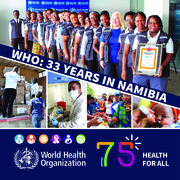
This publication is part of WHO 75th anniversary and aims to capture key successes in public health globally and in Namibia. It includes contributory messages from the Head of State, Prime Minister and the Minister of Health and Social Services.

The Contingency Fund for Emergencies (CFE) provides WHO with rapid and flexible resources to respond to disease outbreaks and other health emergencies. The annual report provides an overview of the use and impact of the Fund over the previous year.

This report highlights the work of the World Health Organization (WHO) in Zimbabwe towards contributing to the triple billion targets in the context of the Sustainable Development Goals (SDGs

Background:Neonatal mortality accounts for 43% of global under-five deaths and is decreasing more slowly than maternal or child mortality. Donor funding has increased for maternal, newborn, and child health (MNCH), but no analysis to date has disaggregated aid for newborns. We evaluated if and how a
...
id flows for newborn care can be tracked, examined changes in the last decade, and considered methodological implications for tracking funding for specific population groups or diseases. MethodsandFindings:We critically reviewed and categorised previous analyses of aid to specific populations, diseases, or types of activities. We then developed and refined key terms related to newborn survival in seven languages and searched titles and descriptions of donor disbursement records in the Organisation for Economic Co-operation and Development’s Creditor Reporting System database, 2002–2010. We compared results with the Countdown to 2015 database of aid for MNCH (2003–2008) and the search strategy used by the Institute for Health Metrics and Evaluation. Prior to 2005, key terms related to newborns were rare in disbursement records but their frequency increased markedly thereafter. Only two mentions were found of ‘‘stillbirth’’ and only nine references were found to ‘‘fetus’’ in any spelling variant or language
more
Le Ministère de la Santé Publique et de la Prévention en collaboration avec les partenaires techniques et financiers, a procédé à l’élaboration du Plan National de Développement Sanitaire quatrième de la Génération (PNDS4), couvrant la période 2022-2030. Ce PNDS4, contrairement aux PND
...
S antérieurs couvre une période restante pour la mise en œuvre de la Politique Nationale de Santé 2016-2030. Le PNDS4 est le dernier segment du cycle de la planification stratégique de la mise en œuvre de la Politique Nationale de Santé (PSN) qui est alignée sur la vision du « Tchad que nous voulons » et l’atteinte des Objectifs de Développement Durable.
more

Ending the epidemics of HIV, tuberculosis and malaria by 2030 is within reach, but not yet fully in our grasp.
With only 11 years left, we have no time to waste. We must step up the fight now.

Reproductive health needs are particularly acute in countries affected by armed conflict. Reliable information
on aid investment for reproductive health in these countries is essential for improving the efficiency and effectiveness of
aid. The purpose of this study was to analyse official developm
...
ent assistance (ODA) for reproductive health activities in
conflict-affected countries from 2003 to 2006.
Methods and Findings: The Creditor Reporting Syst
more
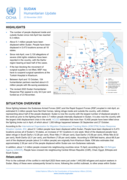
Since fighting between the Sudanese Armed Forces (SAF) and the Rapid Support Forces (RSF) erupted in mid-April, an estimated 6.3 million people have fled their homes, taking refuge inside and outside the country, with children representing about half of the people displaced. Sudan is now the country
...
with the largest number of displaced people in the world as prior to the fighting there were 3.7 million people internally displaced in Sudan. It is also now the country with the largest child displacement crisis in the world. ACLED estimates that more than 10,400 people have been killed since the fighting broke out in April, of which about 1,300 killings happened between 30 September and 27 October.
more

The World Heart Federation (WHF) has been advocating globally for stronger
legislation and policy regarding cardiovascular disease (CVD) for many years. Now, as focus shifts from global to national progress, we call on members and colleagues to advocate for greater action on CVD in your local setti
...
ngs. This ‘Road to 2018 Toolkit’ provides World Heart Federation members with information
and specific, practical tools to support national CVD advocacy, especially around the United Nations High-Level Meeting on NCDs in 2018.
more

Many features of the environment have been found to exert an important influence on cardiovascular disease (CVD) risk, progression, and severity. Changes in the environment due to migration to different geographic locations, modifications in lifestyle choices, and shifts in social policies and cultu
...
ral practices alter CVD risk, even in the absence of genetic changes. Nevertheless, the cumulative impact of the environment on CVD risk has been difficult to assess
and the mechanisms by which some environment factors influence CVD remain obscure. Human environments are complex; and their natural, social and personal domains are highly variable due to diversity in human ecosystems, evolutionary histories, social structures, and individual choices. Accumulating evidence supports the notion that ecological features such as the diurnal cycles of
light and day, sunlight exposure, seasons, and geographic characteristics of the natural environment such altitude, latitude and greenspaces are important determinants of cardiovascular health and CVD risk. In highly developed societies, the influence of the natural environment is moderated by the physical characteristics of the social environments such as the built environment
and pollution, as well as by socioeconomic status and social networks. These attributes of the
social environment shape lifestyle choices that significantly modify CVD risk. An understanding
of how different domains of the environment, individually and collectively, affect CVD risk could
lead to a better appraisal of CVD, and aid in the development of new preventive and therapeutic
strategies to limit the increasingly high global burden of heart disease and stroke.
more

In 2006, the Special Session of African Union Health Ministers adopted the Maputo Plan of Action for implementing the Continental Policy Framework on sexual and reproductive health and rights (SRHR), which expired at the end of 2015. The goal was for all stakeholders and partners to join forces and
...
re-double efforts, so that together, the effective implementation of the Continental Policy framework including universal access to sexual and reproductive health by 2015 in all countries in Africa can be achieved. The Revised Maputo Plan of Action (MPoA) 2016 – 2030 was subsequently endorsed by the African Union Heads of State at the 27th AU Summit in July 2016 in Kigali, Rwanda. The plan reinforces the call for universal access to comprehensive sexual and reproductive health services in Africa and lays foundation to the Sustainable Development Goals, particularly Goal 3 and 5, as well as the African Union Agenda 2063.
more

In 2012, all Member States of the World Health Organization (WHO) endorsed a historical target to reduce premature mortality from noncommunicable diseases
(NCD). This commitment was echoed in 2015 by the United Nations Sustainable Development Goals, which included a target to reduce premature morta
...
lity (the
measure of unfulfilled life expectancy and deaths between the ages of 30 and 70 years) from NCD by 30% by the year 2030. The Sustainable Development Goals are especially relevant to cardiovascular disease (CVD), the leading cause of death globally, with increasing prevalence in low- and middle-income countries (LMIC).
more
Many low- and middle-income countries (LMICs) are undergoing an epidemiological transition. With an improvement in socioeconomic conditions and an aging population, cardiovascular diseases (CVDs), like cardiac arrhythmias, are expected to increase in these countries. However, there are limited studi
...
es on the epidemiology and management of cardiac arrhythmias in LMICs. This review will highlight the unique challenges and opportunities that these countries face when managing cardiac arrhythmias.
more

Non-communicable diseases (NCDs) are the second common cause of death in sub-Saharan Africa (SSA) accounting for about 35% of all deaths, after a composite of communicable, maternal, neonatal, and nutritional diseases. Despite prior perception of low NCDs mortality rates, current evidence suggests t
...
hat SSA is now at the dawn of the epidemiological transition with contemporary double burden of disease from NCDs and communicable diseases. In SSA, cardiovascular diseases (CVDs) are the most frequent causes of NCDs deaths, responsible for approximately 13% of all deaths and 37% of all NCDs deaths. Although ischemic heart disease (IHD) has been identified as the leading cause of CVDs mortality in SSA followed by stroke and hypertensive heart disease from statistical models, real field data suggest IHD rates are still relatively low. The neglected endemic CVDs of SSA such as endomyocardial fibrosis and rheumatic heart disease as well as congenital heart diseases remain unconquered. While the underlying aetiology of heart failure among adults in high-income countries (HIC) is IHD, in SSA the leading causes are hypertensive heart disease, cardiomyopathy, rheumatic heart disease, and congenital heart diseases. Of concern is the tendency of CVDs to occur at younger ages in SSA populations, approximately two decades earlier compared to HIC. Obstacles hampering primary and secondary prevention of CVDs in SSA include insufficient health care systems and infrastructure, scarcity of cardiac professionals, skewed budget allocation and disproportionate prioritization away from NCDs, high cost of cardiac treatments and interventions coupled with rarity of health insurance systems. This review gives an overview of the descriptive epidemiology of CVDs in SSA, while contrasting with the HIC and highlighting impediments to their management and making recommendations.
more

This document contains guidance for strengthening the disability inclusiveness of MHPSS responses and programmes in emergency settings. It is intended to supplement the IASC Guidelines on Mental Health and Psychosocial Support in Emergency Settings (2007).
Overall Objective
To consider and add
...
ress the mental health and psychosocial support (MHPSS) requirements of persons living in emergency settings with all types of disabilities on an equal basis to the MHPSS requirements of all persons, using a human rights-based approach and implementing social-ecological frameworks.
more

Humanitarian crises exacerbate nutritional risks and often lead to an increase in acute malnutrition. Emergencies include both manmade (conflict) and natural disasters (floods, drought, cyclones, typhoons, earthquakes, volcanic eruptions, etc.). Complex emergencies are combinations of both manmade a
...
nd natural disasters, often of a protracted nature. Millions of people are affected by humanitarian crises every year. The increasing frequency and scale of emergencies requires nutrition to be addressed in all phases of a response.
Crisis situations, whether acute or protracted, impact on a range of factors that can increase the risk of undernutrition, morbidity, and mortality. They may involve: the large-scale destruction of property and infrastructure; the erosion of livelihood strategies and purchasing power; a breakdown of and reduced access to essential services, including health services, water supply, and sanitation; and the displacement of large numbers of people. Emergencies can also disrupt social systems and the quality of care/feeding practices. Household access to food may be negatively affected and people may find themselves in overcrowded settlements with their families divided. As a result, at the individual level, there is often an increased risk of deteriorating health and nutritional status, resulting in a greater likelihood of death.
more
